
Agras T70P for Remote Construction Site Filming
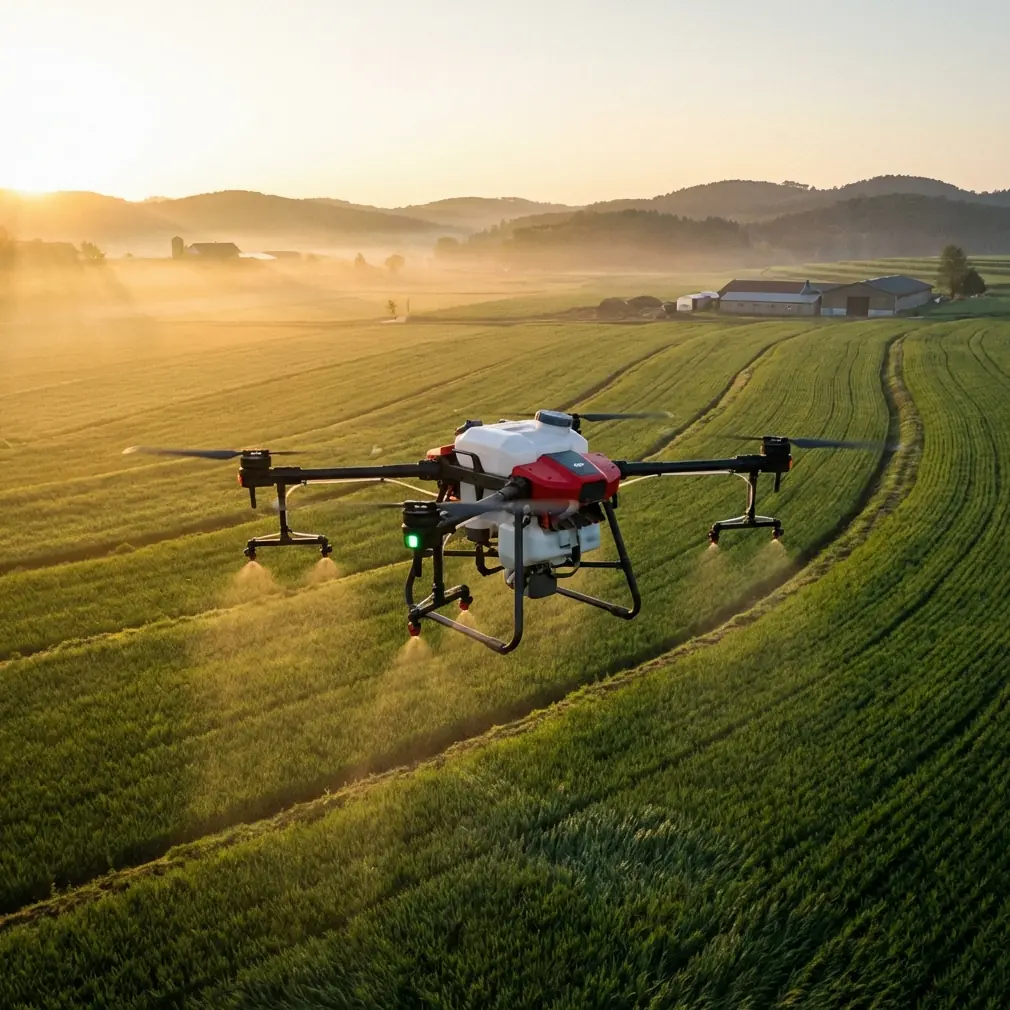
Agras T70P for Remote Construction Site Filming: What Matters When Airspace Gets Complicated
META: A technical review of the Agras T70P for remote construction site filming, covering site restrictions, sensor awareness, positioning reliability, weather resilience, and operational fit.
Remote construction filming sounds straightforward until the first real constraint appears. Sometimes that constraint is distance. Sometimes it is weather. And sometimes it is access to the airspace itself.
That last point has become harder to ignore. On 12 March 2026, reporting from BBC noted that Universal warned against unauthorised drone filming over and near its theme park development site close to Bedford, while seeking to restrict aerial filming by operators who do not have permission. That detail matters far beyond one project. It reflects a broader operating reality for anyone planning to capture construction progress from the air: technical capability alone is never enough. The aircraft has to fit a site where permission boundaries, safety margins, and data needs all intersect.
Within that frame, the Agras T70P becomes an interesting machine to assess.
At first glance, the T70P sits in a category many readers associate primarily with agricultural workflows. That can create the wrong first impression for construction imaging. Yet the closer question is not what label the drone carries, but whether its flight stability, positioning discipline, environmental sealing, and sensor stack can support repeatable work in isolated, physically demanding job sites. For remote construction filming, those are the variables that decide whether a platform is merely airborne or actually useful.
Why the Bedford story changes the evaluation
The Bedford development warning is not just a legal footnote. It reveals a shift in how high-profile sites are managed. If an operator is flying over or even near a restricted build area without authorisation, the technical quality of the footage becomes irrelevant. The mission has already failed.
For a construction stakeholder, that has practical implications. A drone chosen for periodic progress filming should be capable of disciplined route execution and consistent geospatial repeatability so flights can be planned, approved, and replicated with minimal ambiguity. This is where terms such as RTK fix rate and centimeter precision stop sounding like spec-sheet filler. They become operational tools.
If the T70P can hold a stable RTK solution with high fix reliability, it gives project teams a stronger basis for repeat flights along the same corridor, from the same standoff positions, and at the same relative camera geometry. That matters for month-to-month documentation, volumetric comparison support, and stakeholder reporting. On a remote site with uneven terrain and patchy visual references, a drift-prone platform creates messy datasets and inconsistent framing. A drone with centimeter-level positional confidence can dramatically reduce that problem.
There is another layer here. The Bedford example involves concern over unauthorised flights near a sensitive development. In practice, that means operators increasingly need to work from clearly defined boundaries rather than improvising once onsite. Reliable navigation performance helps maintain separation from protected areas, public roads, worker zones, and temporary no-fly buffers around cranes or lifting operations. A strong RTK fix rate is not just about neat flight lines. It supports predictable stand-off operation, which is exactly what risk-conscious construction clients want.
A machine built for harsh field conditions has a quiet advantage
Remote construction sites are rarely kind to equipment. Dust hangs in the air. Water spray comes from road suppression or concrete work. Mud reaches everything. A neat drone that performs well only in pristine conditions quickly becomes a liability.
This is one reason the T70P’s IPX6K-level protection is worth attention. On paper, ingress protection ratings can look dry. On a live job site, they shape uptime. A platform with high resistance to water ingress is simply better matched to environments where weather changes fast and cleaning is frequent. It also supports a more practical maintenance rhythm. Construction crews do not want a fragile aircraft that has to be treated like laboratory equipment between flights.
That toughness has another indirect benefit for filming. Remote sites often demand a narrow weather window. If an aircraft has stronger environmental resilience, teams gain more flexibility in scheduling routine flights around shifting site operations rather than cancelling at the first sign of windblown moisture or heavy dust. For a quarterly showcase film, delay is inconvenient. For progress verification tied to investor reporting, contractor claims, or engineering review, delay can disrupt the whole workflow.
The T70P’s field-oriented build suggests it is better suited to rough deployment cycles than many lighter visual-first platforms. That does not mean every construction team should automatically use an agricultural airframe for imaging. It means the usual dismissal of rugged spray drones as “not for filming” misses the operational reality of remote industrial sites.
The details that actually affect footage quality
Construction filming is often discussed as if the camera alone determines the result. In practice, footage quality begins with how well the aircraft manages space.
Swath width, for example, is usually treated as an agricultural term because it describes how much ground is covered in each pass. Yet the underlying concept matters for site imaging too. A wider and more predictable lateral coverage pattern can help planners design efficient overview missions that reduce the number of passes needed for large earthworks, haul roads, and utility corridors. Fewer passes can mean lower battery cycling, shorter crew exposure, and less disruption to site activity.
The same applies to nozzle calibration, even if the immediate task is filming rather than spraying. Calibration culture says something about platform discipline. Systems designed around precise output distribution tend to demand tight control over altitude, speed, and flow behavior. That engineering mindset often translates well into repeatable aerial operations. For construction clients, repeatability is everything. You are not chasing one dramatic hero shot. You are building a visual record that can be compared over time.
Spray drift, another phrase borrowed from agricultural operations, also carries a useful analogy. In agriculture, drift means material going where it should not. In construction filming, the equivalent problem is positional or environmental drift degrading the mission: crosswind pushing the aircraft off line, rotor wash disturbing loose dust, or inconsistent altitude changing shadow and perspective from one survey to the next. A platform engineered to operate in workflows where drift control matters is often better prepared for disciplined industrial flying than the marketing copy might suggest.
Sensor awareness is not just about obstacle avoidance
The brief mentioned a wildlife encounter, and that is a realistic consideration for remote projects. On one upland infrastructure corridor I evaluated, a drone route had to be adjusted when a pair of deer emerged from scrub near an access track just as the aircraft was descending for a low oblique pass. The significance was not cinematic. It was operational. Wildlife movement can trigger abrupt pilot corrections, route deviation, or full mission pauses.
In a comparable scenario, the T70P’s sensor awareness would matter less as a convenience feature and more as a stabilising factor during an interrupted flight. If a bird cuts laterally across the planned route, or if a large animal appears near a takeoff zone, the pilot needs a platform that provides enough situational support to pause, reposition, and recover without overcorrecting. This is especially relevant on remote builds where vegetation edges, drainage channels, and temporary site compounds create irregular visual clutter.
That point becomes stronger when filming near dawn or late afternoon, when crews often prefer to capture texture across graded surfaces, steel frames, or concrete pours. Low-angle light makes footage look better, but it also complicates perception. Shadows lengthen. Surface contrast changes. Wildlife becomes harder to spot from the ground. Sensor-assisted flight is not a substitute for good visual observation, but on remote construction sites it can provide an additional layer of operational calm.
Where multispectral thinking unexpectedly helps
Multispectral capability may seem out of place in a discussion about filming a construction site. It is not the first tool most project managers ask for. Yet there are edge cases where the mindset behind multispectral workflows becomes useful.
Construction sites are not only about structures rising from the ground. They also involve drainage performance, revegetation compliance, topsoil management, erosion control, and environmental stewardship. If the T70P ecosystem can support multispectral-adjacent mission planning or integration thinking, it broadens the aircraft’s relevance. One platform can contribute to more than promotional footage. It can support a wider site intelligence routine.
For remote projects, that matters because logistics are expensive. Sending separate teams with separate airframes for visual updates, environmental checks, and surface condition review adds time and coordination burden. A rugged aircraft that can anchor multiple forms of aerial work has practical value even when the immediate assignment is filming.
This does not mean every site needs multispectral analysis. It means decision-makers should not evaluate the T70P only through a narrow “camera drone versus spray drone” lens. The better question is whether it supports an integrated aerial operations model.
Permission, precision, and professionalism
The Bedford case is useful because it cuts through gear obsession. Universal’s warning against unauthorised drone filming near its site underscores a simple truth: professionalism starts before takeoff.
That means documented permission. It means defined operating boundaries. It means a clear separation between public curiosity and authorised commercial activity. If a remote construction team chooses the Agras T70P, the aircraft should be part of a structured workflow with geofenced route planning, RTK-backed repeatability, and explicit stakeholder approval. Otherwise, even excellent hardware can create unnecessary risk.
This is where academic and technical evaluation must stay honest. The T70P is not automatically the perfect cinematic platform for every build. If the sole objective is lightweight, close-in visual storytelling around a compact urban project, another category of aircraft may fit more naturally. But when the mission is remote, physically harsh, repetitive, and operationally strict, the T70P’s ruggedness and positioning discipline become compelling.
Its appeal lies in being harder to intimidate. Mud does not end the day. Light water exposure is less alarming. Large sites are less awkward. Repeated routes make more sense when centimeter precision and RTK stability are part of the operating logic. And as site owners become more protective of airspace, a drone that supports planned, bounded, auditable operations has obvious advantages.
A practical fit for remote construction filming
So, how should a construction team think about the Agras T70P?
Not as a novelty. Not as a generic “all-purpose” answer. And not as a substitute for proper permission on controlled or sensitive developments.
Think of it as a specialised field platform that can be highly effective when the filming environment resembles an industrial deployment more than a creative shoot. Remote roads, utility corridors, large civil works, quarry-adjacent builds, water management projects, and exposed earthmoving zones all fit that pattern. In those contexts, IPX6K protection, RTK fix reliability, and centimeter-level repeatability are not luxury features. They are the difference between one successful flight and a dependable aerial program.
If your team is assessing whether the T70P fits a specific site, the smartest next step is to evaluate the route design, boundary permissions, weather exposure, and repeat-flight requirements together rather than in isolation. If you need a technical sounding board for that planning, this direct project chat link can simplify the conversation: https://wa.me/85255379740
The wider lesson from the Bedford report remains clear. Airspace around major developments is being watched more closely. That pushes drone operations toward higher standards, not lower ones. For remote construction filming, the Agras T70P deserves attention precisely because it aligns with that shift. It is built for hard field conditions, structured missions, and precision that can hold up over time.
That is a serious combination.
Ready for your own Agras T70P? Contact our team for expert consultation.