
Agras T70P for Windy Construction Sites: A Field Tutorial
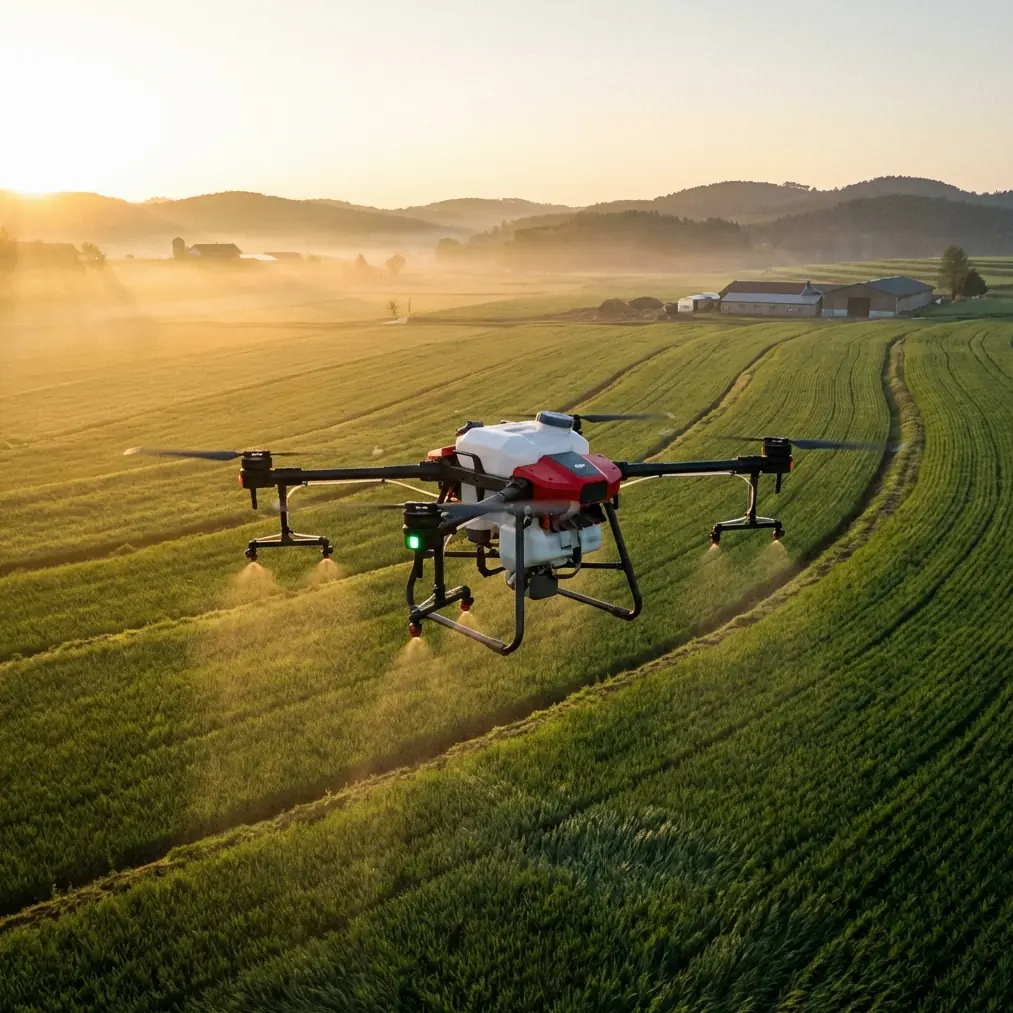
Agras T70P for Windy Construction Sites: A Field Tutorial From the Pilot’s Side
META: Practical Agras T70P tutorial for windy construction sites, covering RTK setup, nozzle calibration, spray drift control, weather response, and stable low-altitude operations.
Construction sites rarely give you a clean flying day. Open steel, half-finished walls, moving machinery, dust, heat shimmer, and crosswinds rolling through unfinished corridors all create the kind of environment that exposes weak planning fast. If you are considering the Agras T70P for work around a windy construction site, the real question is not whether it can lift, spray, or hold a line on a calm demo field. The useful question is how it behaves when the weather shifts mid-flight and your operating window tightens.
That is where the T70P becomes interesting.
I am writing this from the perspective of a consultant who sees aircraft less as gadgets and more as tools inside a workflow. On construction projects, the aircraft has to do two things well at the same time: maintain precise, repeatable positioning and adapt safely when conditions stop cooperating. The Agras T70P is widely associated with agricultural application, but some of its most practical strengths translate surprisingly well to construction-adjacent operations, especially where liquid distribution, surface treatment, or targeted application needs to happen with tight positional control.
This is not a generic overview. It is a field tutorial built around one scenario: filming and operating around a construction site in windy conditions, with weather that changes after takeoff.
Why the T70P even enters the conversation
Most people see the Agras line and think only about crops. That is fair. But on certain sites, especially large footprints with access challenges, the T70P’s appeal comes from a different combination of traits: high payload capability, broad swath potential, weather-resistant construction, and positioning systems designed for repeatable route accuracy.
Two technical details matter immediately in the construction context.
First, RTK-based navigation. When you need centimeter precision near structures, graded surfaces, drainage lines, or treatment zones with narrow tolerances, the difference between ordinary GNSS and a strong RTK fix rate is operationally significant. It affects pass-to-pass consistency, overlap, and whether the aircraft can maintain a predictable track when wind is nudging it off axis.
Second, ingress protection. A system rated to IPX6K is not invincible, but it does tell you something important about how the aircraft is intended to survive difficult field conditions. On construction work, that usually means blown dust, splatter, residue from application operations, and quick turnaround cleaning. Equipment that cannot tolerate that environment tends to become unreliable long before the mission profile matures.
Those are not glamorous features. They are the ones that keep a working day intact.
Start with the site, not the drone
Before I power up a T70P on a construction project, I walk the air before I fly it. Wind on a site is not one thing. It stacks.
At ground level near concrete barriers, you may have manageable airflow. Ten meters up, the wind can be stronger and cleaner. Then you move near a skeletal building frame, and suddenly the flow compresses, curls, and spills over edges. You can get lateral gusts on one side of the structure and a sinking, turbulent pocket on the other.
For filming, that matters because your footage can go from stable to unusable in one pass. For application work, it matters even more because drift becomes the central risk. Spray drift is not an abstract agronomy term here. On a construction site, unintended movement can send material onto vehicles, fresh surfaces, staging areas, or active crews. One gust in the wrong place turns a productive sortie into a cleanup problem.
So the first tutorial point is simple: do not treat the site as a flat map. Treat it as a wind machine.
On the T70P, that means building your route with the wind in mind rather than fighting it afterward. I prefer to align passes so the aircraft spends the least amount of time broadside to the strongest crosswind zones. If the wind is quartering across the site, I also shorten mission segments. Long elegant lines look efficient in software. Shorter blocks are often more controllable in real conditions.
RTK fix rate is not a spec-sheet footnote
If you are flying around steel frames, containers, cranes, and reinforced concrete, signal environment becomes part of mission safety. This is where RTK setup on the T70P deserves more attention than it usually gets.
People like to say “centimeter precision” as if it is automatic. It is not. Precision depends on maintaining a robust RTK fix rate and a stable correction source. If your fix degrades near reflective structures or temporary obstructions, the aircraft may still fly, but your confidence in exact path holding drops. On a windy site, that compounds quickly. Wind pushes. Weak positioning makes the correction less crisp. Your overlap and edge control start to erode.
Operationally, I handle this in three steps:
- I verify the RTK link before the mission, not after the aircraft is loaded.
- I test a short segment near the most reflective or cluttered section of the site.
- I monitor whether the aircraft is holding its line cleanly rather than trusting the planned route blindly.
If you are documenting the site visually at the same time, this also helps your imaging consistency. Stable route geometry gives you cleaner comparative footage and more dependable repeat flights.
The T70P’s navigation stack is most valuable when you use it to reduce variability, not simply to automate movement.
Nozzle calibration is where site quality is won or lost
Nozzle calibration is easy to neglect because it feels procedural. On construction work, it is one of the first things I check.
Why? Because a windy site magnifies every inconsistency in droplet size and output uniformity. If the nozzle pattern is off, or if one side is delivering differently than the other, you do not just get uneven coverage. You get uneven coverage that is then distorted by crosswind. That combination is expensive in time and can create rework.
With the T70P, the goal is not merely “spraying.” The goal is controlled deposition. That starts by confirming that nozzle output matches the application plan and site conditions. If winds are marginal, I lean toward setups that help reduce fine drift-prone droplets where the task allows it. You want the release profile to match the environment, not the other way around.
This is especially true when you are working near edges, trenches, vertical faces, or materials that should not receive overspray. Calibration directly affects how predictable your swath width actually is in field conditions. A theoretical swath on a calm surface means little if the site is channeling gusts through partially built structures.
On the T70P, understanding real swath width versus planned swath width is one of the most practical skills you can develop. In open wind, you may preserve most of the expected pattern. Near structures, that pattern can skew, compress, or feather. If you have not calibrated and tested, you are guessing.
The mid-flight weather change that decides the mission
Here is the scenario that separates careful operators from optimistic ones.
The mission starts under manageable conditions. The T70P lifts smoothly. RTK is locked. Initial passes are clean. The aircraft is holding line well, and the route along the site perimeter looks solid. Then the weather shifts.
It does not need to become extreme to matter. A mild increase in wind speed, combined with a directional change, is enough. What had been a crosswind becomes a diagonal flow spilling between two unfinished walls. Dust starts moving differently across the ground. The aircraft begins making more visible corrections. The spray pattern, if you are applying material, no longer looks as tidy at the edge of the pass.
This is the moment when discipline matters.
What I like about the T70P in these conditions is not that it makes the wind disappear. It does not. No aircraft does. What matters is how controllably it reveals the changing conditions. The aircraft’s route holding and response make it obvious when the environment is beginning to win. That gives the operator a chance to make a decision before the mission degrades into drift, missed coverage, or ugly footage.
My rule is straightforward: if the weather shift changes aircraft attitude noticeably or causes edge uncertainty in the application zone, I pause and reassess. That may mean reducing altitude, narrowing the task block, adjusting pass direction, or landing entirely. Good operators do not prove courage by staying airborne too long. They prove judgment by protecting outcome quality.
If you want a second set of eyes on route setup or wind planning, I usually suggest operators share their site profile through a quick project chat before they load the aircraft.
Using the T70P around unfinished structures
Construction sites create airflow behavior that open farmland does not. The T70P’s size and mission profile mean you should think deliberately about proximity.
I avoid hugging structures unless the task absolutely requires it. Even with centimeter precision, air disturbance near walls and corners can produce abrupt changes in stability and deposition. Instead, I define buffer zones and only tighten the route after I understand how the aircraft responds on the first pass.
This is also where payload and platform confidence can mislead operators. A capable aircraft can encourage overconfidence. Just because the T70P can execute a mission on paper does not mean the site has given you a clean enough aerodynamic environment to do it well.
The better workflow is staged:
- establish open-area performance first
- validate route tracking near structure edges
- compare actual behavior against planned swath width
- refine only the sections that need closer access
That sequence preserves control and gives you real data from the site, not assumptions imported from another job.
Can multispectral thinking help on a construction site?
Strictly speaking, the T70P is not defined by multispectral payload use in the way some mapping platforms are. But the underlying idea behind multispectral workflows is still useful here: do not trust the naked eye alone when surface variation matters.
On construction projects, surface moisture, coverage consistency, and treatment response can look deceptively uniform from the ground. Even if your operation is not using a dedicated multispectral workflow, you should borrow the mindset. Verify outcomes systematically. Use repeatable visual documentation. Check edge zones. Compare treated versus untreated sections under the same light and angle. The T70P’s value rises when it becomes part of a measured process rather than a one-off flight.
That is one reason I often pair application planning with documentation logic. The more repeatable your route geometry and altitude profile, the easier it is to assess what the aircraft actually accomplished.
Weather resistance matters after landing too
IPX6K is one of those details that sounds like marketing until you spend a week on active sites. Dust gets into everything. Residue dries on surfaces. Hose-down cleaning becomes part of normal maintenance, not a special event.
A drone designed to tolerate demanding field cleanup is simply more practical when workdays are repetitive and dirty. On a construction site, that durability affects uptime. It also affects inspection quality. Operators are more likely to clean and check a system regularly when the process is straightforward and the hardware is built for it.
That does not replace maintenance discipline, but it does support it. And on commercial jobs, reliable turnaround is worth more than flashy claims.
A practical windy-site checklist for the T70P
If you are preparing the Agras T70P for this kind of mission, here is the compact field logic I recommend:
Check the wind by zone, not by site average.
A single wind reading does not tell you what is happening beside walls, over stockpiles, or through partially enclosed frames.
Confirm RTK integrity before loadout.
A strong RTK fix rate is foundational if you want consistent passes and true centimeter precision where it counts.
Calibrate nozzles for the real environment.
Nozzle calibration affects droplet behavior, coverage uniformity, and how much margin you have against spray drift.
Validate actual swath width on site.
Do not rely only on a planned number. Wind and structure-induced turbulence can change effective coverage.
Reduce ambition when weather shifts.
If conditions change mid-flight, shorten the block, alter the approach, or land. Salvaging quality beats forcing completion.
Use the aircraft as part of a process.
The T70P performs best when planning, execution, cleaning, and verification all connect.
Final take
The Agras T70P is not interesting because it can fly a route on a perfect morning. Plenty of aircraft can look good in easy air. It becomes valuable on a construction site because its combination of RTK-supported precision, field-ready durability, and controlled application capability gives skilled operators room to work intelligently when the environment turns difficult.
The big lesson from windy-site operations is this: accuracy is not just about hitting coordinates. It is about preserving outcome quality when the site starts pushing back. RTK fix rate, nozzle calibration, swath width awareness, and weather judgment are the pieces that turn the T70P from a capable platform into a dependable one.
If the weather changes halfway through your mission, that is not a failure of planning. It is the point where planning shows its worth.
Ready for your own Agras T70P? Contact our team for expert consultation.