
Agras T70P at High Altitude: Practical Setup Advice
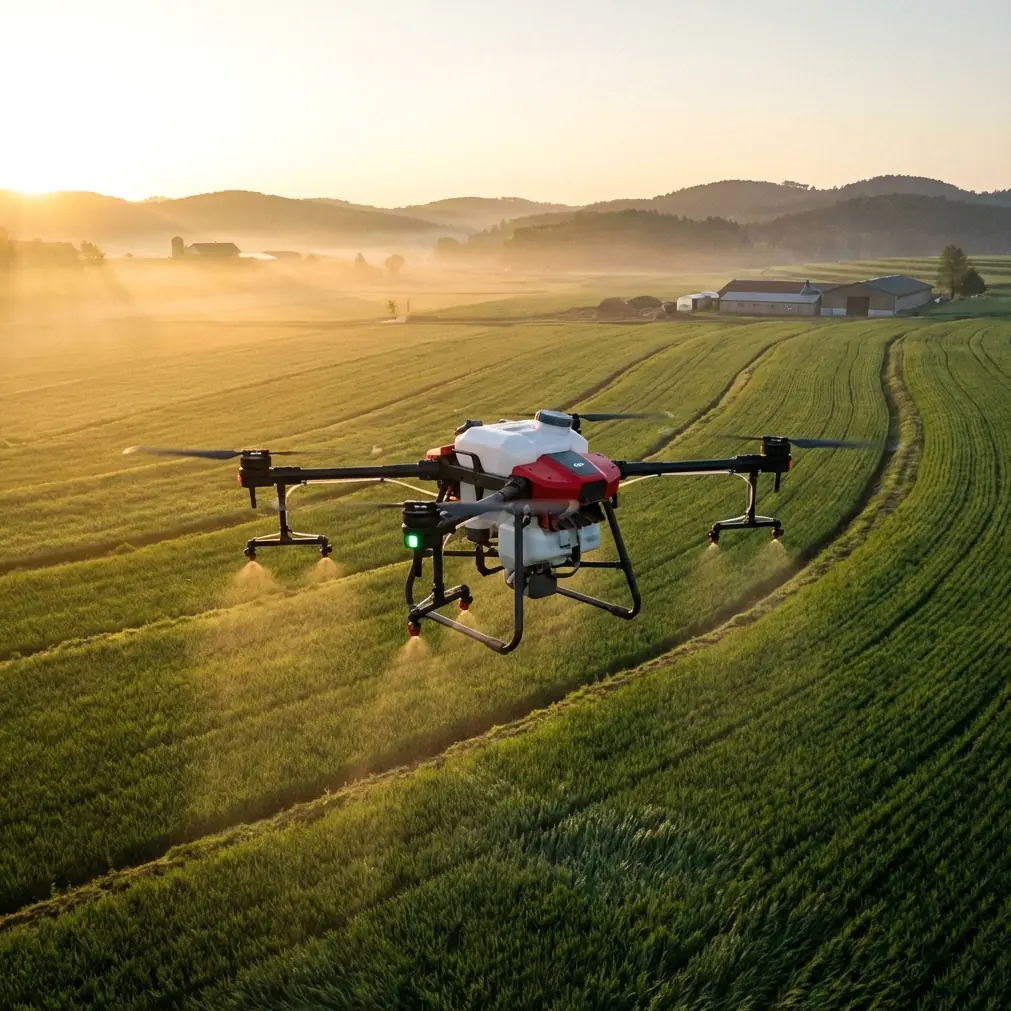
Agras T70P at High Altitude: Practical Setup Advice for Construction-Site Imaging
META: Expert how-to guidance for using the Agras T70P around high-altitude construction sites, with antenna placement, RTK discipline, weather awareness, and reliable field setup tips.
The Agras T70P is not marketed as a cinema platform, and that is exactly why many crews misjudge it on complex industrial jobs. On a high-altitude construction site, the aircraft’s real value is not aesthetic finesse. It is repeatability, stability, and disciplined positioning in ugly operating conditions: thin air, reflected glare, broken terrain, steel interference, and pressure to collect usable visual records before weather shifts.
If your brief is “film the site,” that sounds simple until you are standing on a mountain project road with gusts lifting dust off aggregate piles, a crane cutting through your radio path, and a pilot trying to maintain reliable control while the aircraft moves along a corridor bordered by concrete, rebar, and temporary structures. In that environment, the T70P should be treated less like a camera drone and more like a highly managed aerial work platform.
This matters because high-altitude construction imaging is rarely about one hero shot. It is about producing dependable visual coverage for progress tracking, slope review, haul-road verification, drainage checks, perimeter documentation, and dispute prevention. The operators who get clean results are usually the ones who borrow agricultural discipline: calibration habits, route planning, weather judgment, and exact antenna management.
Why the T70P demands a different filming mindset
The first mistake is assuming payload lifting ability automatically translates into imaging efficiency. It does not. A platform built for field operations brings strengths that are useful on construction jobs, but only when you respect the aircraft’s working logic.
The T70P’s operational character favors structured passes, wide-area coverage, and repeatable lines. That makes it surprisingly capable for documenting large elevated sites where roads, stockyards, retaining works, and cut-and-fill zones need to be captured consistently over time. Its real edge is not “cinematic smoothness.” It is the ability to revisit the same geometry with high positional confidence.
That is where centimeter precision and RTK discipline become central. On a site where embankments are being pushed out week by week, visual records only become decision-grade if each mission can be repeated from nearly the same spatial reference. A strong RTK fix rate is not a luxury detail. It is what separates anecdotal footage from documentation you can compare across dates.
If the aircraft is drifting, hesitating on fix quality, or compensating for poor link health, your visuals may still look acceptable to a casual observer. They will be much less useful for engineers, project managers, or claims teams trying to verify progress or detect change.
Start with the radio link, not the camera angle
For maximum range and cleaner control on high-altitude sites, antenna positioning deserves more attention than most crews give it. This is especially true in mountainous terrain where the aircraft may remain geographically close while still falling into partial radio shadow behind spoil heaps, scaffolding decks, tunnel portals, or stepped retaining walls.
The practical rule is simple: keep the control antennas broadside to the aircraft, not pointed at it like a spear. Most operators intuitively “aim” antennas at the drone. That often reduces link efficiency because the strongest radiation pattern is usually off the sides, not the tip. Think of the antenna face creating a usable field around the aircraft rather than a laser line.
On steep sites, the second mistake is standing too low. If your takeoff point sits in a depression or behind stacked material, the aircraft may lose a clean path to the controller as soon as it transitions behind a berm or concrete core. A small elevation gain for the pilot station can make a major difference. Even moving 10 to 20 meters laterally to clear a crane base or formwork stack can improve consistency more than any setting change.
A good field routine looks like this:
- Stand where you can see the widest portion of the mission envelope, not merely the launch pad.
- Keep your body from blocking the controller’s signal path.
- Rotate your torso with the aircraft rather than twisting the controller into awkward angles.
- Avoid operating directly beside steel containers, parked equipment, or temporary site power infrastructure.
- If the mission line runs along a long ridge or elevated haul road, place yourself near the midpoint instead of one extreme end whenever access allows.
Those habits matter because “maximum range” on paper means little if the real problem is multipath reflection or terrain masking. High-altitude jobs amplify both.
Use RTK like a survey tool, not a checkbox
A construction site is a bad place for lazy GNSS practices. Reinforcement steel, tower cranes, temporary offices, generators, and cut slopes all create conditions that can interrupt or degrade positional confidence. If you want the T70P to deliver useful repeat imagery, monitor RTK fix quality before the mission, during climb-out, and again when the aircraft reaches the far side of the site.
Crews often focus on whether RTK is “on.” That is not the right question. The right question is whether the aircraft is maintaining a stable fix rate through the whole profile of the mission. If the fix degrades near concrete cores or below ridgelines, your flight lines may not be as repeatable as the map suggests.
Operationally, this affects three things:
Frame-to-frame consistency
When you return for weekly or monthly capture, stable centimeter precision lets you reproduce viewpoints with much less manual correction.Boundary confidence
On active sites, edges shift fast. Excavation toes, storage pads, runoff channels, and access roads can change shape within days. Reliable positioning helps separate real site changes from flight-path variation.Safer automation near structures
If the aircraft’s positional confidence fluctuates around unfinished vertical elements, safety margins need to widen. That reduces efficiency and increases pilot workload.
Before launch, let the system settle. Do not arm the aircraft the moment numbers appear acceptable. Wait for stable lock behavior. On cold mornings at elevation, GNSS and link behavior can look fine for a minute, then wobble as the environment changes and the aircraft transitions into a different sky view.
Weather at altitude changes everything
High-altitude construction jobs punish operators who rely on ground-level intuition. Wind can be mild at the controller and rough above the cut face. Temperature shifts can alter battery behavior. Dust can degrade visibility and contaminate critical surfaces. The T70P is built for harsh field work, and that robustness matters here. Features associated with rugged outdoor use, such as an IPX6K-level protection profile, are not abstract spec-sheet trophies. They translate into less drama around spray, mud, road splash, and aggressive cleaning after dirty operations.
Even if you are filming rather than applying product, the site environment still behaves like an agricultural contamination problem. Fine particulates, moisture, and residue collect where you least want them. That is why post-mission inspection should be treated seriously. Look at arm joints, connectors, exposed surfaces, and the controller itself. High-altitude sites can cycle between damp morning air and abrasive midday dust in a single shift.
Wind also changes the meaning of swath width. In agricultural work, swath width is about coverage efficiency. For construction imaging, it becomes a planning concept: how much site can you document per pass while preserving detail and control margin? The temptation is to widen your capture pattern to finish quickly. At altitude, broader passes can increase correction workload and reduce visual consistency, especially when gusts push the aircraft off its ideal line near exposed edges.
A narrower, repeatable route usually produces better operational footage than one ambitious wide sweep.
Why spray-drift thinking helps even when you are not spraying
It sounds strange to bring up spray drift and nozzle calibration in a filming article, but the agricultural mindset is useful on industrial sites because it forces precision. Spray-drift awareness trains operators to respect wind direction, turbulence, and downwash interaction. Those same factors affect image clarity, dust disturbance, and controllability near stockpiles and loose surfaces.
If you launch too close to dry fines, aggregate screenings, or powdery cement residue, rotor wash can create a local haze that ruins visibility and contaminates the airframe. That is not just a housekeeping issue. It can make the first minutes of footage useless and add unnecessary risk if the aircraft has to transition immediately into a more confined section of the site.
Nozzle calibration offers another lesson. In crop operations, calibration is about matching output to target conditions. For site imaging, the equivalent is pre-mission standardization. Set your route spacing, altitude bands, hover points, and timing with the same discipline. If you change these parameters casually from one visit to the next, your footage becomes harder to compare and less valuable to stakeholders.
The common thread is this: consistent inputs produce comparable outputs.
Multispectral thinking without forcing the tool
Some teams are tempted to ask whether the T70P can stand in for specialized multispectral workflows. On a construction site, that question should be framed carefully. Multispectral data is useful when you need material differentiation, drainage pattern hints, vegetation intrusion tracking, or surface-condition analysis around spoil areas and environmental controls. But not every platform should be pushed into jobs better handled by a sensor stack designed for that purpose.
What is useful is adopting multispectral thinking as a planning habit. Ask what the imagery must reveal, not just what the aircraft can record. Do you need to show moisture accumulation near a retention basin? Erosion on a slope face? Encroachment along an access corridor? Thermal or spectral needs may be separate from your general T70P capture plan.
That clarity helps you use the T70P for what it does best on these jobs: stable, repeatable operational coverage across a large and difficult footprint.
A practical high-altitude filming workflow
For crews using the T70P on elevated construction projects, a dependable workflow usually looks like this:
1. Survey the RF environment first
Walk the site before launch. Identify cranes, steel laydown zones, containers, generators, substations, and retaining walls that could interfere with signal quality or block line of sight.
2. Choose the pilot position for link health
Do not launch from the nearest flat spot by habit. Launch from the position that gives the cleanest signal geometry across the full route.
3. Verify stable RTK behavior
Check for consistent fix performance before committing to automated or repeat-path work. If the fix quality is inconsistent, reduce ambition and increase separation margins.
4. Plan tighter passes than you think you need
In thin air and variable wind, conservative route design almost always saves time because it reduces correction and recapture.
5. Keep dust management in mind
Launch and recover away from loose fines where possible. Rotor wash can instantly degrade visibility and footage quality.
6. Standardize your repeat missions
Reuse the same altitude bands, headings, and anchor positions for weekly documentation. This is the easiest way to turn flight logs into evidence-quality progress records.
If your team needs a quick field checklist for antenna orientation and RTK troubleshooting, send the ops lead this setup note: high-altitude T70P support chat.
The real advantage on construction work
The strongest case for the Agras T70P on high-altitude construction sites is not style. It is operational reliability under pressure. When weather windows are short and the terrain is unforgiving, the aircraft rewards crews who think in systems: clean radio geometry, disciplined RTK habits, conservative route design, contamination control, and standardized mission repetition.
That combination is what makes footage useful after the flight is over. Engineers can compare phases with confidence. Site managers can spot drainage or access issues earlier. Documentation teams can build a cleaner historical record. And pilots spend less time improvising around preventable problems.
If you approach the T70P as a rugged aerial work platform rather than a generic filming machine, it becomes much easier to get dependable results on difficult mountain and high-altitude builds. The difference is rarely one dramatic adjustment. It is the accumulation of small professional choices: where you stand, how you orient the antennas, whether you wait for a stable RTK fix, how tightly you define your passes, and whether you treat environmental disturbance as a primary planning factor.
That is what separates footage that merely exists from footage that actually serves the project.
Ready for your own Agras T70P? Contact our team for expert consultation.