
Agras T70P in Windy Wildlife Operations: A Practical Field
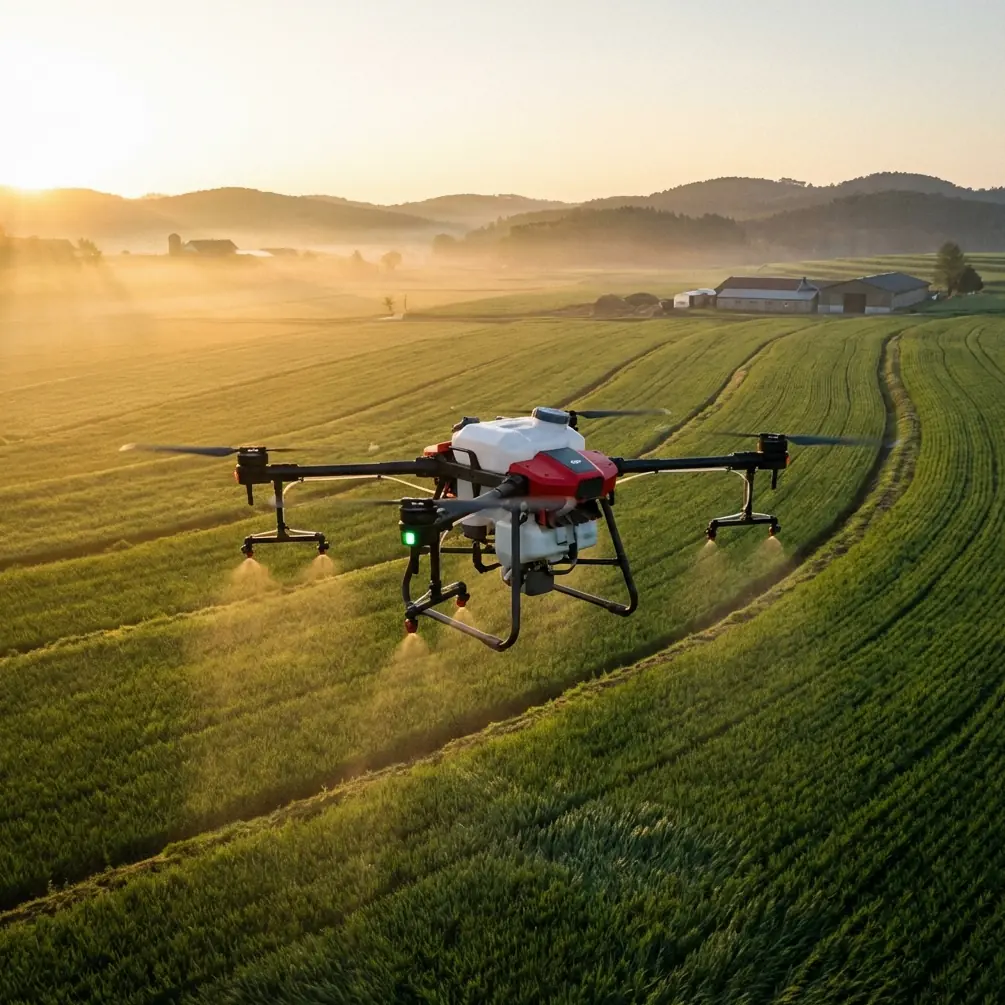
Agras T70P in Windy Wildlife Operations: A Practical Field Tutorial for Stable Delivery, Precision Flight, and Cleaner Application
META: Expert tutorial on Agras T70P best practices for windy wildlife operations, including antenna positioning, spray drift control, RTK fix stability, nozzle calibration, and safe range management.
Wildlife work rarely gives you laboratory conditions. Wind shifts across ridgelines, open grasslands create turbulence close to the canopy, and a mission that looks straightforward on paper can become unstable the moment the aircraft turns broadside to a gust. If you are using the Agras T70P in that environment, the aircraft’s raw capability only gets you halfway. The rest comes down to setup discipline, antenna placement, calibration quality, and a realistic understanding of what wind does to both navigation and payload behavior.
This tutorial is written for operators who need the T70P to perform reliably during wildlife-related field delivery in windy conditions. That may mean transporting biological material, dispersing feed or treatment, or carrying out targeted aerial application in support of habitat management. The exact mission can vary. The operating logic does not. In every case, the priorities are the same: hold a dependable link, protect placement accuracy, manage drift, and avoid introducing unnecessary risk to animals, crew, or terrain.
The Agras T70P sits in a class of aircraft where centimeter-level guidance and wide-area productivity matter. That is why terms like RTK fix rate, swath width, nozzle calibration, and spray drift are not side notes. They are the operational core. If you ignore them in windy wildlife work, the aircraft may still fly, but your outcomes will become inconsistent fast.
Start With Mission Fit, Not Just Aircraft Capability
The first question is not whether the T70P can carry out the task. It is whether the task, as planned, still makes sense once wind is factored in. Wildlife operations often take place in areas where access is limited and terrain is irregular. Those two factors increase the temptation to “make the aircraft solve it.” That is usually the wrong instinct.
Instead, break the mission into four variables:
- wind direction and gust spread
- intended drop or application accuracy
- link reliability across the working area
- animal sensitivity near the route or target zone
A windy mission that only requires coarse placement can remain practical. A windy mission that demands tight placement over a narrow corridor is a different matter entirely. The T70P’s precision systems help, but wind can still move droplets, influence deceleration, and affect how consistently the aircraft tracks a line after each turn.
If your task involves liquid application, drift becomes the first limiting factor. If it involves physical delivery, airframe stability and braking distance become more important. In both cases, the solution starts before takeoff.
Antenna Positioning: The Most Overlooked Range Multiplier
Let’s deal with the simplest field mistake first: poor antenna positioning at the ground station.
Operators often focus on battery condition, route planning, and tank loading while treating antenna orientation as a quick last step. In windy wildlife work, that shortcut can undermine the whole mission. Range and link consistency depend heavily on keeping the controller antennas properly oriented relative to the aircraft’s movement corridor. A strong link is not just about maximum distance. It is about maintaining a stable control and telemetry path when the aircraft yaws into gusts, drops behind vegetation margins, or flies low over undulating terrain.
For maximum effective range, set up where you have a clean line of sight across the actual work area, not just the launch spot. Then orient the antennas so their broadside faces the aircraft’s expected route rather than pointing the tips directly at it. This matters because the radiation pattern is strongest off the sides of the antenna, not the end. If you are running long parallel passes, adjust your stance or station placement so that the aircraft spends most of the mission inside that strongest coverage zone.
In windy conditions, this advice becomes even more valuable because the aircraft may crab into the wind or make corrective movements that alter its apparent aspect during flight. A marginal signal setup on a calm day might work. The same setup in gusting air can produce intermittent drops in confidence, delayed reactions, or forced conservatism in route execution.
Two practical habits improve results immediately:
- Keep the controller at chest level rather than low against the body, reducing signal blockage.
- Reposition the pilot station if terrain or tree lines create partial masking over the intended route.
If you are planning a longer wildlife corridor mission, it is often worth walking the edge of the area before launch and selecting the pilot position based on radio geometry, not convenience. That one decision can do more for real-world range than small tweaks made after the aircraft is already airborne. If your team needs a field checklist for communication setup, I recommend sharing one simple reference link such as this quick ops contact channel among crew before deployment so antenna and route decisions are aligned early.
RTK Fix Rate: Why Centimeter Precision Matters More in Wind
The T70P’s value in demanding fieldwork rises sharply when the RTK solution is stable. “Centimeter precision” sounds like a marketing phrase until you fly in wind over a target area where overlap, pass spacing, and return alignment actually matter. Then it becomes operationally tangible.
A weak or inconsistent RTK fix rate can show up as subtle lateral wandering, less repeatable line tracking, and greater uncertainty at the edges of each pass. In wildlife operations, that translates into wider error margins around sensitive zones, water sources, nesting areas, or exclusion strips. The problem is not only where the aircraft thinks it is. It is how that positional uncertainty compounds when the air mass itself is moving.
Here is the key point: wind already tries to push the aircraft off its ideal track. A high-quality RTK fix gives the flight controller a precise reference for correcting that push. If RTK stability degrades, the aircraft can still navigate, but the consistency of those corrections may decline. Over a broad treatment block, that can lead to uneven spacing. On a narrow delivery path, it can lead to accumulated placement error.
Before starting the mission, confirm that the RTK system has achieved a robust fix and monitor whether the fix rate remains steady throughout the setup phase. If the environment is creating repeated interruptions, solve that first. Do not assume the aircraft will simply “power through” with equivalent field accuracy.
Nozzle Calibration and Spray Drift: Small Errors Become Big Downwind
If your wildlife mission involves spraying rather than physical transport, windy conditions amplify every calibration mistake.
The T70P can deliver broad-area productivity, but swath width in real conditions is never just a menu value. Wind changes the effective distribution pattern. Droplet behavior changes. Edge deposition changes. The practical result is that the width you can safely and uniformly treat may be narrower than your calm-weather assumption.
Nozzle calibration is the foundation here. If flow output is off, the aircraft may still complete the route while applying the wrong amount across the block. Add wind, and the error becomes spatial as well as volumetric. One side of the swath may receive reduced coverage while the downwind edge drifts beyond the intended target.
A disciplined calibration routine should include:
- verifying each nozzle’s output consistency before the mission
- checking for partial blockage or wear that alters pattern shape
- matching droplet strategy to the wind profile, not just the product plan
- reassessing expected swath width instead of flying the widest possible setting
This is where many operators lose precision. They chase efficiency by maintaining a wide swath width in conditions that no longer support it. The aircraft covers ground quickly, but the application quality drops. In wildlife contexts, that is not a trivial inefficiency. It can affect habitat treatment success, target selectivity, and environmental exposure outside the intended zone.
If the air is moving enough that the plume visibly trails or the edge pattern looks asymmetrical, reduce your effective swath and fly accordingly. The T70P is powerful enough to keep work moving, but only if you resist the temptation to fly a paper specification when field conditions are telling a different story.
Flight Path Design for Wind: Don’t Let the Aircraft Fight Physics Alone
A good windy-weather route does not just connect waypoints. It reduces the number of situations where the aircraft must make large corrective moves under load.
For wildlife delivery or treatment work, plan your passes with the prevailing wind in mind. Whenever practical, structure lines so that the aircraft spends more time flying into or with the wind rather than taking repeated crosswind hits on every leg. Crosswind segments are where you are most likely to see track correction work harder, liquid distribution skew, and route stability degrade near turn entry and exit.
Turn zones deserve special attention. In gusty air, aggressive turns can briefly destabilize speed and height control, particularly when the aircraft is carrying a changing payload mass. Build enough buffer into the corners that the T70P can settle before the next working leg begins. This becomes even more important around sensitive wildlife boundaries, where you want predictable aircraft behavior rather than sharp, last-second corrections.
If your mission area includes uneven vegetation height or broken ground, maintain a conservative altitude strategy. Low flight can help with drift management, but only when terrain following remains confident and obstacle exposure is understood. Flying lower than conditions justify does not improve precision if turbulence near the surface is severe.
IPX6K and Field Reality: Weather Resistance Is Not a Free Pass
The T70P’s IPX6K rating is genuinely useful in field operations. It means the airframe is built to tolerate demanding washdown and exposure conditions better than lightly protected systems. That matters in agricultural and habitat-management environments where dust, residue, and wet contamination can quickly accumulate.
But IPX6K should be treated as resilience, not permission. Windy wildlife missions often coincide with variable moisture, drifting debris, and abrupt weather movement. Water resistance does not cancel the aerodynamic effects of rain bands or the visibility and traction issues they create for the ground crew. It also does not reduce the need for careful post-mission inspection of nozzles, connectors, landing gear interfaces, and moving surfaces.
Operational significance is straightforward: durability protects uptime, but it does not replace go/no-go judgment. If you are relying on the rating as a substitute for environmental discipline, you are already behind the aircraft.
Multispectral Support and Wildlife Decision-Making
The T70P conversation often centers on payload and application, but the mention of multispectral workflows matters in wildlife operations because it changes how you decide where to fly in the first place. If you are integrating multispectral mapping from a separate platform or prior survey, you can use that data to refine treatment boundaries, identify stressed vegetation, and avoid unnecessary passes over non-target zones.
That is especially valuable in windy conditions. The more precisely you define the true intervention area, the less time the T70P spends flying exposure-prone margins where drift, signal obstruction, or animal disturbance are more likely. Precision starts before the propellers spin. Good data narrows the problem.
A Practical Windy-Day Checklist for the Agras T70P
Before launch, ask these questions in order:
- Is the mission still appropriate for the current wind, or has accuracy demand exceeded conditions?
- Is the controller antenna placement optimized for the actual route, with clean line of sight?
- Is the RTK fix stable enough to support consistent centimeter-level positioning?
- Have nozzles been calibrated and inspected for balanced output?
- Has swath width been adjusted to match today’s drift risk instead of yesterday’s assumption?
- Are the route geometry and turns designed to minimize crosswind instability?
- Have wildlife sensitivity zones been buffered conservatively?
That sequence matters. Many crews reverse it. They start with route upload and payload prep, then try to troubleshoot precision after the aircraft is in the air. By then, you are solving setup errors at full operational cost.
What Good T70P Operation Looks Like in Wind
The best T70P operators in windy field conditions are rarely the fastest-looking crews on the ground. They are the crews whose flights appear uneventful because the difficult decisions were already made. Their controller link stays clean because they chose the right station location. Their pass spacing remains consistent because they waited for a proper RTK fix. Their application quality holds because they narrowed the swath when the air mass demanded it. Their outcomes look repeatable because they treated calibration and route design as mission-critical, not procedural filler.
That is the real lesson for wildlife delivery and treatment work with the Agras T70P. Wind does not automatically cancel the mission. It exposes the difference between aircraft capability and operational competence. The T70P gives you a strong platform: precise guidance, robust field design, and the potential for high-output work. But in windy conditions, those advantages only become real when the pilot builds the mission around signal geometry, calibration accuracy, and environmental restraint.
Ready for your own Agras T70P? Contact our team for expert consultation.