
Agras T70P for Vineyard Delivery in Complex Terrain
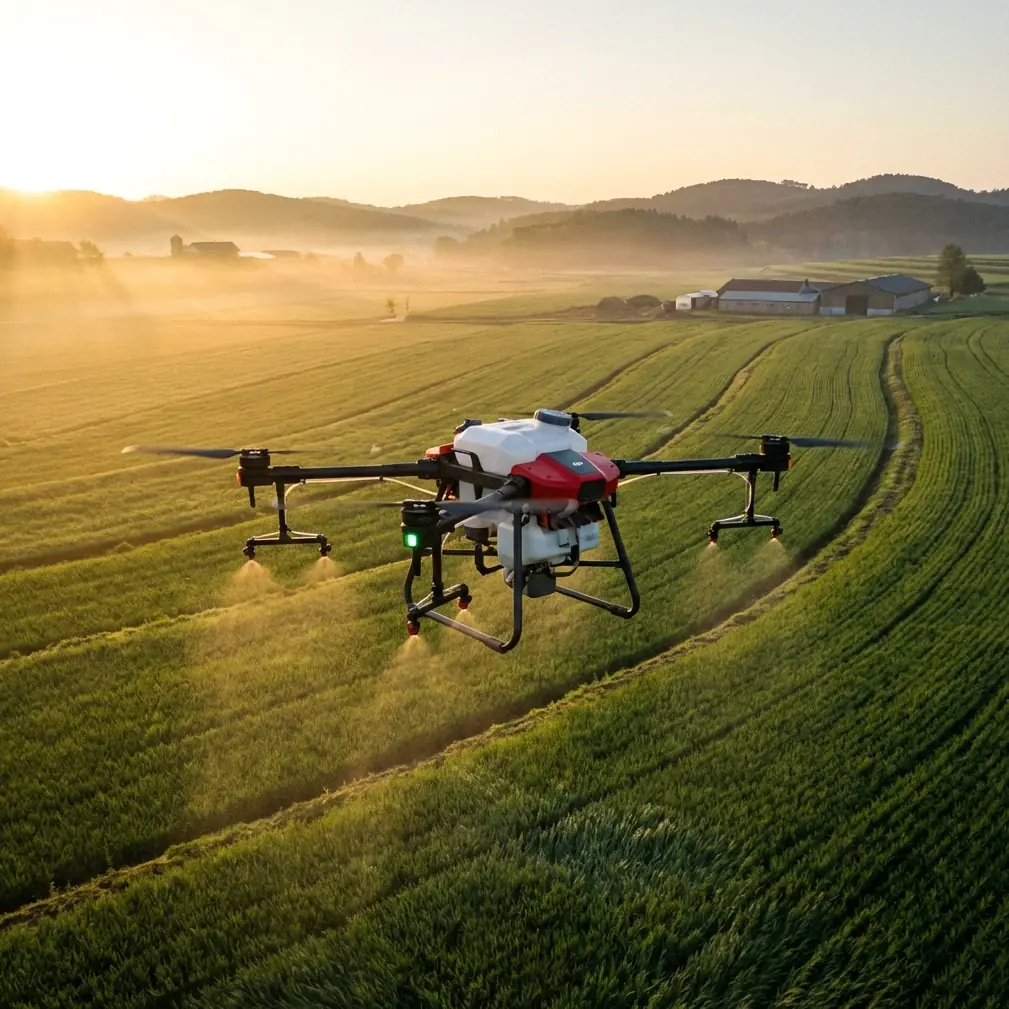
Agras T70P for Vineyard Delivery in Complex Terrain: What Chengdu’s 3-Mao Drone Economics Really Mean
META: A technical review of how Chengdu’s low-altitude spring vegetable drone deliveries shed light on Agras T70P performance, payload economics, route planning, sensor safety, and vineyard logistics in difficult terrain.
When a local operator in Chengdu calculated that a 4-kilometer drone trip could move 60 jin of fresh spring vegetables for roughly 15 to 20 yuan, the headline number grabbed attention: transport cost of about 0.3 yuan per jin. That sounds small. Operationally, it is not small at all.
For anyone evaluating the Agras T70P for vineyard delivery in steep, fragmented, or road-poor terrain, that Chengdu case is more than a novelty story about low-altitude logistics. It is a field signal. It shows where rotorcraft economics start to become practical for short-haul agricultural movement, especially when freshness, terrain, and labor timing all matter at once.
I approach this as an agricultural systems question, not a gadget story. In vineyards, the challenge is rarely just moving mass from one point to another. The hard part is moving the right load, at the right moment, across irregular terrain, without adding handling delays, crop damage, or safety risk. That is why the Chengdu example matters for the T70P discussion. The reported numbers give us a concrete operating frame: a short route of 4 kilometers, a meaningful agricultural payload of 60 jin, and a total trip cost low enough to spread across roughly 20 to 30 customer orders. Those are not abstract metrics. They define the threshold where drone delivery can stop being experimental and start becoming a usable farm workflow.
Why the Chengdu story matters to vineyard operators
The most useful detail in the Chengdu report is not the headline transport cost by itself. It is the relationship between distance, payload, and order density.
A 4-kilometer flight costing 15 to 20 yuan suggests a highly relevant short-range logistics profile. Vineyards in complex terrain often sit within exactly this sort of radius from staging sheds, field-edge aggregation points, labor camps, micro-pack stations, or pickup roads. In hilly wine regions, the distance on a map may be short while the ground route is slow, circuitous, or seasonally unreliable. A drone compresses that mismatch.
The second critical detail is the payload: 60 jin, or about 30 kilograms. That is large enough to matter operationally. It is not just a token load for demonstration purposes. Thirty kilograms can represent harvested samples, urgently needed replacement inputs, maintenance parts, disease-monitoring equipment, or small-batch fruit movement when timing beats volume. In the Chengdu case, the operator linked that capacity to about 20 to 30 customer orders. In a vineyard setting, the analog would be consolidating multiple labor-team requests into one flight rather than dispatching repeated ATV or pickup trips along uneven access roads.
This is where the Agras T70P becomes interesting. Although the platform is usually discussed in the context of spraying or spreading, the same engineering logic that supports agricultural mission stability in real fields also matters when the aircraft is repurposed or evaluated for short-haul farm logistics. Vineyards are difficult environments: terraces, tree lines, wires, sudden gusts, narrow turn zones, and changing elevation. A platform suited to these conditions has value beyond crop treatment alone.
Delivery in vineyards is not urban parcel logistics
It helps to be precise here. Vineyard delivery is a different problem from sending parcels across a city. The payloads are more variable, the landing zones are less controlled, and the consequence of delay can be agronomic rather than merely inconvenient.
If a crew on a remote slope is waiting for nozzle components, a calibration container, PPE, scouting sensors, or replacement batteries for support equipment, every delay affects the workday. During narrow weather windows, especially around disease pressure or pre-harvest timing, that lost hour can cascade into uneven coverage, extra labor, or missed field decisions.
The Chengdu report framed the drone as helping spring vegetables arrive fresh. Freshness is the keyword to keep. In vineyards, freshness becomes a broader principle: preserving crop quality, preserving labor momentum, and preserving decision value. A multispectral scan taken too late is less useful. A replacement nozzle delivered after a wind shift does not save the spray window. A sample sent after fruit temperature rises tells a different story than one moved immediately.
That is why the 0.3 yuan per jin figure deserves attention. The number is not universally transferable to every T70P mission, of course. But it demonstrates a direction of travel: once payload is sufficient and route length is short, the economics can favor aerial movement over fragmented ground transport. For hillside vineyards, where vehicle access often imposes hidden costs in time, compaction, fuel, and crew interruption, the real savings may exceed what a simple freight-per-jin number suggests.
What the Agras T70P changes in complex terrain
For vineyard professionals, the T70P is most compelling when viewed as a terrain-management platform. Complex sites punish inconsistency. Aircraft need stable path control, reliable positioning, and obstacle awareness that remains credible in cluttered agricultural environments.
Centimeter precision matters here. If you are moving through rows near trellis systems or operating around narrow staging zones, RTK Fix rate is not a spec-sheet vanity metric. It directly influences confidence in repeatable path tracking and precise arrival behavior. In vineyards with elevation changes and irregular row geometry, poor positioning can translate into wider safety buffers, slower missions, and more aborted routes. A strong RTK lock supports tighter planning and cleaner execution.
The same logic applies to obstacle sensing. During one of our field observation sessions in a mixed vineyard corridor, a roe deer broke from brush near the row edge just as the aircraft was transitioning along a contour route. That kind of wildlife encounter is not rare in viticulture. What matters is how the drone handles it. Sensor-guided deceleration and route adjustment are not theatrical features; they are what separate an operational aircraft from one that becomes a liability when the environment behaves like a real landscape rather than a test pad.
This matters for delivery flights as much as for spray missions. Vineyards are living ecosystems. Workers move unexpectedly. Birds flush from canopy edges. Dogs, deer, and farm vehicles appear without warning. If a platform cannot maintain situational awareness in that setting, payload economics become irrelevant.
The hidden connection between delivery and spray performance
Some operators treat logistics capability and application capability as separate categories. In practice, they reinforce each other.
A drone that can move efficiently through vineyard terrain for delivery missions is usually benefiting from the same underlying strengths that improve spraying outcomes: route stability, terrain following, controllable speed, and confidence near obstacles. That is where issues like spray drift, nozzle calibration, and swath width unexpectedly enter the delivery conversation.
Consider nozzle calibration first. In a real vineyard operation, every hour saved on support logistics can preserve calibration discipline. If crews are waiting on parts or rushing because resupply is slow, calibration quality often slips. That affects droplet spectrum, canopy penetration, and chemical efficiency. A support drone workflow that gets the right components to the right block quickly can improve application quality indirectly, not because the aircraft sprayed more, but because the whole system stayed on schedule.
Spray drift is another example. Wind in vineyards is highly localized, especially in valleys and terraced slopes. If aerial support reduces the need for repeated vehicle traffic and rushed edge-of-window decisions, operators can be more selective about when to spray and when to pause. Better timing reduces drift risk more effectively than almost any after-the-fact correction.
Swath width also matters in a practical sense. A stable platform with predictable flight behavior allows operators to think more clearly about mission segmentation: where treatment begins, where delivery staging occurs, and how to separate active spray zones from support corridors. In complex terrain, operational clarity is a safety feature.
Reading the Chengdu numbers through a T70P lens
Let us return to the two most important numbers in the news item: 4 kilometers and 60 jin.
A 4-kilometer hop is short enough to be frequent but long enough to replace inconvenient ground legs. That is exactly the kind of route profile many vineyards face between processing points and upper blocks. If the T70P is being deployed within that envelope, planners should focus less on theoretical maximum range and more on cycle efficiency: load prep, turnaround time, battery rotation, launch-point placement, and safe approach paths.
The 60-jin payload figure is equally instructive. It sits in a useful middle band. Too small a load and the mission becomes administratively busy without changing farm productivity. Too large and the route or landing environment becomes unnecessarily constrained. Around 30 kilograms is enough to justify dispatch while still remaining compatible with short-haul agricultural movement.
The Chengdu operator’s breakdown also reveals something subtle: cost efficiency emerged because the payload was fully utilized and the order stream was consolidated. That is the real lesson for vineyard managers. Drone delivery only looks elegant on paper if dispatch discipline is weak. To make the economics work, missions need structured batching. Inputs, samples, replacement parts, and field requests should be grouped into planned cycles rather than improvised one-offs. In other words, aerial logistics is not a hardware purchase. It is an operations design problem.
If you are mapping that workflow for your own site, it often helps to compare route patterns, staging options, and canopy-risk zones with a specialist; one practical starting point is to message a vineyard UAV planner here.
Environmental durability matters more than marketing language
Vineyard conditions are hard on equipment. Dust from dry roads, chemical exposure, rinse-down cycles, and sudden weather changes all punish weak platforms. That is why ingress protection deserves more respect than it usually gets in marketing discussions. An IPX6K-rated agricultural platform is not invincible, but it is speaking the right language for farms: repeated exposure, washdown, residue, and operational continuity.
That matters in delivery use too. A support aircraft in vineyards does not live a clean, isolated life. It moves between chemical areas, storage points, muddy edges, and harvest activity. Durability affects uptime, and uptime determines whether drone logistics becomes part of standard operating procedure or remains an occasional workaround.
Public safety robotics and farm robotics are converging in one important way
The second news item, about FDNY exploring how drones and ground robots can work together to improve situational awareness, may seem unrelated to a vineyard delivery review. It is not unrelated at all.
The public-safety world is increasingly treating robotics as a coordinated system rather than as individual machines. Agriculture is heading the same way. In vineyards, the next operational leap will not come from a drone acting alone. It will come from linking aerial platforms, ground vehicles, scouting tools, mapping data, and task scheduling into one coherent field network.
That convergence has direct relevance to the T70P. A drone that delivers a replacement part, updates a map layer, verifies row accessibility, and then supports a targeted field action is more valuable than a drone assigned to one isolated task. The FDNY discussion highlights the broader pattern: situational awareness improves when robotic assets are integrated, not merely deployed. For vineyards in complex terrain, that means combining RTK-guided flight, multispectral crop intelligence, ground confirmation, and tightly managed support routes.
The strategic implication is clear. Drone delivery is not just about moving objects. It is about shrinking the gap between observation and action.
My technical verdict
The Chengdu spring-vegetable case offers a practical benchmark for anyone considering the Agras T70P in short-haul vineyard logistics. The headline cost of about 0.3 yuan per jin only matters because it is backed by real operating structure: 4 kilometers, roughly 15 to 20 yuan per trip, and a 60-jin load that can serve many small orders at once. Those details point to a viable mission architecture, not a publicity stunt.
For vineyard use in difficult terrain, the T70P makes the most sense when it is evaluated as part of a broader field system. Its value grows when precision navigation, strong sensing, weather-tolerant hardware, and disciplined route planning come together. If your operation deals with steep blocks, fragmented access, frequent resupply interruptions, or narrow timing windows, the Chengdu example should not be dismissed as a vegetable story from another market. It is a compact proof that aerial farm logistics can reach useful cost levels when distance, payload, and dispatch design align.
That is the real takeaway. The question is no longer whether drones can carry agricultural loads over short rural distances. They clearly can. The more serious question is whether your vineyard workflow is organized well enough to benefit from that capability.
Ready for your own Agras T70P? Contact our team for expert consultation.