
How to Deliver Vineyard Sprays with the Agras T70P
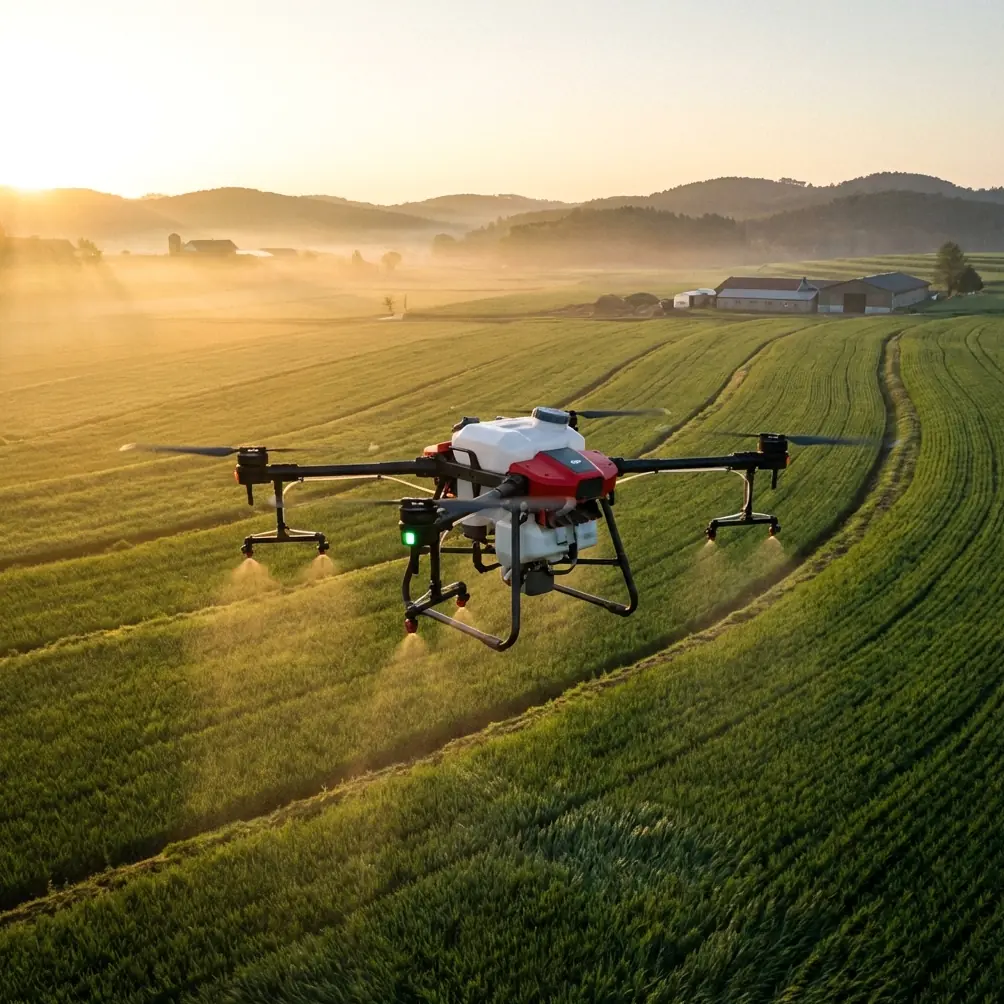
How to Deliver Vineyard Sprays with the Agras T70P
META: Master low-light vineyard spraying with the Agras T70P drone. Learn calibration, flight planning, and safety protocols for precision agriculture results.
TL;DR
- Pre-flight lens and sensor cleaning prevents navigation failures during critical low-light vineyard operations
- The T70P's 70L payload capacity and RTK centimeter precision enable efficient row-by-row coverage
- Proper nozzle calibration reduces spray drift by up to 90% in sensitive vineyard environments
- IPX6K-rated construction allows operation in early morning dew conditions common during optimal spray windows
Vineyard managers lose thousands annually to mistimed pesticide applications. The Agras T70P solves this with dual atomization systems and obstacle avoidance that function reliably during dawn and dusk spray windows—here's exactly how to configure and deploy it for your operation.
Why Low-Light Vineyard Spraying Demands Specialized Equipment
Traditional ground-based sprayers struggle in vineyards. Narrow row spacing, delicate canopy structures, and the need for early morning or late evening applications create operational bottlenecks.
The optimal spray window for most vineyard treatments falls between 5:00 AM and 9:00 AM or 6:00 PM and 8:00 PM. During these periods, temperatures remain below 25°C, wind speeds stay under 3 m/s, and humidity levels support proper droplet adhesion.
The T70P addresses these constraints through several integrated systems:
- Binocular vision sensors with active illumination for low-light navigation
- Spherical radar providing 360-degree obstacle detection up to 50 meters
- RTK positioning maintaining centimeter precision regardless of lighting conditions
- Terrain-following capability adjusting altitude across sloped vineyard blocks
Pre-Flight Safety Protocol: The Cleaning Step That Prevents Failures
Before any vineyard mission, complete this critical sensor maintenance routine. Residue from previous spray operations accumulates on optical surfaces, degrading the T70P's perception systems.
Essential Cleaning Checklist
Step 1: Inspect the FPV camera lens
Remove any chemical residue using a microfiber cloth dampened with isopropyl alcohol. Even minor deposits reduce image clarity for the remote pilot.
Step 2: Clean binocular vision sensors
The front, rear, and downward-facing stereo cameras require spotless surfaces. Use compressed air first, then wipe gently in circular motions.
Step 3: Verify radar dome condition
The spherical radar housing must remain free of dried spray material. Contamination here directly impacts obstacle detection range.
Step 4: Check spray system nozzles
Inspect each of the 16 nozzles for blockages. A single clogged nozzle creates uneven coverage patterns visible in crop health imagery.
Pro Tip: Schedule cleaning immediately after each flight session, not before the next one. Dried chemical residue becomes significantly harder to remove after 24 hours and may require specialized solvents that risk damaging sensor coatings.
Configuring the T70P for Vineyard-Specific Operations
Vineyard spraying differs fundamentally from broadacre applications. The T70P's configuration must reflect these unique requirements.
Swath Width Optimization
Standard agricultural drones often default to maximum swath width for efficiency. Vineyards demand the opposite approach.
Set the T70P's effective swath width to match your row spacing minus 0.5 meters on each side. For typical 2.5-meter row spacing, configure a 1.5-meter swath width.
This conservative setting prevents:
- Spray drift onto adjacent rows during treatment timing variations
- Chemical contact with non-target varieties in mixed blocks
- Overspray onto access roads and headlands
Nozzle Calibration for Canopy Penetration
The T70P supports both centrifugal atomization and pressure nozzles. For vineyard applications, centrifugal atomization typically delivers superior results.
Configure droplet size based on target pest or disease:
| Target Application | Droplet Size (μm) | Flow Rate (L/min) | Flight Speed (m/s) |
|---|---|---|---|
| Fungicide coverage | 150-250 | 6.0-8.0 | 3.0-4.0 |
| Insecticide contact | 100-150 | 4.0-6.0 | 4.0-5.0 |
| Growth regulators | 200-300 | 5.0-7.0 | 3.0-4.0 |
| Foliar nutrients | 250-350 | 7.0-9.0 | 4.0-5.0 |
RTK Base Station Positioning
Achieving consistent RTK Fix rate above 95% requires proper base station placement. Position the base station:
- On the highest accessible point within 2 kilometers of the spray zone
- Away from metal structures, power lines, and dense tree cover
- With clear sky visibility above 15 degrees elevation in all directions
Expert Insight: Many operators underestimate RTK signal degradation in vineyard valleys. Install the base station on the uphill side of sloped blocks. Signal multipath from hillsides opposite the base station causes position jumps that create visible spray gaps.
Flight Planning for Low-Light Conditions
The T70P's autonomous flight capabilities require specific configuration for dawn and dusk operations.
Mission Parameter Settings
Altitude: Maintain 2.5-3.0 meters above canopy height. The terrain-following system references the ground surface, so add your trellis height to this value.
Speed: Reduce standard flight speed by 20-30% during low-light operations. This allows obstacle avoidance systems additional processing time.
Overlap: Increase route overlap to 30% rather than the standard 20%. Reduced visibility makes manual gap identification difficult during flight.
Battery Management Strategy
Low-light operations often coincide with cooler temperatures that reduce battery performance. The T70P's 30,000 mAh intelligent batteries deliver approximately 15% less capacity at 10°C compared to 25°C.
Plan missions assuming:
- 55 minutes maximum flight time per battery set in warm conditions
- 45 minutes maximum flight time in cool morning conditions
- 10-minute reserve for return-to-home and landing
Spray Drift Mitigation Techniques
Vineyard environments present unique drift challenges. Adjacent blocks may contain different varieties at varying growth stages, organic certification boundaries, or residential properties.
Environmental Monitoring
Before each flight, verify:
- Wind speed below 3 m/s at canopy height
- Wind direction parallel to rows rather than perpendicular
- Temperature-humidity differential supporting droplet survival
- No thermal inversions trapping spray material
Buffer Zone Configuration
Program the T70P's geofencing to enforce automatic buffer zones:
- 10 meters from property boundaries
- 15 meters from water features
- 20 meters from residential structures
- 30 meters from organic certification boundaries
The aircraft automatically reduces speed and adjusts spray output when approaching these zones.
Multispectral Integration for Precision Application
Advanced vineyard operations combine the T70P with multispectral imaging data for variable-rate application.
Workflow Integration
Phase 1: Conduct multispectral survey flights during midday when lighting conditions support consistent imagery.
Phase 2: Process imagery to generate NDVI or other relevant vegetation indices identifying stress zones.
Phase 3: Convert stress maps to variable-rate prescription files compatible with the T70P's flight planning software.
Phase 4: Execute spray missions with automatic rate adjustment based on prescription zones.
This approach typically reduces chemical usage by 15-25% while improving treatment efficacy in problem areas.
Common Mistakes to Avoid
Skipping sensor calibration after transport: Vehicle vibration during transport to vineyard sites can shift sensor alignment. Run the IMU calibration routine before the first flight of each day.
Ignoring dew accumulation on aircraft: Early morning operations expose the T70P to significant moisture. While the IPX6K rating protects against water ingress, wet propeller surfaces reduce thrust efficiency by up to 8%.
Overloading for efficiency: The temptation to maximize payload reduces flight stability in the confined spaces between vineyard rows. Limit loads to 60 kg for precision work requiring tight turns at row ends.
Neglecting post-flight data review: The T70P logs detailed spray records including GPS coordinates, flow rates, and environmental conditions. Review this data to identify coverage gaps before they become visible crop damage.
Using broadacre flight patterns: Vineyard rows require linear flight paths aligned with trellis orientation. Serpentine patterns designed for open fields create inconsistent coverage at row transitions.
Frequently Asked Questions
Can the T70P operate in complete darkness?
The T70P requires minimal ambient light for its vision-based obstacle avoidance systems. Operations are reliable during civil twilight—approximately 30 minutes before sunrise and after sunset. True nighttime operation requires supplemental lighting and regulatory approval in most jurisdictions.
How does row-end turning affect spray coverage?
The T70P's flight controller automatically suspends spray output during turns exceeding 45 degrees. This prevents over-application at headlands. Configure turn radius based on row spacing—tighter rows require slower approach speeds to execute clean turns within available space.
What maintenance schedule supports daily vineyard operations?
For intensive spray seasons, perform full sensor cleaning after every 3 flight hours. Replace nozzle filters weekly during active use. Conduct propeller inspections daily, looking for edge damage from vegetation contact. Schedule professional motor and ESC inspection after every 100 flight hours.
Vineyard spraying with the Agras T70P transforms labor-intensive ground operations into precise, efficient aerial applications. The combination of substantial payload capacity, centimeter-accurate positioning, and robust low-light capability addresses the specific challenges vineyard managers face during critical treatment windows.
Success depends on proper configuration, disciplined pre-flight protocols, and continuous attention to environmental conditions. Master these elements, and the T70P becomes an indispensable tool for modern vineyard management.
Ready for your own Agras T70P? Contact our team for expert consultation.