
Agras T70P for Coastal Delivery Venues: What Actually
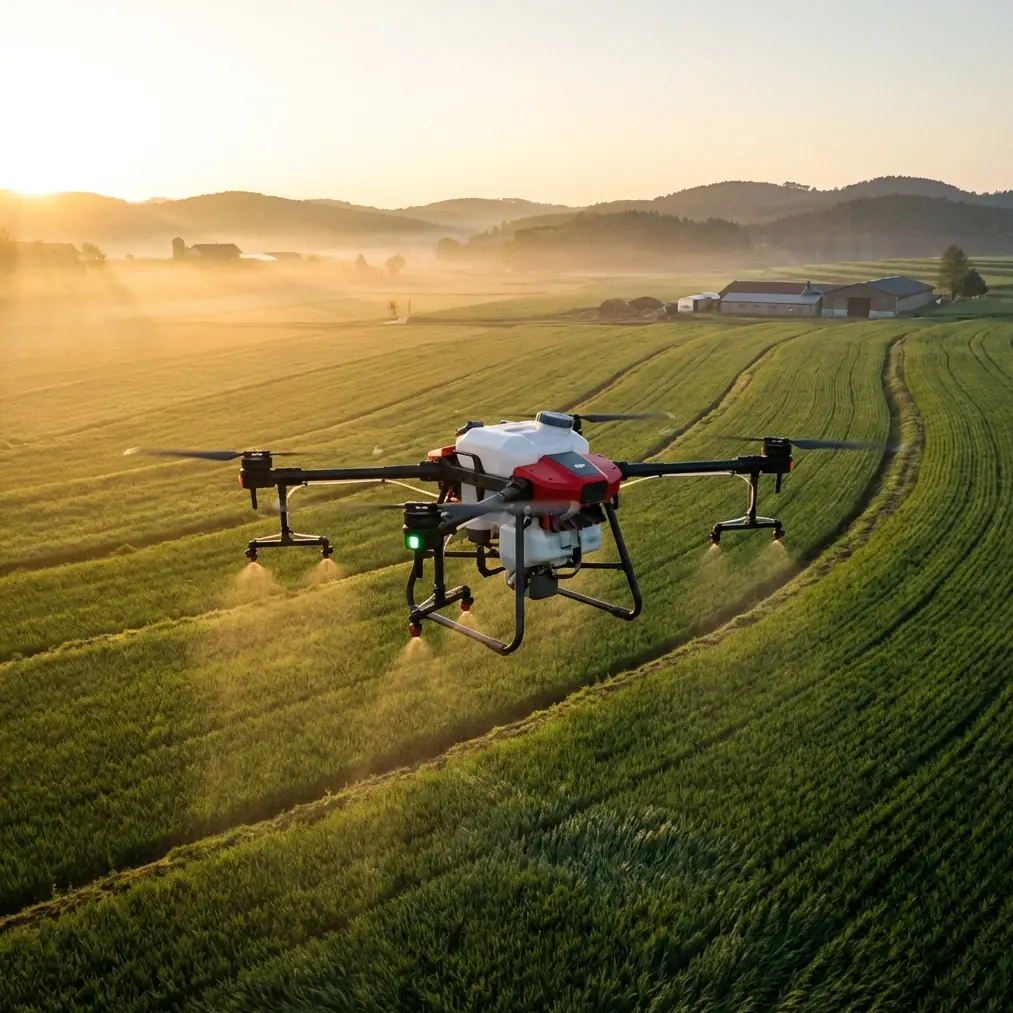
Agras T70P for Coastal Delivery Venues: What Actually Matters in Wind, Salt, and Tight Turnarounds
META: A practical expert analysis of the Agras T70P for coastal delivery venues, covering spray drift, nozzle calibration, RTK fix rate, centimeter precision, swath width, IPX6K durability, and why these details matter in real operations.
Coastal operations punish agricultural drones in ways inland buyers often underestimate. Wind is less predictable. Salt hangs in the air and settles into hinges, connectors, pumps, and exposed fasteners. Open spaces look forgiving from a distance, yet delivery venues near shorelines often include green belts, ornamental plantings, service roads, staging zones, and narrow operating windows shaped by weather and foot traffic.
That is exactly where the Agras T70P becomes interesting.
Not because every manufacturer now claims precision, automation, and efficiency. Those words have lost their edge. The T70P deserves a closer look because the features that matter at the coast are not the flashy ones on a brochure. They are the operational traits that keep output stable when conditions are messy: high positioning reliability, predictable swath behavior in crosswinds, robust liquid delivery control, and a platform that can tolerate washdown and exposure better than lighter-duty systems.
For coastal delivery venues, the real question is not whether the aircraft can fly. Most modern platforms can. The question is whether it can maintain repeatable treatment quality, stay on task when GNSS conditions fluctuate around structures, and survive a punishing environment without becoming a maintenance burden.
The core problem at coastal venues
A delivery venue in a coastal setting is rarely just one thing. It might include landscaped grounds, perimeter vegetation, access lanes, drainage edges, or managed turf around logistics or event infrastructure. The operator may need to handle plant health programs, mosquito mitigation in approved civilian contexts, dust control in selected zones, or precision spreading and spraying over areas that cannot tolerate overshoot.
The challenge is that the coast amplifies small errors.
A few centimeters of lateral deviation may not matter in a broad inland field. Around paths, curbs, decorative beds, vehicle lanes, and pedestrian-adjacent spaces, it matters a lot. A slight drift issue that looks minor in calm conditions can become visible off-target deposition when sea breeze picks up. A drone that tolerates routine freshwater conditions may age quickly when exposed to salt-laden air and repeated cleaning cycles.
This is where the T70P’s value should be judged: not in abstract capacity claims, but in whether it helps the operator control three things better than many competitors:
- Placement accuracy
- Liquid application consistency
- Environmental durability
Those are the variables that turn a technically capable drone into a dependable working tool.
Why centimeter precision is not a luxury here
The T70P is most compelling when paired with workflows that depend on strong RTK performance and centimeter-level positioning. On paper, “centimeter precision” sounds like a familiar marketing phrase. At a coastal delivery venue, it is operationally significant for a simple reason: the aircraft often works close to boundaries that matter.
That could mean:
- landscaped edges beside paved routes
- treatment zones near loading areas
- repeated passes over narrow strips
- accurate return to previously mapped lanes without overlap creep
A high RTK fix rate matters because these jobs often involve structural interference, reflective surfaces, intermittent wind shifts, and route designs that require confidence in every pass. When RTK reliability is weak, operators compensate with wider safety margins, slower mission tempo, or extra overlap. All three reduce productivity.
The T70P’s positioning stack, when properly set up, gives operators a better shot at maintaining consistent path discipline. That affects more than route aesthetics. It influences chemical efficiency, reduces unnecessary retreatment, and lowers the odds of uneven coverage along boundaries.
Compared with less refined systems that drift into “good enough” navigation under pressure, the T70P is better suited to venues where the line between treated and untreated area must stay controlled. In other words, precision here is not a premium extra. It is how you avoid turning a coastal site into a rework schedule.
Spray drift is the coastal issue no one should downplay
If there is one topic that should sit at the center of any T70P discussion for shoreline-adjacent work, it is spray drift.
Coastal air movement is rarely static. You can start a mission in manageable conditions and see localized crosswind changes halfway through a route. Open water, paved surfaces, walls, and low buildings all distort airflow. That means the aircraft’s spraying system has to do more than dispense liquid. It has to support a controllable droplet profile and stable application pattern in conditions that are not always cooperative.
This is where nozzle calibration becomes more than routine maintenance. It is one of the most practical habits an operator can build around the T70P. Poor calibration changes flow uniformity, and once that combines with gusty lateral airflow, swath quality degrades quickly. You get streaking, underdose sections, edge drift, or the false impression that the aircraft is underperforming when the real issue is setup discipline.
The better argument for the T70P versus many competing platforms is not that wind suddenly stops mattering. It does not. The stronger case is that the T70P gives professional operators a platform worthy of serious calibration and mission tuning. If your nozzle output is verified, droplet strategy is matched to the task, and your route spacing reflects actual conditions, the aircraft can deliver more reliable outcomes than smaller or less stable systems that become visibly unsettled in maritime airflow.
Swath width is another detail that should not be treated casually. A wider swath can raise productivity, but at the coast, chasing width without respecting drift and deposition quality is a mistake. The T70P’s operational strength is that it can support productive coverage while still allowing the operator to tune route spacing based on real field conditions instead of theoretical maximums. That flexibility is where experienced crews separate themselves from checkbox buyers.
IPX6K is not a side note in a salt-heavy environment
One detail that deserves more attention than it usually gets is IPX6K protection.
For inland users, ingress protection often gets filed under durability trivia. For coastal venues, it is a meaningful part of lifecycle management. Salt residue and frequent cleaning are facts of life. Equipment exposed to sea air often needs more regular washdown, more careful inspection, and better protection around vulnerable points.
An IPX6K-rated platform is not invincible, and it does not remove the need for disciplined post-operation cleaning. But it does signal that the aircraft is designed with harsher exposure in mind. That matters when the drone is operating near mist, spray, damp loading areas, or airborne salt particles that can work their way into sensitive assemblies over time.
This is one area where the T70P can legitimately stand taller than some competitors that look fine on a specification sheet but reveal their weaknesses after months of use in tough environments. In coastal operations, durability is not just about surviving a day. It is about preserving mission readiness week after week without corrosion and contamination driving downtime.
A drone that requires excessive caution every time it is rinsed or cleaned becomes expensive in labor, even if no one writes that cost down directly. The T70P’s protection level gives operators a more realistic platform for real-world coastal maintenance routines.
Delivery venues need clean workflows, not just powerful hardware
The phrase “delivering venues in coastal” suggests a mixed-use operational environment, and that changes how the T70P should be evaluated. This is not broadacre farming in a uniform inland block. These venues often demand coordination with schedules, landscaping standards, and visual expectations.
That makes the aircraft’s precision ecosystem more valuable than raw payload rhetoric.
A drone can be large and powerful and still be awkward in a venue that needs:
- fast setup
- predictable route execution
- minimal off-target deposition
- clean recordkeeping
- repeatability across recurring maintenance cycles
The T70P fits better in this kind of environment when the team uses it as a controlled application platform rather than a brute-force machine. The right workflow starts with route planning, RTK confidence checks, and nozzle calibration before the mission ever begins. Then it shifts to live wind awareness, conservative swath assumptions in exposed zones, and post-mission review of coverage consistency.
That is the practical difference between operators who get dependable results and those who blame the aircraft for preventable variability.
If your team is building a site-specific operating procedure for a shoreline venue and wants to talk through setup details, mission design, or calibration strategy, a direct line like this Agras T70P planning contact can be useful before deployment.
Where the T70P can genuinely outclass rivals
Many rival agricultural drones compete on headline metrics. Bigger number. Bigger promise. Bigger assumption that field conditions are simple.
The T70P’s advantage is more mature than that.
It excels when the operating environment exposes the gap between advertised performance and controllable performance. Coastal venues do exactly that. They reward aircraft that combine robust environmental protection, precise navigation, and application consistency. They punish systems that look efficient only under ideal conditions.
Three areas stand out:
1. Better suitability for boundary-sensitive work
Centimeter precision and a strong RTK-based workflow matter more at venues with roads, edges, and mixed-use zones than they do in open-field monocrop applications. The T70P is better positioned for those scenarios than drones that are acceptable in broad open areas but less convincing around tight operational boundaries.
2. Greater resilience in washdown-heavy service routines
IPX6K is not glamorous, but coastal operators know exactly why it matters. A platform that tolerates demanding cleaning practices and wet exposure with more confidence has a practical edge over competitors that feel delicate after repeated service cycles.
3. More professional application control when drift risk is real
With proper nozzle calibration and sensible swath width management, the T70P supports disciplined spraying in a way that less stable or less refined platforms often do not. The aircraft will not override poor decisions, but it gives a skilled operator a better toolset for maintaining quality under pressure.
That distinction is worth underlining. The T70P is not “better” merely because it is newer or larger. It is better in the hands of operators who understand that performance comes from the interaction between aircraft stability, liquid system setup, route design, and environmental awareness.
A note on multispectral expectations
Some buyers looking at sophisticated venue management also ask about multispectral workflows. That is a useful concept in site intelligence, but it should be handled realistically in the T70P conversation. The more relevant question is not whether the platform sits inside a broad precision-ag ecosystem, but how the resulting data translates into actual treatment accuracy on the ground.
For coastal venues, multispectral analysis can help identify stress variation, irrigation irregularities, or vegetation health trends in managed landscapes. Yet the output still depends on execution. If diagnosis says one zone needs intervention and the drone cannot place that intervention with consistency, the value chain breaks.
That is why the T70P’s strongest story is not sensing alone. It is actionability. If you know where the problem sits, the aircraft’s centimeter precision, RTK reliability, and tuned spray system help convert that knowledge into precise fieldwork.
The academic view: why systems thinking wins
From an academic operations perspective, the T70P should be seen as a systems platform. Dr. Sarah Chen’s style of analysis would likely focus less on isolated specifications and more on how each one affects field outcomes.
Take these two details together:
- RTK fix rate
- Nozzle calibration
One is a navigation issue. The other is an application issue. In practice, they are linked. A perfect route with poor flow consistency still produces uneven deposition. A perfectly calibrated spray system with weak positioning still creates overlap and misses. The T70P’s value appears when both are managed together.
Add IPX6K into that picture, and the operational significance becomes clearer. A coastal site demands repeated use, repeated cleaning, and repeated precision. If the platform degrades under environmental stress, the quality chain breaks over time. Durability supports accuracy just as much as electronics do.
That is the right way to evaluate this aircraft. Not as a collection of independent features, but as a machine whose usefulness depends on how well those features hold together in a difficult venue.
What buyers and operators should ask before deployment
Before assigning the T70P to a coastal delivery venue, ask questions that reveal operational truth:
- How stable is the RTK solution across the actual site, not just in open-sky test conditions?
- Has nozzle calibration been verified for the intended application rate and droplet objective?
- Is the planned swath width based on real wind behavior at the venue?
- What cleaning and corrosion-prevention routine will be followed after salt exposure?
- Are route boundaries designed for centimeter precision, or padded to compensate for uncertainty?
If the answers are strong, the T70P is not just capable. It becomes highly credible for serious commercial work near the coast.
That is the difference with this model. It is not merely an agricultural drone adapted to a harsh setting. In the right hands, it becomes a controlled, repeatable application platform for environments where sloppy execution is exposed quickly.
Ready for your own Agras T70P? Contact our team for expert consultation.