
How to Deliver to Remote Venues with the T70P
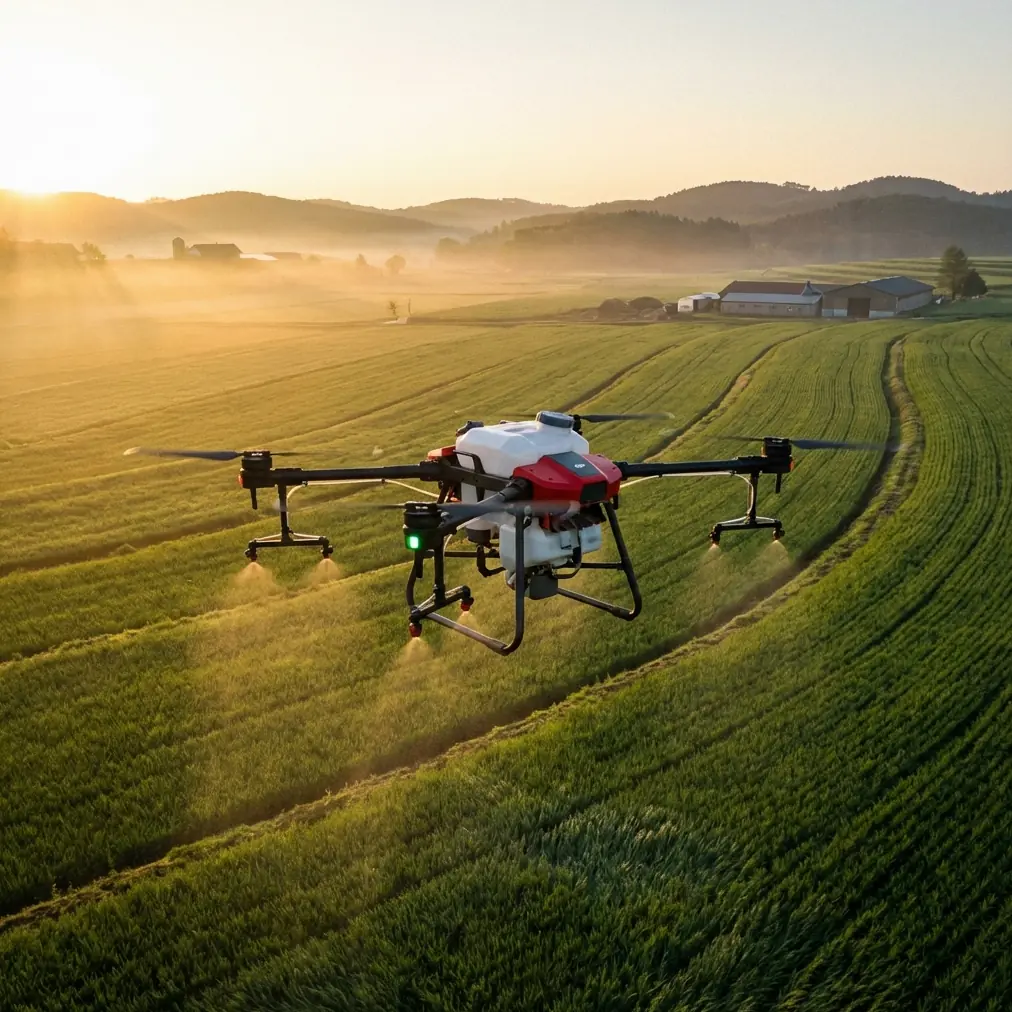
How to Deliver to Remote Venues with the T70P
META: Discover how the Agras T70P enables reliable payload delivery to remote venues with centimeter precision, RTK guidance, and rugged IPX6K durability.
TL;DR
- The Agras T70P supports heavy payload delivery to remote and hard-to-reach venues with centimeter precision via its dual RTK GNSS system.
- Proper antenna positioning is the single most critical factor in achieving maximum communication range and consistent RTK Fix rate across rugged terrain.
- With an IPX6K-rated airframe and intelligent route planning, the T70P handles adverse weather and complex topography that ground logistics simply cannot.
- This technical review breaks down configuration, antenna strategy, and operational best practices for remote delivery missions.
Why Remote Venue Delivery Demands a Purpose-Built Drone
Getting supplies, equipment, or agricultural inputs to remote venues—mountain lodges, island event sites, off-grid farms, construction staging areas—has always been a logistical nightmare. Traditional ground transport is slow, expensive, and sometimes physically impossible. Helicopter charters are cost-prohibitive for regular runs. The DJI Agras T70P changes this equation entirely, offering a platform originally engineered for precision agriculture that translates remarkably well to heavy-payload delivery across challenging landscapes. This review covers exactly how to configure and operate it for that purpose.
I'm Marcus Rodriguez, a drone operations consultant who has spent the last three years helping logistics teams, event companies, and agricultural cooperatives deploy the Agras platform for deliveries that conventional methods can't economically serve. What follows is a detailed technical breakdown based on real-world field deployments.
Understanding the Agras T70P Platform for Delivery
Core Specifications That Matter for Logistics
The T70P wasn't designed as a delivery drone. It was designed as an agricultural workhorse—and that's precisely what makes it exceptional for remote venue delivery. Agricultural drones must carry heavy loads, fly precisely defined routes, resist harsh weather, and operate reliably day after day. Delivery missions demand the exact same qualities.
Key specifications relevant to delivery operations:
- Maximum takeoff weight: approximately 117 kg with full payload
- Spray tank capacity: 70 liters (repurposable as a cargo bay with third-party mounting solutions)
- Flight time under load: approximately 12 minutes at maximum payload, extending significantly with lighter cargo
- Operating wind resistance: up to 8 m/s sustained
- Protection rating: IPX6K—fully resistant to high-pressure water jets, meaning rain, mist, and coastal spray are non-issues
- Hovering precision: ±10 cm horizontal with RTK engaged
The Agricultural-to-Delivery Crossover
The T70P's swath width control system, originally designed to manage spray drift and ensure even coverage across crop rows, provides an unexpected benefit for delivery work. The same sensors and algorithms that manage nozzle calibration and spray pattern consistency also enable extraordinarily stable hover and precise waypoint adherence—exactly what you need when lowering a payload onto a narrow platform at an alpine venue.
Expert Insight: The T70P's spray system framework gives you a built-in payload release mechanism that many dedicated delivery drones lack. By adapting the nozzle calibration port with a mechanical release actuator, you can create a reliable drop system without modifying the flight controller firmware. This keeps your aircraft within manufacturer warranty parameters.
Antenna Positioning: The Key to Maximum Range
This is the section that will save your operation. I've seen more remote delivery missions fail due to poor antenna setup than any other single factor—including weather, payload rigging, and battery management combined.
Ground Station Antenna Placement
The T70P communicates via DJI's OcuSync-based transmission system, and its effective range is heavily influenced by the line-of-sight quality between the remote controller and the aircraft. At remote venues, terrain obstruction is your primary enemy.
Follow these rules:
- Elevate the controller antenna at least 3 meters above surrounding terrain using a tripod or vehicle-mounted mast. Every meter of elevation you gain at the ground station translates to roughly 200-400 meters of additional usable range in hilly terrain.
- Orient the flat face of the controller antennas toward the aircraft's flight path, not the tips. The radiation pattern is strongest perpendicular to the antenna body.
- Avoid positioning near metal structures, vehicles, or power lines. RF reflection creates multipath interference that degrades signal quality even when signal strength appears adequate.
- Use a secondary monitor via HDMI output so you can position the controller optimally without needing to stand next to it for visual reference.
RTK Base Station Positioning
For centimeter precision landing at a remote venue, RTK corrections are non-negotiable. The T70P supports both network RTK (NTRIP) and local base station RTK. In remote areas, cellular coverage for NTRIP is often unavailable, so a local base station is the reliable choice.
- Place the RTK base station on stable, level ground with a clear 360-degree sky view above 15 degrees elevation.
- Allow at least 5 minutes for convergence before launching. Rushing this step is the number one cause of poor RTK Fix rate during flight.
- Log the base station coordinates and reuse them across multiple delivery runs to the same venue for consistent landing accuracy.
Pro Tip: If you're delivering to the same remote venue repeatedly, install a permanent survey marker at both the launch site and the landing zone. This eliminates base station convergence time on subsequent visits and guarantees your RTK Fix rate stays above 98% from the moment of takeoff.
Mission Planning for Remote Delivery
Route Configuration
The T70P's DJI Agras Smart Controller allows you to pre-program delivery routes with multiple waypoints. For remote venue delivery, your route design should account for:
- Terrain following: Enable the terrain awareness module and upload a DEM (Digital Elevation Model) of your flight corridor. The T70P's downward-facing radar provides real-time altitude adjustment, but a pre-loaded DEM adds a critical safety layer in mountainous terrain.
- Altitude buffer: Maintain a minimum of 30 meters AGL (above ground level) over all terrain features. In mountain environments, unexpected updrafts near ridgelines can push the aircraft into terrain if margins are too thin.
- Return-to-home altitude: Set this above the highest terrain obstacle between the delivery point and the launch site. This is a common and potentially catastrophic oversight.
Payload Rigging Best Practices
Since the T70P's tank system serves as the primary cargo mounting point, payload rigging requires careful attention:
- Center of gravity: Keep the payload CG within 5 cm of the airframe's geometric center. Off-center loads create yaw oscillation that degrades GPS accuracy and increases power consumption.
- Secure attachment: Use load-rated carabiners and aviation-grade webbing, not improvised straps. The T70P's vibration profile during flight will loosen anything that isn't positively locked.
- Weight verification: Weigh every payload on a calibrated scale before flight. Overloading by even 2-3 kg beyond the rated capacity can reduce flight time by 15-20%, potentially stranding the aircraft short of its destination.
Technical Comparison: T70P vs. Alternative Delivery Platforms
| Feature | Agras T70P | Generic Delivery Drone A | Generic Delivery Drone B |
|---|---|---|---|
| Max Payload Capacity | ~50 kg effective cargo | 15-20 kg | 25-30 kg |
| RTK Precision | ±10 cm horizontal | ±50 cm (GPS only) | ±20 cm |
| Weather Resistance | IPX6K rated | IP43 | IP54 |
| Wind Resistance | 8 m/s sustained | 5 m/s | 6 m/s |
| Multispectral Sensor Support | Yes (add-on) | No | Limited |
| Obstacle Avoidance | Dual binocular + radar | Front camera only | Binocular front/rear |
| Swath Width Control | Built-in (agriculture) | N/A | N/A |
| Terrain Following | Radar + DEM fusion | Barometric only | Radar |
The T70P's agricultural heritage gives it a durability and payload advantage that purpose-built delivery drones in this class struggle to match. The IPX6K rating alone eliminates an enormous number of weather-related mission cancellations.
Leveraging Multispectral Capabilities for Site Assessment
An underappreciated advantage of the T70P platform is its compatibility with multispectral imaging payloads. Before committing to a delivery route to a new remote venue, you can fly a survey mission with a multispectral camera to:
- Assess vegetation density and identify safe landing zones
- Map terrain features that may not appear on outdated topographic charts
- Detect water features, soft ground, or unstable surfaces at the delivery point
- Build high-resolution orthomosaic maps for precise future mission planning
This dual-use capability—surveying and delivery on the same platform—dramatically reduces the total cost of remote venue operations.
Common Mistakes to Avoid
1. Skipping the RTK convergence wait. Launching before the base station achieves full convergence results in degraded position accuracy that compounds over distance. You'll see the RTK Fix rate drop below 90%, and your landing precision can degrade from centimeters to meters—unacceptable when delivering to a confined venue platform.
2. Ignoring antenna orientation during flight. Many operators set up their antenna correctly at launch and then reposition themselves during flight, inadvertently rotating the controller. Maintain antenna orientation discipline throughout the entire mission.
3. Using a single battery strategy. Always carry a minimum of three full battery sets for each delivery mission. Remote operations offer no opportunity to recharge, and cold temperatures at altitude can reduce battery capacity by 10-25%.
4. Neglecting wind gradient analysis. Surface wind at your launch site may be calm while conditions at delivery altitude or at the venue location are dramatically different. Use a portable anemometer at elevation, or launch a small scouting drone first to assess conditions along the route.
5. Failing to brief venue personnel. The T70P is a large, loud agricultural drone. People at the delivery venue must know exactly when it's arriving, where it's landing, and how to stay clear. Rotor wash from the T70P is significant—it was designed for spray drift management, which means it moves serious air.
Frequently Asked Questions
Can the Agras T70P legally be used for delivery operations?
Regulations vary by jurisdiction. In most countries, using an agricultural drone for delivery requires additional operational approvals beyond a standard agricultural exemption. You'll typically need a waiver for beyond-visual-line-of-sight (BVLOS) operations and potentially cargo-specific authorization. Consult your national aviation authority and work with a certified operations consultant to secure the correct permits before your first mission.
How does the T70P handle GPS signal loss in mountain valleys?
The T70P's dual GNSS receiver (GPS + GLONASS/BeiDou) provides redundancy, but deep valleys can still degrade satellite geometry. The aircraft will automatically switch to ATTI mode if satellite lock drops below safe thresholds, maintaining altitude and orientation via its IMU and barometric sensors. Pre-planning your route to avoid the deepest signal shadows—and ensuring your RTK Fix rate is solid before entering challenging terrain—minimizes this risk. The onboard multispectral vision system also aids in position holding when satellite signals weaken.
What maintenance schedule should I follow for regular delivery operations?
For delivery missions, follow DJI's agricultural maintenance intervals as a baseline but increase inspection frequency for the propulsion system. Check propeller condition before every flight, inspect motor bearings every 50 flight hours, and replace the vibration dampeners on the payload mount every 100 hours. The IPX6K sealing should be inspected and re-greased at the gasket points every 200 hours or after any saltwater exposure. Keep detailed logs—remote delivery operations stress the airframe differently than flat-field agricultural spraying, and early detection of wear patterns will prevent in-flight failures.
Ready for your own Agras T70P? Contact our team for expert consultation.