
Agras T70P at High-Altitude Solar Farms: A Field Case Study
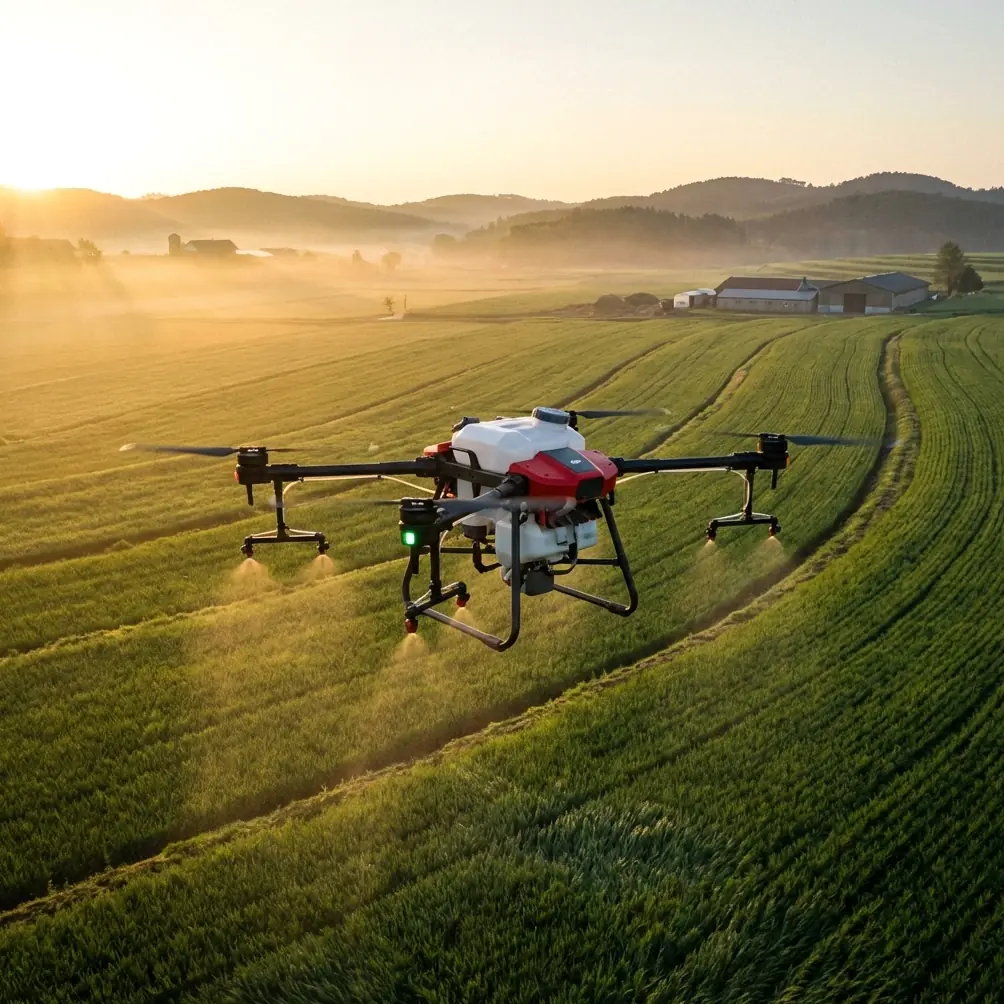
Agras T70P at High-Altitude Solar Farms: A Field Case Study on Flight Height, Control Discipline, and Calibration
META: A practical case study on using the Agras T70P around high-altitude solar farms, with expert insight on flight altitude, control reliability, calibration discipline, and why precision workflow matters.
High-altitude solar farms create an unusual operating environment for any UAV team. The site is wide, repetitive, reflective, and often exposed. Rows of panels can distort visual judgment, wind can build fast over open terrain, and distance management becomes more than a comfort issue. It becomes the line between a smooth mission and an unreliable one.
That is exactly where the Agras T70P deserves a more serious discussion.
Most articles about this aircraft drift into broad claims about productivity. That misses the real question for solar-farm operators and service providers: how should the T70P actually be flown, checked, and managed when the job site sits at elevation and mission consistency matters more than marketing language?
My view, after advising operators in demanding civilian environments, is simple. On high-altitude solar farm work, the T70P should be treated less like a generic big drone and more like a tightly managed aerial platform whose success depends on three things working together: disciplined flight altitude, dependable ground control, and rigorous sensor calibration.
Why high-altitude solar farms are harder than they look
A solar farm seems visually straightforward from the ground. The geometry is orderly. Access lanes are predictable. Obstructions may appear limited. In practice, though, the environment puts pressure on navigation and mission repeatability.
Panel arrays create long stretches of visually similar terrain. When the landscape repeats, pilots can lose positional intuition faster than expected. Add altitude and the weather window narrows. Wind exposure changes from one ridge or terrace to the next. If the mission includes liquid application, cleaning-related operations, vegetation management, or data collection over infrastructure corridors, flight height becomes a primary operational variable rather than a simple setting.
That matters for the T70P because large-platform performance only pays off when the aircraft stays stable, aligned, and connected to a coherent ground workflow.
The flight altitude question: lower is often smarter around panels
The most useful advice I give for this scenario is not flashy: do not default to flying higher just because the site is expansive.
At high-altitude solar farms, optimal flight altitude is usually the lowest safe height that preserves obstacle clearance, stable tracking, and the required operational quality for the task. That sounds obvious, but many crews still over-fly. They assume extra height buys safety. Around solar infrastructure, that can reduce precision instead of improving it.
If the T70P is being used for spray-related vegetation management near panel rows, excessive altitude tends to increase drift exposure. Even a capable aircraft cannot change the physics of droplets moving through crosswind over open reflective ground. Lower, controlled passes generally improve placement and reduce the chance of material moving off target. That directly affects spray drift, nozzle calibration outcomes, and the consistency of swath width across uneven terrain.
The same thinking applies to inspection-style workflows. If the aircraft is carrying payload configurations or adjunct sensing strategies intended to support site assessment, climbing too high weakens the value of centimeter-level positioning and reduces the practical benefit of a strong RTK fix rate. Precision is not just about where the drone is on a map. It is about whether the aircraft is holding the right relationship to the asset.
So what is the best altitude? There is no honest universal number. The correct answer depends on terrain relief, row spacing, local wind, panel tilt, and mission type. But the principle is firm: on a high-altitude solar site, the T70P should usually be flown at the minimum safe and task-effective altitude, not at the maximum visually comfortable one.
Ground control is not a side issue
One reference point from training-oriented UAV systems is surprisingly relevant here. In the TT drone documentation, the ground control system is described as the core element used to monitor flight attitude, work state, task planning, route planning, image display, and command transmission. That sounds basic, but it captures something many field teams forget under schedule pressure: a drone mission is not just airborne performance. It is an information loop.
The same source also notes that operators may modify flight paths from the ground end and, in special cases, switch to direct manual control. Operationally, that matters a great deal for the T70P at a solar farm.
Why? Because high-altitude infrastructure sites rarely reward rigid mission habits. You may launch with a planned route, then find gusting conditions at one end of the array, maintenance crews in an access lane, or reflective interference that changes how visually comfortable the pass feels. A capable aircraft is valuable, but only if the team on the ground can interpret parameters quickly and adjust the route without confusion.
This is why I push crews to treat the ground station workflow as part of mission safety and quality, not admin overhead. If your control discipline is weak, the T70P’s capabilities are underused. If your route-editing and pilot override process is clear, the aircraft becomes much more practical in real solar-farm conditions.
There is another training fact worth borrowing. The TT reference recommends keeping that platform within 50 meters of the ground end because it uses WiFi for short-range image transmission, and flying too far can degrade the link or even break connection with the controller or computer. The T70P is not that educational platform and should not be judged by those same link limits. Still, the operational lesson is valuable: link quality is never abstract. Distance, terrain, and environmental conditions directly affect the usefulness of live data and command responsiveness.
For a high-altitude solar farm mission, that means crews should not plan from map scale alone. They should think in terms of control quality. Even on a more advanced system, keeping the aircraft close enough for strong situational oversight and decisive intervention often leads to cleaner execution than stretching every sortie to the edge of practical control comfort.
Calibration errors show up fast on repetitive terrain
The most overlooked source material in this discussion is the compass calibration reference. It lays out several triggers for recalibration: after new firmware is installed, after the flight controller or GPS has been removed or reassembled, or when the aircraft starts circling or wandering during position hold. For solar-farm work, every one of those triggers should be taken seriously.
Repetitive environments expose navigation sloppiness. If the aircraft is not behaving cleanly, the geometry of panel rows makes it obvious. A machine that drifts, yaws oddly, or fails to hold line will not simply look untidy. It can compromise application quality, mapping integrity, or safe spacing around infrastructure.
The calibration document contains two details operators should remember.
First, calibration should be performed in an area with as little interference as possible, and the flight controller and GPS must be firmly fixed before calibration starts. That has direct relevance on solar sites. Do not calibrate beside vehicles, metal structures, or dense equipment yards and then assume the result is trustworthy. High-altitude solar farms can contain plenty of metallic clutter near service areas. Walk away from interference before you begin.
Second, the procedure requires rotating through six faces: front, back, left, right, top, and bottom, each oriented downward toward the ground for a few seconds. That sounds procedural, but the significance is operational. Incomplete or rushed calibration creates bad assumptions inside the navigation stack. Then teams blame wind, terrain, or software when the real issue was a poor setup routine.
The same source notes that the first compass value normally falls within ±250, where older expectations were often within ±150 due to changes in calibration algorithms in newer ground station and firmware logic. That detail matters because technicians still sometimes evaluate results using outdated thresholds. On a T70P workflow, especially one tied to high-precision route consistency, modern calibration interpretation should follow current platform logic rather than habits built on older systems.
What this means for RTK and centimeter precision
Solar farms reward repeatability. If the mission calls for tightly controlled routes, narrow margins near infrastructure, or data products that benefit from consistent track alignment, centimeter precision is only meaningful when the whole stack is healthy.
This is where RTK fix rate enters the conversation. Teams tend to mention RTK as if it solves everything by itself. It does not. A stable fix rate is part of the answer, but not the whole answer. If the aircraft is flying too high for the task, if the pilot is accepting marginal drift conditions, or if compass and positioning hardware were not properly checked after maintenance or firmware changes, you can still end up with poor results that a spec sheet cannot rescue.
The smarter approach is layered:
- Verify mechanical integrity after any disassembly.
- Recalibrate when the workflow clearly calls for it.
- Confirm navigation behavior before committing to full-array runs.
- Use RTK to refine execution, not to excuse sloppy preparation.
When those steps are respected, the T70P can better deliver the kind of controlled pathing that large solar sites demand.
Payload thinking: the platform matters, but so does what you ask it to carry
One interesting detail from the TT educational reference is that UAV airframes can support very different payloads depending on mission type, including cameras, lidar, infrared devices, and other sensors. It even describes a small educational craft with six mounting studs for expansion modules and third-party sensors. That is not directly about the T70P, but the lesson translates well.
Solar-farm operators often make a mistake at the planning stage. They talk about the aircraft before they define the mission output. Do you need vegetation control? Visual inspection support? Thermal-oriented workflows? Supplemental multispectral assessment of surrounding land conditions? A route design that works for one mission profile may be wrong for another.
For example, if the goal is infrastructure-adjacent application work, nozzle calibration and swath width discipline become central. If the goal is condition assessment, altitude and line spacing should be optimized for image usefulness, not simply coverage speed. The T70P should be configured and flown according to the output requirement, not according to a generalized idea of “big drone efficiency.”
A practical field model for the T70P on elevated solar sites
If I were setting a standard operating pattern for this scenario, it would look like this:
Start with calibration discipline, especially if firmware has changed or hardware has been disturbed. Perform that work away from interference and do not rush the six-face process.
Then establish a short test segment over a non-critical section of the site. Watch line hold, heading stability, and route behavior closely. If the aircraft shows any tendency to wander or circle, stop and resolve it before scaling up.
Next, choose flight altitude conservatively. On spray-related work, prioritize drift control and target placement over broad aerial comfort. On inspection or sensing work, prioritize data quality and positional relationship to the panel rows. Lower safe altitude usually improves both.
Finally, keep the ground control role active. Monitor live parameters, be ready to revise pathing, and avoid treating preplanned missions as untouchable. A solar farm is orderly on paper, but field reality changes by the hour.
If you want to compare your site constraints or operating assumptions with someone who has worked through similar deployment logic, you can message the project desk here: https://wa.me/85255379740
The real takeaway
The Agras T70P is best understood on high-altitude solar farms not as a generic heavy-duty drone, but as a precision work platform that rewards disciplined operation. The biggest gains do not come from flying farther or higher. They come from making the aircraft easier to trust.
That trust is built on details.
A strong ground-control loop matters because route changes and direct manual intervention are sometimes necessary. Calibration matters because even small navigation errors become obvious across repetitive panel geometry. And flight altitude matters because lower, task-appropriate passes usually deliver better control of drift, alignment, and usable output than inflated stand-off heights.
Those are not glamorous points. They are the reasons a mission works.
Ready for your own Agras T70P? Contact our team for expert consultation.