
Agras T70P in Windy Solar-Farm Corridors
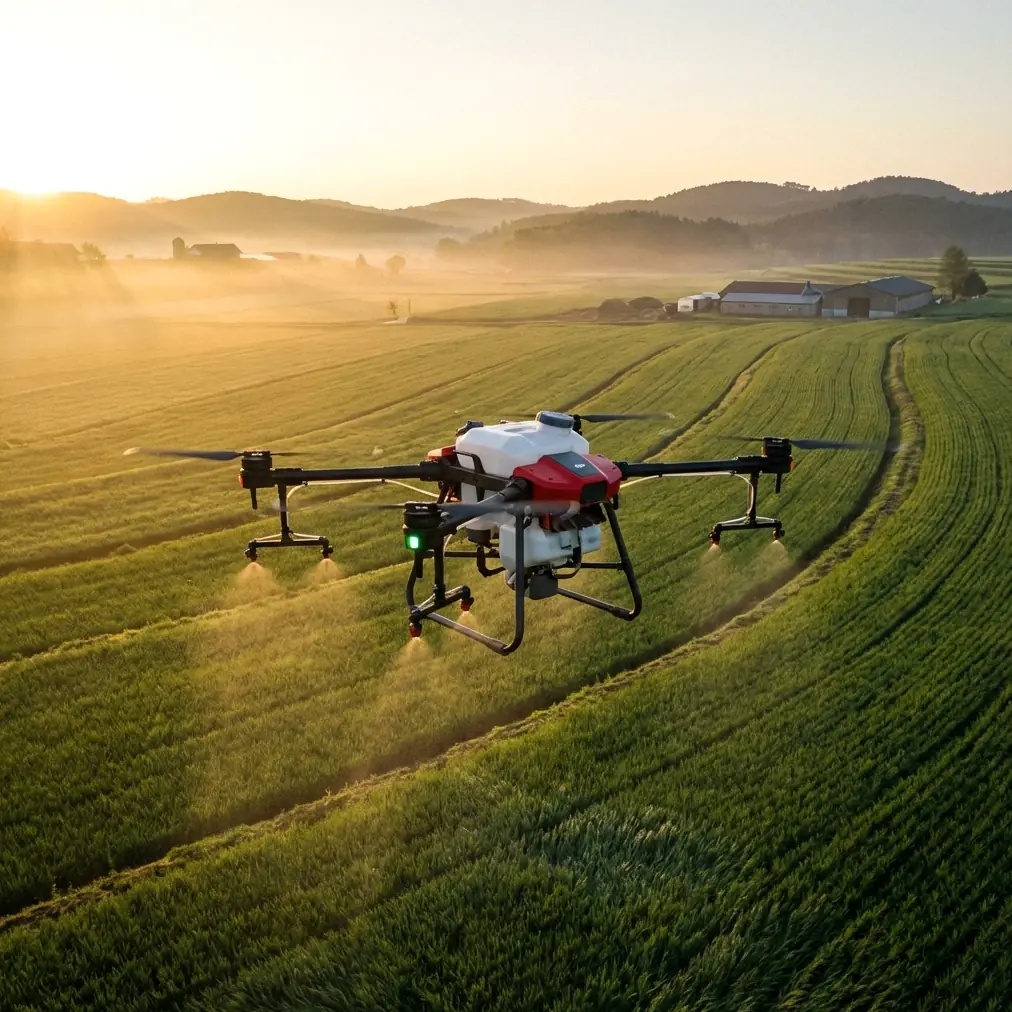
Agras T70P in Windy Solar-Farm Corridors: A Field Case Study on Precision, Battery Planning, and Crop-Sensing Workflow
META: A field-led Agras T70P case study for windy solar-farm operations, covering battery management, centimeter-level workflow discipline, hyperspectral crop insight, and safe image capture for agricultural missions.
The most interesting thing about the Agras T70P is not a spec sheet line. It is what happens when a machine built for agricultural productivity gets pushed into awkward, high-interference environments where workflow discipline matters as much as airframe capability.
One of those environments is the modern solar farm.
Large solar arrays create wind funnels. They interrupt line of sight. They introduce repeating geometry that can confuse less organized field teams. And when the land around or beneath the panels is managed as agricultural groundcover, trial plot area, or vegetation-control acreage, the aircraft is no longer just “spraying a field.” It is operating in a corridor system where precision, route awareness, battery timing, and data capture all have to work together.
That is where the Agras T70P becomes a systems tool rather than a single-purpose drone.
Why the solar-farm setting changes the way you fly
Wind around solar infrastructure behaves differently from wind in open cropland. It accelerates through gaps, drops suddenly near panel edges, and can produce local turbulence during low-altitude passes. For an Agras T70P operator, that matters for three reasons.
First, spray drift risk rises quickly when the wind is being channeled instead of flowing uniformly. A nozzle setup that behaves predictably in an open block may not behave the same way between long rows of panels.
Second, route geometry becomes less forgiving. Repetitive lanes tempt pilots to focus too much on coverage and not enough on obstacle perspective. The field guidance from the ArcGIS integrated collection workflow is useful here: before reaching the sampling plot, the aircraft camera should point forward and downward so the operator can observe obstacles along the route. That sounds simple, but in solar farms it is operationally significant. You need visual context ahead, not just directly below, because panel supports, maintenance fencing, and service pathways compress your recovery options.
Third, low-altitude maneuvering discipline matters more than raw flight confidence. The same ArcGIS workflow notes that when a pilot arrives above a target plot, the camera can be switched to a vertical 90-degree downward orientation and the aircraft should descend straight down for sample-point capture. Just as critical, it warns against horizontal movement at low altitude during that phase to reduce collision risk. In a solar-farm corridor, that point is gold. Side-slip corrections that feel harmless in open farmland can become expensive mistakes around steel posts and panel edges.
The Agras T70P, in other words, should be flown here with a surveyor’s restraint, not a racer’s instincts.
The part most teams underestimate: battery choreography
Field teams like to talk about payload, swath width, and RTK fix rate. Those matter. But in mixed agricultural and infrastructure-adjacent work, battery choreography often determines whether the mission stays clean.
The most practical reference in the source material is not glamorous at all: one sample plot’s automatic orthomosaic acquisition consumed one battery, while manually collecting interpretation sample-point photos required at least another. With skilled operation, two to three batteries of around 30 minutes each could complete all field acquisition for one plot.
That is a planning lesson, not just a historical note.
For Agras T70P crews working around windy solar farms, I recommend mentally separating missions into three energy budgets:
Primary treatment budget
This is the battery reserve for the actual application work, where wind compensation and route fidelity are non-negotiable.Verification budget
This covers manual low-speed imaging, sample-point capture, edge-condition review, and any second-pass checks for drift-sensitive zones.Recovery margin
This is the battery you preserve because solar corridors can delay direct return paths, especially when you need to exit upward to a safe height before moving laterally.
That third category is where experienced operators save themselves trouble. My own field rule in windy corridor sites is simple: if the battery state suggests I can “probably finish,” I assume I cannot. I land, swap, and reset the task. The time lost on one battery swap is trivial compared with a rushed low-battery correction in unstable wind.
This is especially true if you are pairing treatment work with image capture or ground-truth collection. The source workflow makes clear that image products are not all created from the same photo set. Orthomosaic photos should be stored separately from interpretation sample-point images, even placed in a distinct folder such as “caiyangdian.” For T70P teams, that practice is more than office housekeeping. It prevents the all-too-common post-flight mess where agronomy review, compliance records, and mapping deliverables become mixed together and unusable.
Agras T70P is strongest when paired with disciplined data collection
Many people frame agricultural drones as either application machines or sensing machines. In reality, the strongest field programs combine both, even if the sensing hardware is separate.
The hyperspectral reference material is a reminder of why.
Research cited there found that rice canopy hyperspectral data in the 400–900 nm range, with 3–5 nm resolution, could be used to estimate leaf nitrogen and chlorophyll. The reported correlation levels were meaningful, with r² values of 0.72 for nitrogen and 0.86 for chlorophyll in the cited analysis. Another important detail is that canopy spectra from rice with different nitrogen levels showed clear differences in the near-infrared region.
What does that mean for an Agras T70P operator working in a solar-farm agricultural zone?
It means application quality should not be judged only by whether liquid was dispensed where intended. It should also be evaluated by whether the operation supports a measurable crop response. Nitrogen management, chlorophyll status, and stress patterns are not abstract research topics. They are exactly the kinds of outcomes that determine whether a drone treatment strategy is agronomically credible.
The same document also highlights why this is harder in real production than in controlled studies. Canopy reflectance shifts with leaf water content, canopy geometry, and soil coverage. That lowers the reliability and generalizability of nitrogen diagnostic models. For field teams, this is the operational takeaway: drone treatment logs and remote-sensing interpretation should be tied to specific site conditions, not treated as universally transferable formulas.
In practical terms, if you are using the Agras T70P to manage vegetation or crop inputs on land broken up by solar structures, pair the aircraft with a multispectral or hyperspectral validation workflow whenever possible. Even a simple disciplined comparison of pre-treatment and post-treatment imagery can reveal whether wind exposure, shading from panel rows, or application timing is creating uneven plant response.
Why red-edge thinking still matters in T70P-era operations
Another reference detail deserves more attention than it usually gets: the “red edge” concept, defined from the maximum first-derivative spectral response within 660–750 nm, has long been linked to chlorophyll-related analysis.
This matters because the Agras T70P is often discussed in terms of output and productivity, while crop-health interpretation gets left to a separate team. That separation is a mistake.
If a site manager is trying to understand whether poor vegetation response beneath or adjacent to solar panels is caused by nutrient stress, shading pattern, water variability, or application inconsistency, red-edge-sensitive imaging can be part of the answer. Not the whole answer. But part of it. It gives context to whether the drone’s work is solving the right problem.
That is particularly valuable in solar farms where visual crop variability can be misleading. A patch of weak vegetation may look like under-application when it is really a microclimate issue caused by panel orientation and ground moisture retention. Without sensing data, teams often blame the flight first.
The better workflow is this: application plan, field execution, structured sample imaging, orthomosaic generation, then agronomic interpretation. The ArcGIS workflow supports exactly that chain by separating orthomosaic capture from sample-point documentation and then processing the orthomosaic in software such as Drone2Map or OneButton. High-definition orthomosaics are described there as the foundational dataset for crop identification. That statement still holds. If your T70P work cannot be spatially reviewed against a clear base layer, troubleshooting becomes guesswork.
Nozzle calibration and spray discipline in crossflow conditions
The references do not provide a T70P-specific nozzle table, so I will stay with what the evidence supports: windy corridor operations punish casual calibration.
In open fields, small nozzle inconsistencies are sometimes masked by uniform travel patterns and forgiving drift space. In solar-farm lanes, they are amplified. Uneven droplet behavior, slight altitude variation, and poor lane entry can produce visible banding or off-target deposition.
This is why I treat nozzle calibration as a precondition for meaningful agronomy, not a maintenance footnote. If your spray pattern is unstable, your later efforts to interpret multispectral response are compromised from the start. You may think you are measuring crop variability when you are actually measuring application inconsistency.
The same logic applies to RTK discipline. Centimeter precision is not a luxury in constrained layouts. It is what allows repeatable pathing, cleaner overlap control, and better alignment between treatment records and later orthomosaic review. In sites with repeated rows and narrow service lanes, a strong RTK fix rate is often the difference between a professional workflow and a speculative one.
One operational habit I recommend to every T70P crew
After completing an orthomosaic pass and sample-point collection, the reference workflow suggests climbing to a safe height, moving outside the plot, and recording orbit-style video while keeping the camera trained on the target area. The purpose is to help office staff understand real site conditions more intuitively.
I strongly support this.
On paper, a solar-farm agricultural block may look straightforward. In reality, the relationship between panel spacing, terrain undulation, service roads, and vegetation condition is easier to understand in motion than in stills. A short contextual video often explains issues that static images do not.
For teams building repeatable T70P programs, this is one of the easiest process upgrades available. It costs little time and can reduce post-flight ambiguity dramatically.
If you are refining that workflow or comparing setup notes with other operators, I’d point colleagues to this direct field discussion link: message a UAV workflow specialist here.
The bigger picture: drone operations are becoming institutional, not experimental
There is one reference item that at first glance seems unrelated: the recent hiring notice for the Sichuan Low-Altitude Airspace Operation Service Center, explicitly framed as a formal staffed recruitment. I think it belongs in this conversation.
Why? Because it signals where the industry is going.
Agricultural drone work, especially around infrastructure-rich sites, increasingly depends on formal low-altitude airspace management, standardized operational support, and professionalized teams. The era when every mission could be improvised on local knowledge alone is fading. When regional airspace service institutions are staffing up, that is a sign that low-altitude operations are becoming a governed ecosystem.
For Agras T70P operators, that trend has practical implications. Better mission records, clearer route planning, stronger safety discipline, and cleaner data handling are no longer “nice to have.” They are how serious operators distinguish themselves in a sector that is maturing fast.
What a high-performing Agras T70P workflow looks like in this environment
If I reduce the case study to its essentials, the best T70P practice for windy solar-farm deployment looks like this:
- enter the route with forward-downward camera awareness to read obstacles early;
- avoid unnecessary low-altitude horizontal corrections near target plots;
- plan battery use separately for treatment, verification, and reserve recovery;
- separate image datasets by purpose, especially orthomosaic photos and sample-point captures;
- use orthomosaics as the base layer for interpretation rather than relying on memory;
- support application decisions with multispectral or hyperspectral crop insight when possible;
- treat red-edge and chlorophyll response as management signals, not academic trivia;
- maintain nozzle calibration and RTK discipline because corridor environments expose every weakness.
That is the real value proposition of the Agras T70P in demanding commercial use. Not just output. Not just endurance. A platform capable of fitting into a methodical operating system where flight execution, agronomy, and data review all reinforce each other.
When crews get that right, windy solar-farm work stops being a compromise mission. It becomes a repeatable one.
Ready for your own Agras T70P? Contact our team for expert consultation.