
Agras T70P in Dusty Power-Line Corridors: The Pre
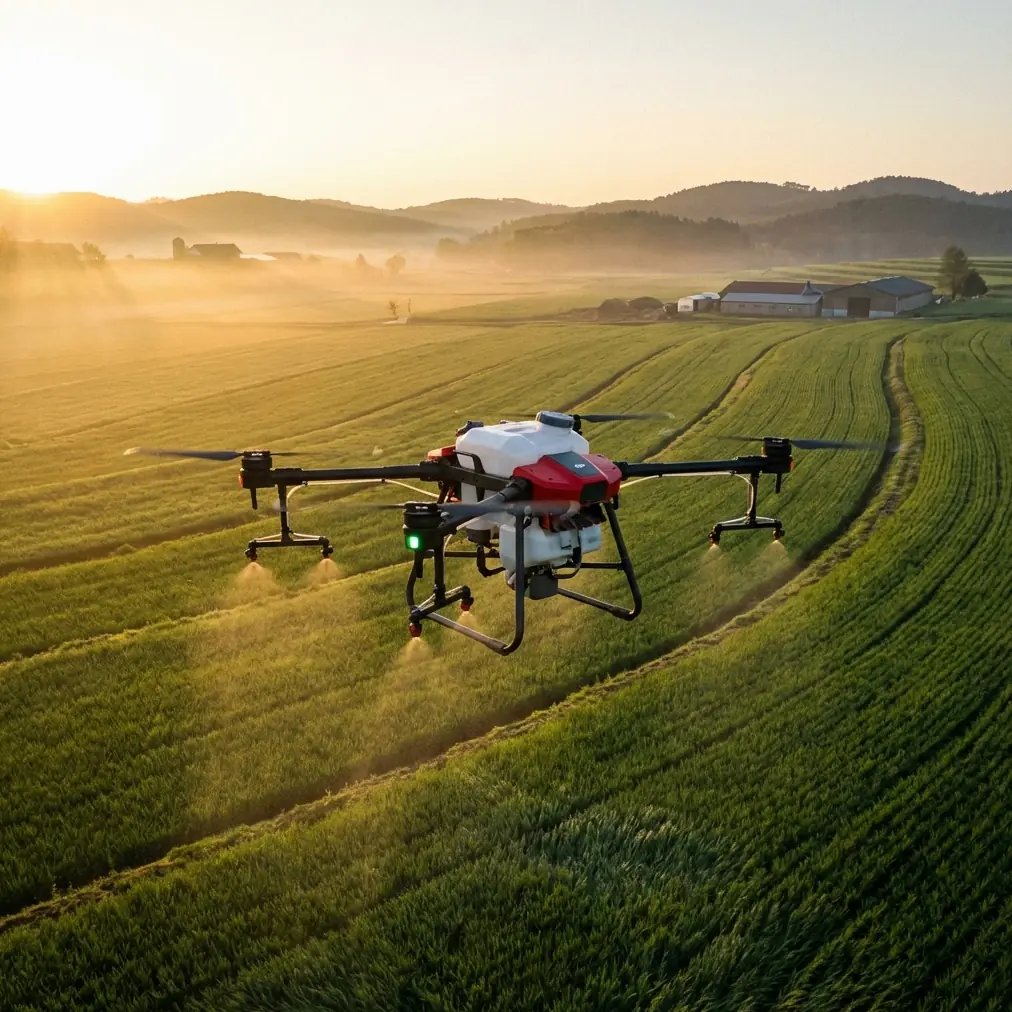
Agras T70P in Dusty Power-Line Corridors: The Pre-Flight Step That Protects Accuracy, Coverage, and Crop Results
META: A field-focused look at using the Agras T70P in dusty power-line environments, with practical insight on pre-flight cleaning, control discipline, precision setup, and why small checks matter for spray quality and safe operations.
Dust changes everything.
Operators usually talk about payload, tank capacity, route efficiency, or how much ground can be covered before lunch. Those matter. But when an Agras T70P is working near power-line corridors in dry conditions, the real dividing line between smooth operations and a frustrating day is often much smaller: what happens before takeoff.
Dust gets into places that don’t look dramatic on a checklist. Sensor windows. Cooling paths. Spray system interfaces. Landing gear joints. Connector surfaces. Camera housings. It settles gradually, then starts distorting the quality of the decisions the aircraft makes in flight. A machine built for precision agriculture depends on clean inputs. If the environment is dirty, pre-flight discipline becomes part of application quality, not just maintenance.
That is the practical story around the Agras T70P in this kind of mission profile.
Why dusty power-line work is harder than an open-field spray job
Fields under or beside transmission lines are rarely ideal. Access roads are often dry and powdery. Vehicle traffic stirs up fine particulate matter. Vegetation can be uneven because of right-of-way maintenance patterns. There may be narrow treatment lanes, abrupt obstacles, and visual clutter from poles, towers, and cables. Even when the work itself is routine crop or vegetation management, the environment keeps pushing the aircraft away from perfect conditions.
That matters because agricultural drone performance is not just about flight. It is about coordinated precision: route holding, droplet placement, swath consistency, nozzle calibration, altitude stability, and confident decision-making by the pilot and support crew.
If dust starts degrading any part of that chain, the symptoms may show up elsewhere. The operator may blame drift, poor coverage, inconsistent edge performance, or an unstable RTK fix rate. Sometimes the root cause began on the ground with contamination that was never cleared away.
The overlooked safety feature: cleaning before calibration
A lot of operators think of cleaning as a post-job task. On the Agras T70P, especially in dusty utility-adjacent environments, it should also be a pre-flight safety step.
That does not mean a cosmetic wipe-down. It means checking the surfaces and components that influence perception, stability, and application consistency. In practical terms:
- Clean sensor faces and vision-related surfaces so the aircraft is not trying to interpret a dusty world through a dusty lens.
- Inspect the spray path, including nozzles and filters, because a partially contaminated system can undermine coverage quality before the first pass.
- Clear dust from critical seams and vents where heat management or connector reliability could be affected.
- Confirm landing gear and frame contact points are free from packed debris that might alter stance or vibration characteristics on takeoff.
This is where the T70P’s role as a precision tool becomes obvious. Centimeter precision is not just an RTK phrase on a spec sheet. It depends on the aircraft receiving clean, trustworthy information and executing commands without interference. If your RTK fix rate is strong but your local sensing surfaces are obscured, the drone may still have a harder job maintaining the consistency you expect near obstacles and irregular terrain.
In a dry corridor, cleaning is part of system integrity.
What training drones quietly teach that large ag drones still need
One of the most useful lessons in drone operations comes from a completely different class of aircraft: education platforms.
In a DJI TT educational training example, the drone is programmed to keep a relative distance that is recommended at 80 centimeters from a challenge card during a follow task. That detail sounds small, but the operational lesson is large. Controlled distance is not abstract. It is measurable, repeatable, and teachable. If the input reference is reliable, the aircraft can behave predictably.
The same training material also describes a simulated building patrol in which the drone takes off from “challenge card 1,” flies a rectangular route for 2 laps, and displays card numbers as it passes overhead. Again, this is not agriculture. But it reinforces something highly relevant to Agras T70P operations in constrained environments: repeatable geometry matters.
When spraying along dusty power-line corridors, the operator is essentially asking the aircraft to perform a disciplined route in a space full of external noise. Stable spacing, consistent turns, and predictable path behavior all influence swath width and overlap. If pre-flight cleaning is skipped and a sensor or vision surface is compromised, that geometric reliability becomes harder to preserve.
So the significance of those training details is not the classroom exercise itself. It is the principle behind it. Precision flight begins with clean reference conditions.
Dust, spray drift, and why “close enough” is not enough
Spray drift is usually discussed as a weather problem. Wind, droplet size, boom height in ground equipment, thermal conditions. All true. But drone drift performance also depends on aircraft stability and application consistency.
In dusty power-line environments, two issues often arrive together:
- The air is visually and physically contaminated.
- The operating corridor is narrow enough that misses and over-application are more visible.
If nozzle calibration is slightly off because the system was not properly checked, and if the aircraft is also compensating for degraded sensing or rougher stability cues, your swath width can become less uniform than the mission plan suggests. That is when you see treatment bands that look acceptable from one angle and questionable from another.
On an Agras T70P, this is exactly why pre-flight cleaning should be tied directly to calibration logic. Clean first, then verify nozzle condition, pressure behavior, and intended application pattern. Doing those in the wrong order can create false confidence.
The operator who treats cleaning as part of calibration usually gets better field consistency than the operator who treats calibration as a box to tick before a dusty airframe even gets inspected.
A lesson from accident recovery that applies before the crash
There is another useful reference from broader multirotor practice. A technical article on drone recovery describes how many new pilots react poorly when they think an aircraft has become unstable. One recommendation is to first verify whether the drone is truly out of control rather than immediately making panicked inputs. The article also notes that after an incident, flight data should be exported and analyzed.
That advice is often framed around hobby or general UAV mishaps, but the operational significance carries over.
In agriculture, especially with a platform like the Agras T70P, pilots should build the same mindset into normal workflow:
- Do not confuse environmental disturbance with full control loss.
- Avoid abrupt control habits when the aircraft response changes.
- If something feels wrong, investigate the cause systematically.
- Review data and patterns after abnormal behavior instead of relying on memory alone.
This matters in dusty power-line operations because fine dust can create subtle symptoms before it creates obvious ones. Maybe route holding feels less crisp. Maybe obstacle-related behavior looks hesitant. Maybe application edges are not as clean as expected. Those are not reasons to improvise aggressively. They are reasons to pause, inspect, clean, and verify.
One point from that recovery article is especially useful: many pilots misread the aircraft state and react too fast. In field work, that same mistake can turn a manageable issue into downtime, crop inconsistency, or avoidable hardware stress.
Building a smarter Agras T70P pre-flight routine
A good T70P checklist for dusty utility-adjacent work should be short enough to use every time and strict enough to catch the small failures. Here is the structure I recommend.
1) Start with contamination control
Before batteries, before route upload, before final calibration, inspect the aircraft for visible dust loading. Pay attention to sensor surfaces, arm joints, motors, tank area interfaces, pump-related components, and nozzle assemblies.
If your team arrives with a dusty transport setup, you are not beginning from zero. Assume the aircraft needs attention.
2) Clean the aircraft with purpose
The goal is not to make it look new. The goal is to restore reliable sensing and clean fluid delivery. Use methods appropriate for agricultural UAV hardware and avoid forcing debris deeper into sensitive areas.
This is the step many crews rush. It should not be rushed.
3) Check nozzle calibration after cleaning
Nozzle calibration done on a contaminated system can hide a problem rather than solve it. Once cleaned, verify the spray setup and confirm that the intended output supports the target droplet profile and coverage plan.
This is where drift management starts becoming real rather than theoretical.
4) Confirm positioning quality
If the mission depends on RTK guidance, look at fix reliability before entering the work zone. A strong RTK fix rate supports predictable lane tracking and repeatable overlap, especially where the route runs close to infrastructure or irregular field boundaries.
5) Rehearse corridor geometry
Think like the TT training exercise: repeatable spacing, deliberate route structure, disciplined turns. In constrained work, geometry is safety and quality at the same time.
6) Brief the team on abort cues
Everyone should know what triggers a stop: unexpected aircraft behavior, abnormal spray pattern, inconsistent positioning response, unusual vibration, or reduced situational clarity from airborne dust.
That is not over-caution. It is efficient professionalism.
What operators gain when they respect the environment
The T70P is capable, but capability only shows up when conditions are managed.
A clean aircraft is more likely to maintain the precision that agricultural jobs demand. A properly checked spray system supports more reliable swath width and reduces the risk of coverage variation. Better route discipline helps protect treatment consistency near infrastructure edges. Stronger pre-flight habits also reduce the chance that a minor issue turns into field interruption.
And there is another payoff: operator confidence.
When crews know the aircraft was cleaned, checked, and calibrated in the right sequence, they make better decisions in the air. They are less likely to second-guess every movement. They are also more likely to recognize a real anomaly early.
For teams trying to standardize dusty-corridor operations with the Agras T70P, this is usually where performance improves first—not through dramatic changes, but by removing preventable uncertainty.
The real value of an expert workflow
People often search for answers in specifications: IP ratings, precision claims, mapping options, multispectral compatibility, flow rates, or automation features. Those are useful. But in the field, workflow quality decides whether the platform performs like a professional tool or just an expensive machine working in bad air.
That is why the pre-flight cleaning step deserves more attention than it gets. It protects the safety features you depend on. It supports the accuracy you expect. And in dusty power-line environments, it is one of the cheapest ways to preserve application quality.
If you are building or refining an Agras T70P process for these conditions and want a second set of eyes on the checklist, route logic, or spray setup, you can message a field operations specialist here.
The Agras T70P does not need perfect conditions to work well. It needs disciplined preparation. In dust, that starts before the motors spool up.
Ready for your own Agras T70P? Contact our team for expert consultation.