
Agras T70P in Dusty Utility Corridors: A Field Case Study
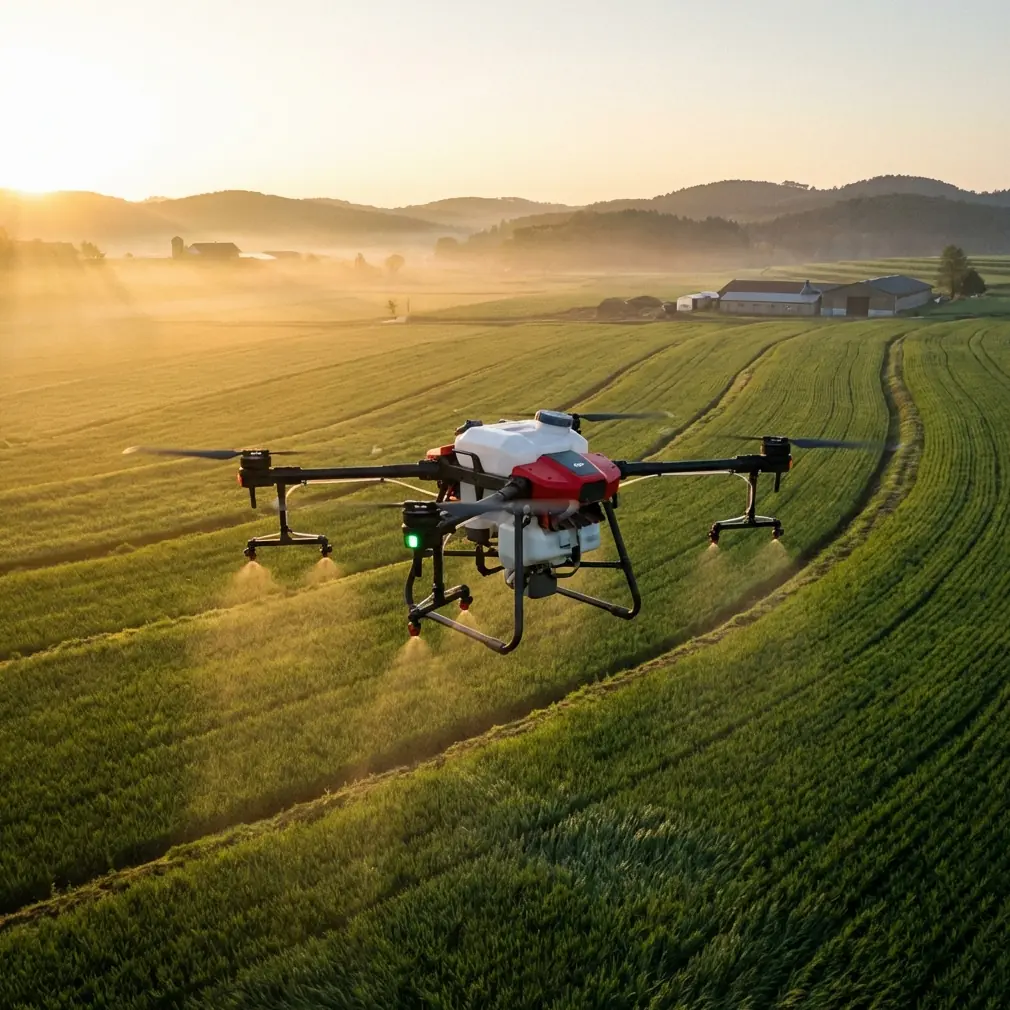
Agras T70P in Dusty Utility Corridors: A Field Case Study on Precision, Drift Control, and Sensor-Led Delivery
META: A field-based expert case study on how the Agras T70P performs in dusty power-line environments, with practical insight on RTK fix rate, nozzle calibration, spray drift, IPX6K resilience, and obstacle sensing.
Dust changes the rules.
Anyone who has worked along power-line corridors in dry agricultural regions knows that visibility can collapse in minutes. Fine particulate hangs in the air, coats lenses, degrades situational awareness, and quietly punishes sloppy setup. In that setting, the Agras T70P is not interesting because it is large or modern. It is interesting because a platform built for agricultural precision can solve a harder operational problem: moving materials and executing support tasks near utility infrastructure where dust, uneven terrain, and narrow safety margins all arrive at once.
This case study looks at a dusty line-support scenario where an Agras T70P was used to deliver small utility items along a rural power corridor while remaining ready for dual-use field tasks such as spot application and perimeter treatment. That combination matters. Utility contractors and land managers increasingly ask one aircraft to do more than one job in a single deployment window. A drone that can navigate a rough corridor, maintain stable positioning, and manage drift-sensitive application work has more operational value than one that excels only in clean, ideal conditions.
I approach this as an academic and field systems analyst: what matters is not marketing language, but whether the machine preserves control authority, sensor reliability, and repeatable output when the environment stops cooperating.
The day began with a familiar problem. Wind was moderate but variable. The service road beneath the line had turned to loose powder after weeks without rain. Vehicle movement kicked up a constant haze. That haze did more than reduce visibility. It altered pilot judgment, reduced contrast for visual line-of-sight checks, and threatened any mission segment where centimeter-level placement mattered. In utility work, that can mean a dropped component landing too far from a technician’s position. In agricultural work, it means uneven coverage, over-application, or drift into sensitive zones.
The T70P’s usefulness in that environment starts with precision. When operators talk about RTK fix rate, they are not discussing a luxury feature. They are talking about whether the aircraft can repeatedly hold a trustworthy positional solution when the job demands close placement near obstacles and repeatable passes through a defined corridor. A high RTK fix rate under field conditions supports centimeter precision, and centimeter precision changes the risk profile of the mission. In this case, the aircraft was tasked with carrying lightweight line-support materials to staging points that had little visual distinction from the surrounding terrain. Dust made the corridor look flat and ambiguous. Reliable RTK performance reduced the chance of small position errors accumulating into operational inefficiency.
That operational significance becomes obvious when you compare two outcomes. With stable positioning, the aircraft can place items near the intended handoff point, limiting unnecessary movement by ground crews under the line. Without it, crews lose time searching, walking back and forth in heat and dust, and re-establishing safe spacing around vehicles and equipment. A few decimeters of error may sound trivial on paper. In the field, those decimeters become fatigue, delay, and avoidable exposure.
The second issue was particulate resilience. Dust does not politely stay away from the airframe. It reaches motors, joints, connectors, and every exposed surface. That is why a protection rating such as IPX6K matters even in work that is not strictly about rain or washdown. People often misunderstand ingress protection by thinking only about water. In mixed field environments, a robust protection standard supports survivability during repeated cleaning cycles and operation around mud spray, chemical residue, and abrasive contamination. In this case, after several sorties along the corridor, the airframe required wipe-downs and inspection intervals that would have stressed a less protected platform. IPX6K is operationally significant because it helps make field maintenance practical rather than delicate. When you are rotating batteries and trying to maintain sortie tempo, equipment that tolerates aggressive cleaning is easier to keep mission-ready.
What stood out most, however, was not the dust. It was a red fox.
Late in the second operational block, the aircraft approached a bend in the corridor where grasses and scrub had thickened near a pole base. A fox broke from the cover and crossed the path beneath the aircraft just as the drone was descending toward a low-altitude handoff point. The event lasted only seconds. But it was exactly the kind of unpredictable movement that tests whether onboard sensing and cautious mission design are truly integrated or merely advertised. The aircraft’s obstacle-awareness behavior prevented a rushed descent profile. Instead of continuing into an unstable close-in approach, it adjusted and held long enough for the animal to clear the area before resuming the task. That matters for two reasons. First, wildlife encounters are common in utility corridors that cut across agricultural and semi-natural land. Second, a drone operating near animals, people, and infrastructure must handle unexpected movement without forcing the pilot into abrupt corrections.
This is where the T70P’s sensor package earns trust. In dust, even experienced operators can become overconfident if they rely too heavily on direct visual cues. Sensor-assisted situational awareness adds a second layer of discipline. It does not replace pilot judgment, but it can slow the mission down at exactly the moment when slowing down prevents a mistake. For line-support work in dry regions, that is not a convenience. It is part of safe operations.
Because this platform sits in the agricultural category, it is also fair to ask how the same features translate to spray tasks around power-line rights-of-way. Here the discussion shifts to spray drift, nozzle calibration, and swath width. These are not side issues. They are often the difference between a successful deployment and a complaint from a neighboring property owner or environmental monitor.
Dust complicates spraying in subtle ways. First, it can disguise crosswind behavior close to the ground. Second, it can contaminate nozzles and alter atomization if routine calibration is ignored. Third, it changes how operators perceive coverage because airborne particles and sunlight can make a swath appear denser or wider than it really is. The T70P’s value in this context depends on disciplined nozzle calibration before the mission and validation of droplet behavior under actual site conditions. If the goal is vegetation suppression beneath or adjacent to lines, operators need to know the real swath width in that day’s airflow rather than the theoretical width from a calm-day reference. That is how drift is controlled: not by assuming the aircraft can overcome physics, but by tuning the application system to the environment.
A practical lesson from this case was that calibration intervals should shorten in dusty corridors. Even if a nozzle appears clean, fine dust can affect pattern quality over time. A small deviation in output may not be obvious on one pass, but over repeated operations it produces inconsistent coverage. For contractors managing both delivery and vegetation work, that means preplanned inspection points are worth the interruption. Better to lose a few minutes to recalibration than to discover patchy control or unintended off-target deposition later.
Another underappreciated factor is data layering. While the T70P is primarily discussed in terms of payload and field operations, teams increasingly pair aircraft missions with multispectral intelligence from companion mapping workflows. In a utility corridor, multispectral imagery can identify stress patterns in vegetation before they become visible to the naked eye, helping crews decide where a spray mission is actually necessary and where mechanical trimming or no action is the better choice. That matters because every unnecessary pass adds rotor wash, consumes battery cycles, and increases cumulative exposure to dust. A smarter workflow does not just fly better. It flies less, and with better reason.
The corridor in this case did not need broad treatment everywhere. Multispectral review from prior surveys had already flagged isolated vigor zones near several structures, so the drone’s agricultural capability remained tightly targeted. This is one of the strongest arguments for the T70P in mixed utility-ag operations: it supports precise intervention rather than blanket action. Precision reduces chemical drift risk, shortens flight time, and preserves more predictable battery planning for the delivery segments of the day.
Battery planning deserves mention because dusty operations are rarely linear. Ground teams pause. Trucks move. Visibility changes. Pilots may need to hold position or reroute around work crews and livestock gates. In those conditions, an aircraft with stable control and repeatable navigation helps protect the schedule. Not because it makes every sortie faster, but because it makes them more consistent. Consistency is usually the metric that matters in utility support. A mission that takes 11 dependable minutes is often more valuable than one that sometimes takes 8 and sometimes creates recovery work.
There is also a human-factors point here. Dust erodes concentration. Technicians blink more, wipe screens more, and make more micro-decisions under discomfort. Systems that reduce cognitive load have disproportionate value in those conditions. Reliable positioning, predictable response near obstacles, and resilient hardware are not isolated technical advantages. Together they leave the operator with more mental bandwidth to manage the real mission: coordination with ground crews, terrain changes, and the unexpected. If you want to compare field systems honestly, that is one of the fairest ways to do it. Ask which aircraft helps experienced people stay sharp in a bad environment.
For teams evaluating workflows around the Agras T70P, the deeper lesson is straightforward. Do not frame it only as a crop drone, and do not assume dusty utility work is simply a transport problem. It is a precision-control problem under contamination stress. The machine has to place, hold, sense, and recover. It has to maintain a dependable RTK fix rate when visual references deteriorate. It has to support accurate nozzle calibration when a secondary spray task becomes necessary. It has to tolerate repeated cleaning cycles consistent with an IPX6K-class field reality. And it has to detect and respond when the corridor suddenly includes a live, moving animal rather than a static obstacle.
That blend of demands is exactly why this case is useful. It shows that the T70P’s value emerges at the intersection of aviation discipline and applied fieldwork. A drone can have impressive specifications and still fail to matter operationally. What matters is whether those specifications preserve outcomes in a messy environment. Here, they did.
If you are planning similar work and want to compare mission design assumptions with an experienced team, you can message a field specialist here. The right discussion is rarely about headline features. It is about environmental limits, calibration routines, and where precision actually saves time.
For dusty power-line support operations, the Agras T70P stands out when it is treated as a system rather than a flying container. Its precision tools reduce placement error. Its environmental resilience supports realistic field maintenance. Its sensor behavior adds a margin of safety when wildlife or ground movement disrupts the plan. And when spray work is part of the same deployment, attention to drift, swath width, and calibration turns a capable aircraft into a dependable one.
That is the difference between a drone that flies and a drone that earns its place on the truck.
Ready for your own Agras T70P? Contact our team for expert consultation.