
Agras T70P for Windy Highway Operations: A Technical Review
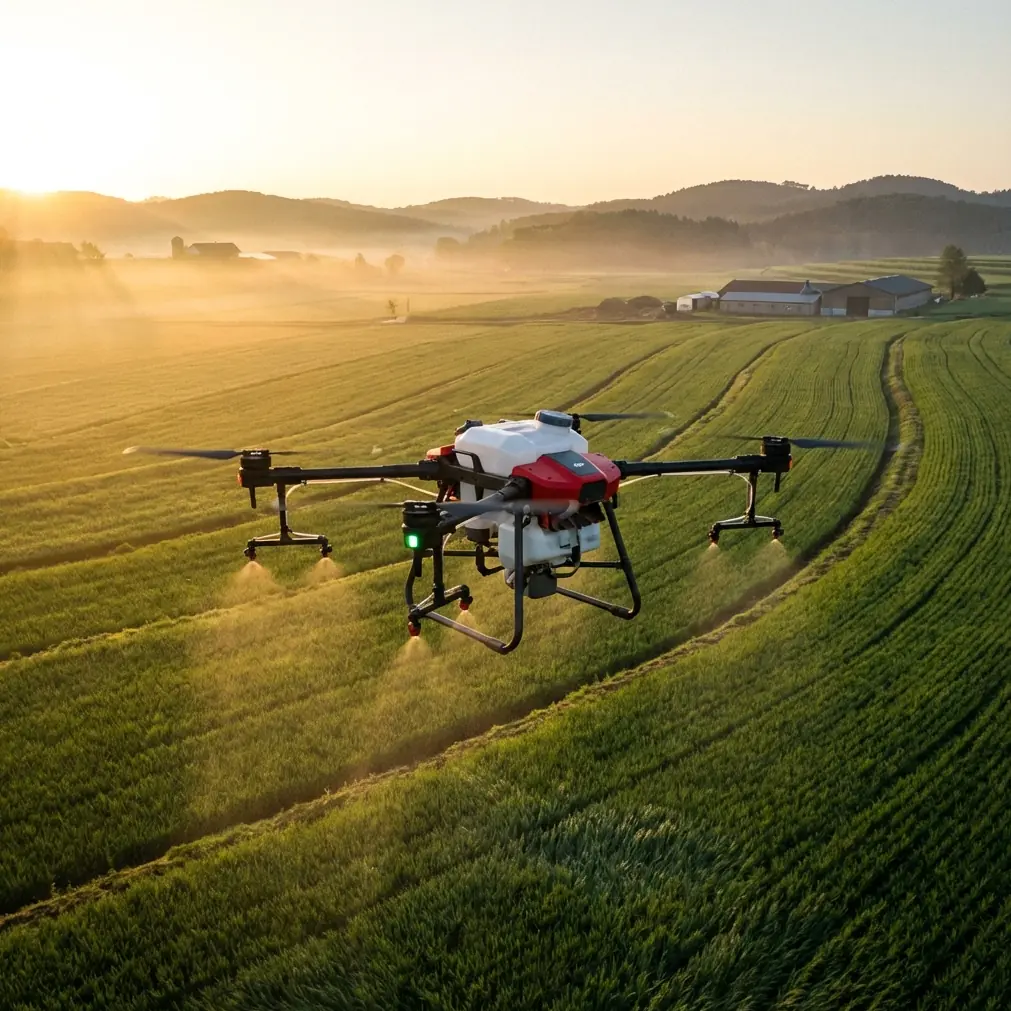
Agras T70P for Windy Highway Operations: A Technical Review from the Field
META: Expert technical review of the Agras T70P for highway work in windy conditions, covering spray drift control, nozzle calibration, RTK fix stability, cleaning routines, and operational safety.
Highway-adjacent spraying is one of those jobs that exposes weak assumptions very quickly. Wind behaves differently around open carriageways, embankments, sound barriers, culverts, and overpasses than it does over a flat, uniform field. A platform that performs well in calm agricultural blocks can become difficult to manage when gusts shear across lanes, rebound off concrete, and push droplets toward drainage infrastructure or live traffic corridors.
That is exactly why the Agras T70P deserves a more technical look. Not because it is simply a large agricultural drone, but because its practical value changes when the mission shifts from broad-acre crop work to linear infrastructure delivery in windy conditions. If your operating environment includes roadside vegetation control, slope treatment, drainage-edge application, or managed green strips along transport corridors, the T70P should be judged less by headline capacity and more by how well it preserves consistency under aerodynamic stress.
I approach the aircraft from that angle: not as a catalog item, but as a system whose usefulness depends on drift discipline, repeatable positioning, weather tolerance, and maintenance habits that protect its sensing stack.
Why highway wind changes the real operating question
Highway work compresses your margin for error. In a field, minor lateral spray displacement may still land within the treatment zone. Near highways, the same drift can cross into a shoulder, guardrail, drainage ditch, or a non-target habitat strip. The issue is not merely efficiency. It is compliance, safety, and whether the operation remains defensible after the job is done.
That makes spray drift the central operational variable.
The T70P enters this discussion as a platform designed for high-throughput application, but throughput alone is not what matters here. Along highways, the better question is whether the aircraft can maintain a usable swath width while the operator intentionally tightens droplet behavior, reduces volatility in application pattern, and preserves enough positional confidence to keep the edge of treatment exactly where it belongs.
This is where the combination of nozzle calibration, RTK-backed positioning, and disciplined pre-flight preparation becomes more significant than raw tank size or acres-per-hour claims. A windy roadside mission is won before takeoff, then refined pass by pass.
Start with the least glamorous step: cleaning before power-up
Most crews think of pre-flight cleaning as housekeeping. On the T70P, especially for highway work, it is a safety step.
If I were standardizing a deployment routine for this aircraft, I would require a deliberate cleaning pass over the spray nozzles, flow paths, landing gear contact areas, forward sensing surfaces, and any exposed camera or positioning interfaces before the first battery goes in. Residual chemical film, dust, and fine roadside grit can interfere with both spray quality and sensing reliability. Highways generate particulates that typical crop interiors do not: brake dust, fine aggregate, dried mud aerosol, and oily surface residue carried by wind.
That matters operationally in two ways.
First, nozzle contamination can distort atomization. If one nozzle begins producing a different droplet spectrum from the others, your application pattern becomes asymmetrical. In windy conditions, that asymmetry is amplified. The operator may think the crosswind is the only problem, when the true issue is that a partially obstructed nozzle has shifted the spray profile before the aircraft even leaves the staging zone.
Second, dirty sensing surfaces can degrade obstacle perception or reduce confidence in flight stabilization features that are already working harder near embankments and roadside structures. The T70P is built for harsh field use, and an IPX6K protection level is highly relevant here. That rating signals that the aircraft is designed to tolerate aggressive water exposure during cleaning and demanding outdoor service conditions. But IPX6K is not a license for sloppy maintenance. Its real value is that it supports a repeatable washdown routine after contaminated operations and allows crews to keep the platform mission-ready without treating every cleaning cycle as a risk event.
For highway delivery, I would go further: clean first, then inspect nozzle output visually, then confirm calibration. In this environment, that sequence is not optional discipline. It is one of the simplest ways to prevent drift problems that later get blamed on weather alone.
Nozzle calibration is where drift control becomes real
A great many discussions about drone spraying in wind remain too abstract. They talk about “optimizing settings” without identifying the one task that most directly affects how the liquid behaves after leaving the aircraft. That task is nozzle calibration.
On the T70P, calibration should be treated as an operational control, not a menu step. The objective is not just correct volume delivery. It is to maintain a predictable droplet distribution and uniform release pattern across the spray system, so that when wind begins to push the plume laterally, the operator is dealing with one variable instead of several at once.
Along highways, this has immediate significance. Suppose the planned swath width looks acceptable under light wind, but a gust corridor forms between a raised shoulder and a noise barrier. If the nozzles are well calibrated and the droplet profile is stable, the pilot can respond by narrowing effective swath width, adjusting ground speed, and reworking overlap with some confidence. If calibration is off, those adjustments become guesswork because the aircraft is not producing a symmetrical baseline.
That is why experienced operators often reduce their practical swath width well below the theoretical maximum when working linear rights-of-way in unstable air. The narrower pattern may look less efficient on paper, but it preserves deposition quality and lowers drift exposure at the treatment boundary. On a highway contract, the pass that stays inside the line is worth more than the pass that covers more area but leaves uncertainty behind.
RTK fix rate is not just a positioning metric
The T70P’s value in infrastructure-adjacent work also depends on position quality. “Centimeter precision” is often repeated as a promotional phrase, but highway operations reveal whether that precision is truly actionable. The crucial issue is not simply whether RTK is available. It is whether the RTK fix rate remains stable enough to support repeatable path tracking during turns, edge passes, and segmented linear missions.
That sounds like a technical distinction. In practice, it affects almost everything.
If the fix is stable, the aircraft can hold cleaner lines along guardrails, fence edges, vegetated shoulders, and drainage margins. It also helps maintain reliable overlap when the operator breaks a long roadside corridor into manageable treatment blocks. A strong RTK fix rate reduces the amount of lateral wandering that can otherwise combine with wind to widen the uncertainty band at the edge of the application zone.
For highway delivery in windy conditions, I would pay close attention to where RTK performance degrades. Overpasses, retaining walls, roadside structures, and terrain transitions can all influence signal environment. The T70P can only express its full positional advantage when the mission is designed around those realities. That means checking fix stability before the first productive run, watching for status changes during route segments, and having a procedure for widening buffer margins if fix confidence softens.
This is one of the most underappreciated links between navigation and spray quality. A poor RTK fix rate does not merely affect where the drone flies. It changes where the chemistry lands.
Wind management is really route design
Operators often talk about whether a drone can “handle wind.” I think that framing is incomplete. Wind management on the T70P is less about brute resistance and more about whether the mission design respects the airflow around the corridor.
For highways, route design should account for:
- crosswind sections where embankments accelerate airflow,
- bridge approaches where turbulence forms,
- median or verge geometry that alters droplet travel,
- and vehicle-induced air movement near active lanes.
The T70P becomes most effective when used with a segmented strategy rather than a single continuous assumption about conditions. One section may support a wider swath width and normal speed. The next may require a tighter pattern, lower altitude, and more conservative overlap. A technically strong platform helps, but the best result comes when the operator treats each highway micro-environment as its own application problem.
This is also where multispectral workflow can enter the conversation, even if it is not the aircraft’s primary headline feature in every deployment stack. In some highway vegetation programs, multispectral mapping upstream of spraying can help identify stress patterns, invasive spread, or moisture variation along slopes and drainage edges. That can reduce unnecessary application and sharpen treatment zoning before the T70P ever launches. The operational significance is straightforward: less blanket spraying, more targeted delivery, fewer drift-sensitive passes where they are not needed.
The T70P makes sense when consistency matters more than headline speed
The temptation with any large-format spraying drone is to evaluate it by pace. Highway work punishes that instinct.
What the T70P offers in this use case is not simply scale. It offers the possibility of maintaining a disciplined application standard across a difficult environment—if the operator respects the setup. The aircraft’s ruggedization, including IPX6K protection, matters because roadside operations are dirty and cleanup must be repeatable. RTK-backed centimeter precision matters because the treatment boundary is often narrow and unforgiving. Nozzle calibration matters because drift control begins at the point of atomization, not at the moment the pilot notices a gust.
Those details sound technical because they are technical. But they are also practical. They determine whether a crew can treat a vegetated highway corridor with enough repeatability to satisfy both agronomic intent and public-facing operational standards.
I would summarize the T70P’s highway value this way: it is a strong platform for windy corridor work only when used as a measurement-driven system. If a team wants to rely on broad assumptions, oversized swaths, and casual pre-flight habits, the aircraft’s advantages shrink quickly. If the team builds the mission around cleaning discipline, calibration fidelity, route segmentation, and RTK monitoring, the platform becomes much more convincing.
A field-ready operating sequence I would recommend
For crews deploying the T70P along highways, the most sensible workflow is methodical rather than fast:
Begin with a full pre-flight cleaning of nozzles and sensor-facing surfaces. Confirm there is no residue from prior chemistry and no roadside grit lodged in spray components. Check nozzle output before takeoff, not after the first uneven pass. Validate RTK fix quality at the staging area and again at the first treatment segment. Reduce swath width when turbulence is visible or when corridor geometry suggests gust concentration. Reassess after each segment instead of assuming the previous wind model still applies 500 meters later.
That sounds conservative. It is. Highway operations deserve conservative thinking.
If you are building a standard operating procedure around the T70P for this kind of mission and want a second technical opinion, you can share your corridor profile and mission constraints here: message the operations desk. In my experience, small changes in setup often do more for drift control than large changes in hardware.
Final assessment
The Agras T70P is not interesting because it can carry product and cover ground. Plenty of aircraft can do that in a benign environment. It becomes interesting when the assignment moves to windy highway corridors where spray drift, positional fidelity, and maintenance quality decide whether the operation is acceptable.
That is why I keep returning to three specifics: IPX6K washdown resilience, centimeter-precision RTK behavior, and careful nozzle calibration. Those are not abstract specifications. They directly shape how safely and accurately the aircraft can perform when wind and infrastructure combine to narrow the margin for error.
For highway delivery in windy conditions, the T70P is best understood as a precision application platform that rewards disciplined operators. Treat pre-flight cleaning as a safety procedure. Treat RTK fix rate as a live spray-quality variable. Treat swath width as something to be earned from conditions, not assumed from a brochure. Used that way, the aircraft is not just capable. It is credible.
Ready for your own Agras T70P? Contact our team for expert consultation.