
Agras T70P for High-Altitude Highway Work
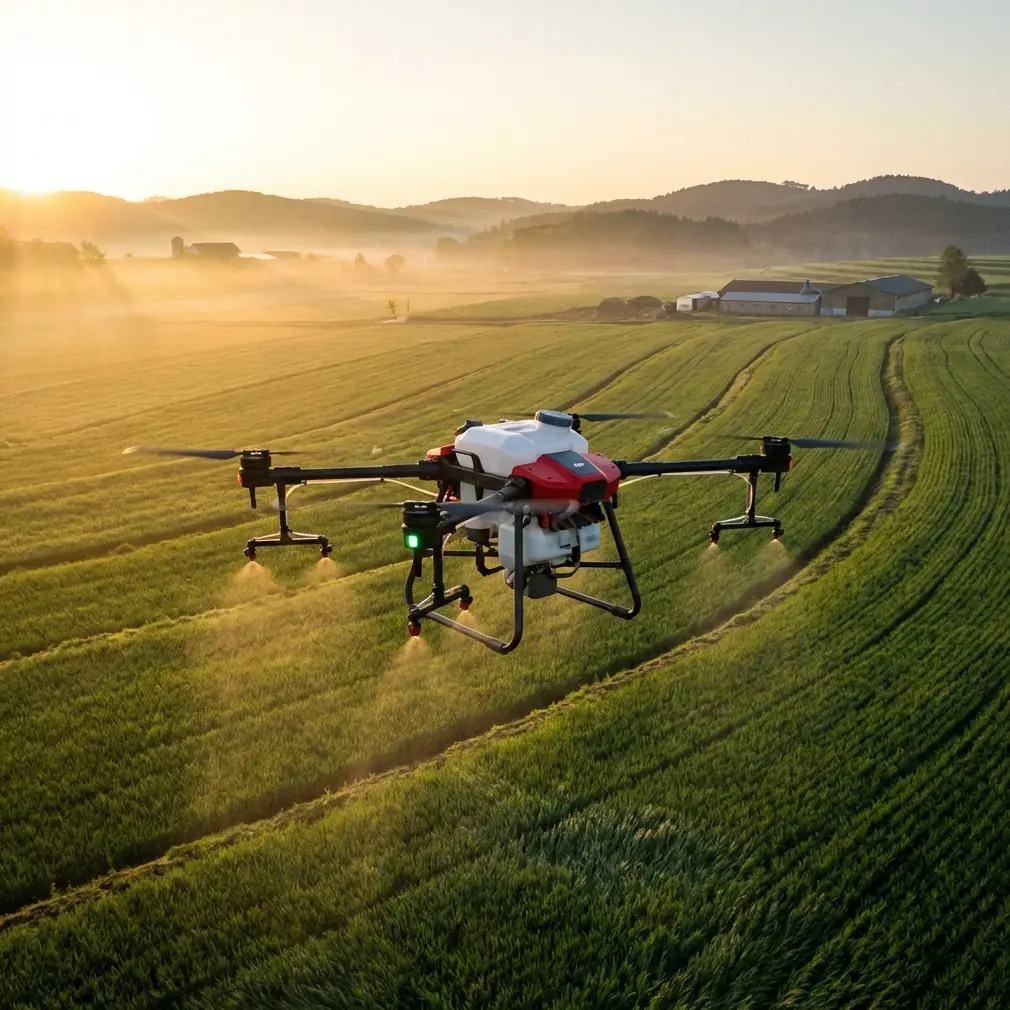
Agras T70P for High-Altitude Highway Work: A Field Case Study on Range, Drift Control, and RTK Discipline
META: A practical Agras T70P case study for high-altitude highway delivery and spraying support, covering antenna positioning, RTK fix rate, nozzle calibration, swath width, spray drift, and weather-ready field setup.
High-altitude highway work exposes every weak point in a drone operation. Signal stability drops sooner than crews expect. Wind behaves differently along cut slopes and bridge approaches. Payload strategy that feels efficient at lower elevation can turn sloppy when thinner air and crosswinds start widening the pattern. That is exactly why the Agras T70P deserves to be discussed in a real operating context rather than as a spec-sheet trophy.
I have spent enough time around mountain transport corridors to know that “good enough” procedures rarely stay good for long. On a broad acre field, minor drift or a temporary RTK wobble may be annoying. Along a highway at elevation, those same issues can become operational delays, missed coverage bands, or avoidable exposure to adjacent lanes, drainage channels, and steep embankments. The T70P is capable, but only when the team treats setup discipline as part of the mission, not something done after the batteries are warm.
This case study focuses on a common scenario: a crew supporting vegetation and right-of-way management along a high-altitude highway corridor with an Agras T70P. The mission profile includes long linear runs, repeated turns, changing slope angles, and intermittent obstructions from barriers, trucks, signage, and rock cuts. In that environment, three variables shape results more than anything else: antenna positioning, RTK fix rate, and nozzle calibration.
Why highways at altitude expose bad habits
The first trap is assuming a highway is an “easy” route because it is linear. It is not. A corridor mission forces the aircraft to work through repeated changes in reflective surfaces, lateral wind loading, and partial sky blockage. Guardrails, retaining walls, and parked support vehicles can all affect signal behavior near the launch area. Elevation adds another layer. Crews often notice they lose confidence in the link earlier than expected, even when the aircraft still appears visually close enough to feel safe.
This is where antenna positioning stops being a minor detail and becomes operationally decisive.
On the T70P, range is not just about radio hardware. It is about preserving a clean geometry between the controller antennas, the aircraft, and the terrain. Too many crews stand beside a truck, under a temporary shelter, or directly below a cut slope and then wonder why their effective control margin feels inconsistent. At altitude, I advise crews to walk the takeoff point first and pick the operator position before unloading the aircraft. The better launch point is usually the one with the clearest forward sky view, not the one closest to the cargo bed.
If you want maximum usable range, keep the controller antennas oriented broadside to the aircraft’s path rather than pointed like arrows at the drone. That sounds simple, but in field audits it is one of the most common mistakes I see. Antennas radiate best across their sides, not off the tip. Along a highway mission, where the aircraft may track parallel to the operator for long sections, a small orientation error can quietly reduce signal quality at the exact moment the aircraft reaches the far end of a pass.
The second part of the advice is elevation relative to the ground station. If the operator is standing too low behind a barrier, parked machine, or spoil mound, the line-of-sight path degrades fast. Move even a few meters to a slightly higher shoulder or open lay-by, and the link can stabilize dramatically. Those small terrain choices matter more in mountain corridors than crews expect.
RTK fix rate is not a luxury metric
The T70P is often discussed in terms of payload productivity, but for highway work the more meaningful performance marker is consistency of centimeter precision. The question is not whether the aircraft can technically fly a route. The question is whether it can hold accurate lateral placement over repeated passes when the corridor is narrow, the edges matter, and overlap needs to remain controlled.
That is where RTK fix rate comes in.
A strong RTK fix rate supports predictable path holding and cleaner pass-to-pass repeatability. If that fix rate is unstable before launch, you are effectively accepting variable placement before the job even begins. On a mountainside highway shoulder, that can mean the difference between a clean swath and a pattern that drifts toward drainage infrastructure or leaves untreated strips near the guard line.
I tell crews to treat RTK health as a go/no-go check, not a background icon on a screen. Do not rush into the first run because the weather window looks narrow. If the fix is bouncing, solve that first. Sometimes the issue is a poor base station location. Sometimes it is partial sky obstruction from a rock face or a bridge structure. Sometimes it is simple impatience. The T70P can deliver centimeter precision, but only when the positioning environment supports it.
Operationally, this matters for more than route fidelity. A stable RTK solution also reduces the amount of mental correction a pilot must apply when monitoring edge alignment on long highway stretches. That frees attention for the things that actually deserve live judgment: gusting crosswinds, vehicle movement near the work zone, and changes in spray behavior over slope breaks.
Nozzle calibration decides whether your swath width is real or imaginary
Highway work punishes assumptions about coverage. Crews love quoting swath width, but along elevated road corridors the nominal number is often fiction unless nozzle calibration is verified for the day’s actual conditions. The T70P may be capable of broad, efficient coverage, but the useful swath width in a mountain highway scenario is the width that still holds uniform deposition at the edges.
That is not always the biggest width the machine can physically throw.
Nozzle calibration needs to reflect altitude, product characteristics, target density, and wind profile. In practical terms, I recommend calibrating before the first operational block and then rechecking whenever there is a meaningful weather shift. A change in temperature, humidity, or wind channeling through a pass can alter droplet behavior enough to affect edge performance. On a flat field, crews sometimes get away with ignoring this. On a highway shoulder above a ravine, they do not.
Spray drift is the central risk. It is not merely about losing efficiency. Drift along highways creates exposure beyond the intended treatment zone. That might include adjacent lanes, water channels, maintenance assets, or sensitive vegetation outside the corridor. If your nozzle setup produces droplets that are too fine for the wind you actually have, the T70P’s productivity becomes irrelevant because the operation is no longer controlled.
This is why I often tell teams to reduce their working swath width rather than defend an optimistic number. A narrower but repeatable swath nearly always outperforms a wide pattern with weak edges and variable deposition. That one decision can clean up overlap planning, improve treatment quality, and reduce retreatment later.
The weatherproofing detail that actually matters in road work
One feature that matters more in roadside operations than many crews admit is ingress resistance. An IPX6K-class airframe is not just a durability talking point. In highway environments, the aircraft can be exposed to atomized moisture, dust, residue from shoulder surfaces, and repeated wipe-down cycles during long shifts. A machine that handles aggressive cleaning and dirty field conditions gives operations more practical resilience.
For the T70P, that matters because highway work is rarely neat. You are not launching from a manicured pad. You are often working from gravel turnouts, muddy shoulders, or service areas contaminated by runoff and debris. An IPX6K-rated platform is better suited to that reality. It supports a maintenance rhythm that matches actual field use instead of ideal showroom conditions.
That does not remove the need for discipline. It means the aircraft is built for hard environments, not that it should be treated casually. Crews still need to inspect seals, connectors, nozzles, and antenna mounts as if reliability depends on them. Because it does.
A practical setup sequence that improves outcomes
For one recent high-altitude corridor planning exercise, I walked the crew through a four-part preflight logic using the T70P as the core platform.
First, choose the operator position for signal geometry, not convenience. The launch area should give the controller a clean side-on relationship to the aircraft’s primary flight path. Avoid standing tight against trucks, metal barriers, or steep walls. If possible, elevate the operator position slightly above the immediate shoulder clutter.
Second, verify RTK fix rate before route execution, and confirm it remains stable after the aircraft rises above nearby obstructions. A fix that looks acceptable on the ground but degrades once the aircraft transitions along the corridor is a warning sign. Better to delay than to spend the next hour flying with positional doubt.
Third, calibrate the spray system based on the actual target zone and weather. That includes validating nozzle behavior and shrinking planned swath width if edge control looks weak. High-altitude air and wind channeling can make yesterday’s settings unreliable.
Fourth, monitor drift visually and operationally. Do not wait for visible overspray to become obvious. Watch edge behavior on the downwind side, especially where the highway shoulder drops into open terrain. That area often reveals pattern instability first.
When crews follow that sequence, the T70P stops feeling like a powerful machine that needs constant correction and starts behaving like a controlled tool. That is the difference professionals are really looking for.
Where multispectral fits, and where it does not
Some readers ask whether multispectral analysis should be part of highway corridor operations with a platform like the T70P. The answer depends on the mission. If the work is tied to vegetation stress mapping, invasive species tracking, or selective treatment planning across a long right-of-way, multispectral data can add value upstream in the workflow. It helps define where intervention is needed rather than treating the entire corridor uniformly.
But it should not distract from the immediate discipline required for execution. The best analytics in the world do not compensate for weak RTK performance, poor nozzle calibration, or sloppy antenna placement. In highway operations, data collection and application accuracy have to work together. If one side is weak, the mission underperforms.
So yes, multispectral thinking can inform planning. Just do not confuse planning intelligence with field precision. The T70P earns results in the last few meters of the job, where drift, route fidelity, and coverage uniformity decide whether the work holds up under inspection.
The real takeaway for T70P crews
The Agras T70P is well suited to demanding highway work at altitude, but it rewards crews who respect the basics at an expert level. That starts with antenna positioning for maximum range and cleaner link stability. It continues with treating RTK fix rate as essential for centimeter precision, not as a nice feature to mention after the fact. And it becomes visible in the spray pattern, where nozzle calibration and realistic swath width determine whether the operation is merely fast or actually correct.
If I had to reduce the lesson to one sentence, it would be this: in high-altitude highway work, the T70P performs best when the crew manages geometry before chemistry. Signal path, positioning integrity, and flight-line discipline come first. Product application comes after those foundations are secure.
That approach may sound less exciting than chasing headline output numbers, but it is the reason some teams finish a corridor cleanly while others spend the day compensating for mistakes that were built into the mission from the first minute. If your crew is refining procedures for this kind of work and wants a second set of eyes, you can message me here with your operating scenario.
The T70P is not difficult to deploy. What is difficult is deploying it with enough precision to meet the realities of a high-altitude highway environment. That is where professional habits separate themselves. And that is exactly where this aircraft can prove its value.
Ready for your own Agras T70P? Contact our team for expert consultation.