
Delivering forests with the Agras T70P: high
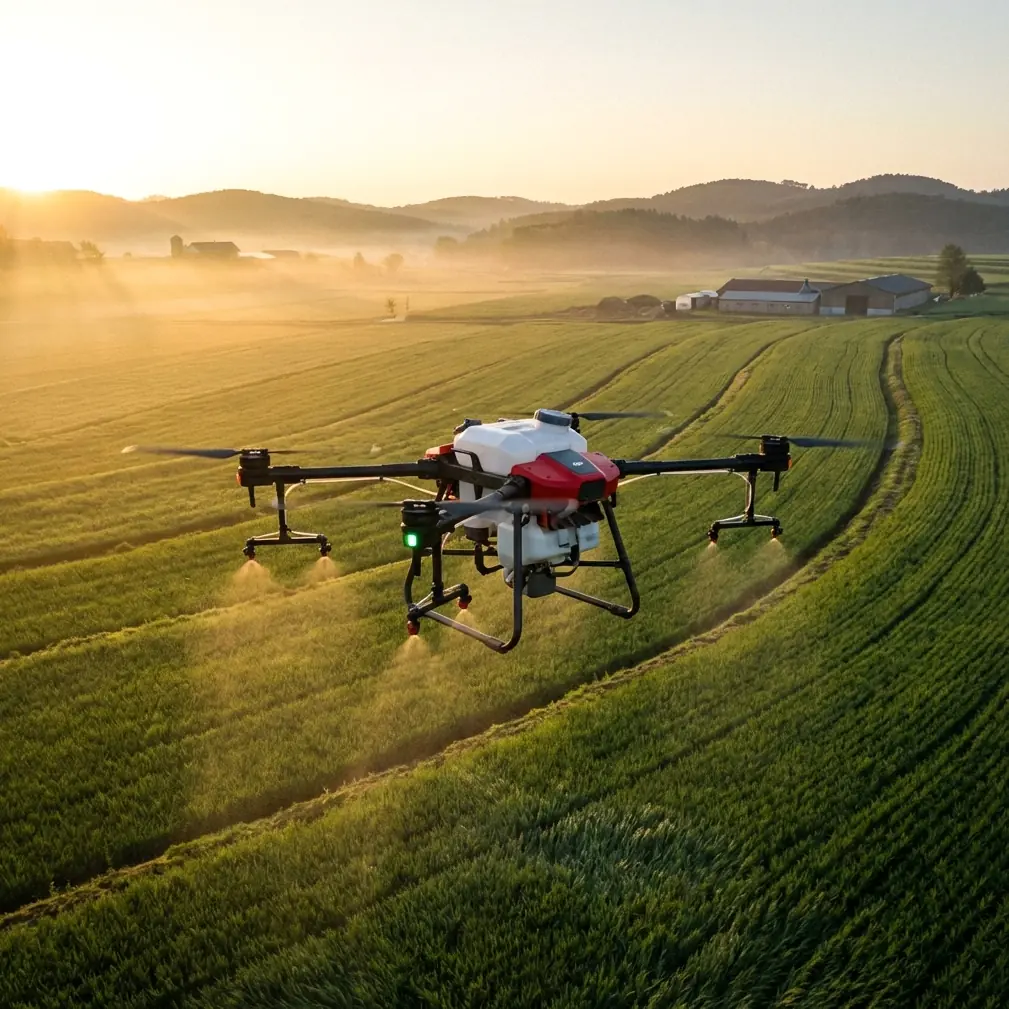
Delivering forests with the Agras T70P: high-altitude spraying lessons that actually matter
META: Practical Agras T70P guidance for high-altitude forest operations, covering RTK precision, service-team workflows, spray drift control, nozzle calibration, and how to manage weather shifts mid-flight.
By Marcus Rodriguez, Consultant
The most useful way to think about the Agras T70P in forestry work is not as a flying machine first. It is a service platform.
That distinction matters in high-altitude forest operations, where the aircraft itself is only one part of the job. The real challenge is building a system that can respond to large treatment areas, uneven terrain, sudden pest pressure, and weather that rarely stays polite for long. If you are planning to use the T70P for forest delivery and crop protection work in elevated terrain, the lesson from China’s plant-protection market is clear: the winners are not the solo operators with a machine in the back of a truck. The winners are organized teams with scheduling discipline, repeatable workflows, and precision tools that reduce risk.
That shift has been coming for years. One of the more revealing field observations from the agricultural aviation side was the response to a corn armyworm outbreak in Weinan, Shaanxi. The significance of that event was not just that drone fleets were mobilized. It was that coordinated dispatch proved its value during a sudden pest event. In practical terms, that is exactly the kind of stress test a forest operation faces when an infestation appears in a remote upland block and treatment windows are short. For an Agras T70P operator, the takeaway is operational, not theoretical: response speed depends on fleet organization, route planning, and resource integration more than on raw aircraft specs alone.
Why the T70P belongs in a systems conversation
Forestry at altitude is unforgiving. Payload matters, yes. Stability matters. Tank design, pump performance, swath width, and airframe sealing all matter. But if the drone is deployed without disciplined planning, those strengths get diluted quickly.
The historical trend in aerial plant protection helps explain why. As agricultural drones became more intelligent, the cost of buying, maintaining, and properly supporting them rose. Earlier commentary from the field predicted that individual backpack-style operators would gradually lose ground to larger service teams and plant-protection companies. That prediction makes even more sense in mountain forests than it does in flat farmland.
Why? Because forests add friction everywhere:
- access roads are worse
- GNSS conditions can vary under canopy edges and terrain shadow
- refill and battery logistics take longer
- wind behaves differently over ridgelines and clearings
- treatment quality is harder to verify by eye
In other words, the T70P may be powerful, but the business model around it has to be even stronger. A dedicated forestry service team can standardize nozzle calibration, keep spare wet parts on hand, document RTK fix rate behavior by site, and create weather thresholds specific to each elevation band. A solo operator usually cannot do all that consistently.
The old story of manual spraying is ending
The move away from traditional shoulder-carried spraying is not just about labor efficiency. It is about risk transfer.
In conventional manual application, exposure risk, consistency risk, and coverage quality risk all sit heavily on the worker. Drone-based plant protection shifts much of that burden onto the service provider and its operating procedures. That sounds simple until you realize what it implies: once the drone team takes responsibility, farmers, foresters, and land managers start judging not just whether the aircraft flies, but whether the service is reliable.
That point showed up clearly in field commentary: aerial plant-protection quality, service, and credibility were still not always meeting end-user expectations. For a T70P forestry operator, this is the pressure point to focus on. The machine is not enough. The service promise has to be measurable.
That means:
- pre-mission site assessment
- documented nozzle calibration before the day’s first treatment block
- spray drift thresholds tied to actual slope and tree density
- route plans built around terrain exposure, not just area size
- post-flight records that show what was treated, under what weather conditions, and with what positioning quality
These are not administrative extras. They are the difference between a drone operation that scales and one that gets remembered for inconsistent coverage.
RTK is not a luxury in high-altitude forests
One of the most useful historical clues in the reference material is the early emphasis on RTK, autonomous route planning, and app-based multi-aircraft coordination. Those capabilities were highlighted as defining advantages in plant protection long before today’s larger agricultural platforms entered more demanding mission profiles.
For the T70P in forest delivery and spray work, RTK is operationally significant for two reasons.
First, it improves repeatability. In sloped or fragmented treatment zones, centimeter precision helps maintain cleaner overlap control and more predictable swath placement. That does not magically solve every canopy penetration challenge, but it does help prevent the common problem of over-treating one edge while starving another.
Second, it strengthens team coordination. If multiple crews are covering adjoining blocks, route consistency matters just as much as position accuracy. The older industry observation about hand-held app control enabling multi-machine coordination still translates directly today. In forestry, especially when a narrow weather window opens, coordinated aircraft deployment can make the difference between finishing a ridge section today or losing it to wind and cloud tomorrow.
When evaluating your own T70P workflow, do not just ask whether RTK is available. Ask harder questions:
- What is your RTK fix rate at the actual operating elevation?
- How does terrain shadow affect reacquisition time?
- What is the fallback plan when a route segment loses ideal correction quality?
- Are pilots trained to recognize when “acceptable” positioning on-screen is not acceptable for a narrow spray corridor?
That is where precision stops being a brochure word and becomes field discipline.
Mid-flight weather changes: where good planning saves the mission
Let’s talk about the part that catches even experienced operators off guard.
A few months ago, I was reviewing a high-altitude forestry workflow with a crew working a steep treatment area that opened into a ridgeline saddle. Conditions at launch looked manageable. Wind was light at ground level, and the first passes were stable. Mid-flight, the weather turned the way mountain weather often does: a crosswind built faster than expected along the ridge, and humidity shifted just enough to change droplet behavior.
The aircraft handled the shift mechanically. That was not the real victory.
The real victory was that the crew had already built drift-response rules into the plan. They reduced exposure on the windward edge, re-checked effective swath width instead of blindly trusting the original setting, and adjusted the sequence so the most turbulence-prone section was treated last rather than forcing completion under worsening conditions. Because their route plan was structured and their application assumptions were documented, they could adapt without improvising the whole mission.
This is how the T70P should be used in forests. Not as a machine that “beats the weather,” because no responsible operator should promise that. Instead, as a platform within a workflow that recognizes weather as a live variable.
If you are flying high-altitude forest blocks, build these into your routine:
1. Treat swath width as conditional, not fixed
A published or nominal swath width is only a starting point. Over forest edges, broken terrain, and wind-exposed ridges, effective deposition width changes. Reassess it when wind direction shifts.
2. Watch spray drift before it becomes obvious
By the time visible drift is easy to see, you may already be compromising the target zone. Establish stop or modify thresholds in advance.
3. Revisit nozzle calibration more often than feels necessary
In altitude work, operators often focus on batteries, lift, and route geometry. But nozzle performance drift quietly undermines everything. Small inconsistencies in output become large inconsistencies across a broad forest block.
4. Do not over-trust autonomy
Autonomous route planning is a major advantage. The earlier generation of plant-protection systems proved that. But autonomous does not mean self-judging. Terrain-induced airflow, edge effects, and sudden cloud movement still require a human decision layer.
Forest operations need coordination tools, not just aircraft
Another detail in the source material deserves more attention than it usually gets: service integration platforms became strategically important during pest-response mobilization. In plain language, scheduling and communication tools started to matter almost as much as the drone.
That idea is extremely relevant to T70P deployment in remote forests.
A high-altitude operation can fail for boring reasons:
- the refill vehicle is on the wrong access road
- the second battery set arrives late
- the treatment map on one tablet is outdated
- a weather change reaches one crew before another
- the land manager cannot confirm which compartment was finished
These are not flight failures. They are coordination failures. The historical lesson from plant-protection dispatch systems is that organized information flow creates capacity. If your forestry operation is expanding beyond a single crew, this is where to invest attention.
Use shared treatment maps. Standardize mission naming. Record weather observations by time stamp. Build a handoff protocol for battery swaps and refill cycles. If you need a quick field discussion about T70P setup for steep forest work, I usually recommend crews keep a direct line open through this WhatsApp contact for coordination questions rather than relying on fragmented messages across multiple apps.
That is not about convenience. It is about reducing ambiguity while the aircraft is actually earning its keep.
The market backdrop explains why the T70P category matters
The broader drone industry figures in the reference material are not forestry-specific, but they do give useful context. One report projected the global drone market at roughly 700亿美元 by 2025, while Chinese policy guidance pointed to a civil drone industry output value of 600亿元 by 2020 with annual growth above 40%.
Those numbers matter because they explain why professional users now have access to more capable airframes, better planning tools, and more mature service ecosystems. Commercial drone growth has pushed the sector away from hobby-era assumptions. For forestry operators, that means the T70P belongs to a market phase where reliability, data integration, and service structure increasingly define success.
This also explains why features such as robust weather resistance, sealed components, and maintenance discipline matter so much. If your T70P platform includes high-ingress protection expectations such as IPX6K-class resilience, that helps in wet, dirty, chemical-intensive field environments. But protection ratings are not permission to neglect washdown, inspection, or connector care. In mountain forestry, mud, mist, and residue accumulate fast. A sealed platform lasts longest in the hands of crews who still behave as if it is vulnerable.
What smart operators should measure on every forest mission
If I were setting up a T70P forestry program from scratch, I would want five things recorded on every job:
RTK fix rate by block and elevation
This gives you a real picture of where centimeter precision is dependable and where mission design needs extra caution.Actual weather trend during flight
Not just launch conditions. Mid-flight changes are often what separate a clean treatment from a compromised one.Nozzle calibration status
A quick number on flow consistency beats a vague assumption every time.Observed drift risk zones
Mark the edges, ridges, and canopy openings that repeatedly change droplet behavior.Treatment completion quality, not just completion percentage
Finishing the map is meaningless if the deposition pattern is wrong.
Notice what is missing from that list: ego metrics. Forest work does not care how smooth the takeoff looked or how confident the pilot sounded. It cares whether the right material reached the right place under the right conditions.
The real promise of the Agras T70P in high-altitude forestry
The strongest case for the T70P is not that it replaces every traditional method overnight. It is that it fits the long-term direction of aerial plant protection: higher precision, more autonomy, better coordination, and stronger service accountability.
The source material predicted a move toward RTK, autonomous route planning, and larger organized service teams. It also warned that quality and trust would become the deciding factors as risk shifted from manual workers to drone operators and companies. That prediction has aged well.
So if you are looking at the Agras T70P for forests in high-altitude areas, think bigger than payload or speed. Ask whether your operation can do three things well:
- respond quickly when pest pressure spikes
- maintain precision when terrain complicates every pass
- deliver a service standard that land managers will trust again next season
If the answer is yes, the T70P becomes more than a tool. It becomes the center of a modern forestry workflow that is measurable, scalable, and far more resilient than the old shoulder-spray model ever was.
Ready for your own Agras T70P? Contact our team for expert consultation.