
Delivering in Windy Conditions With the Agras T70P: A Field
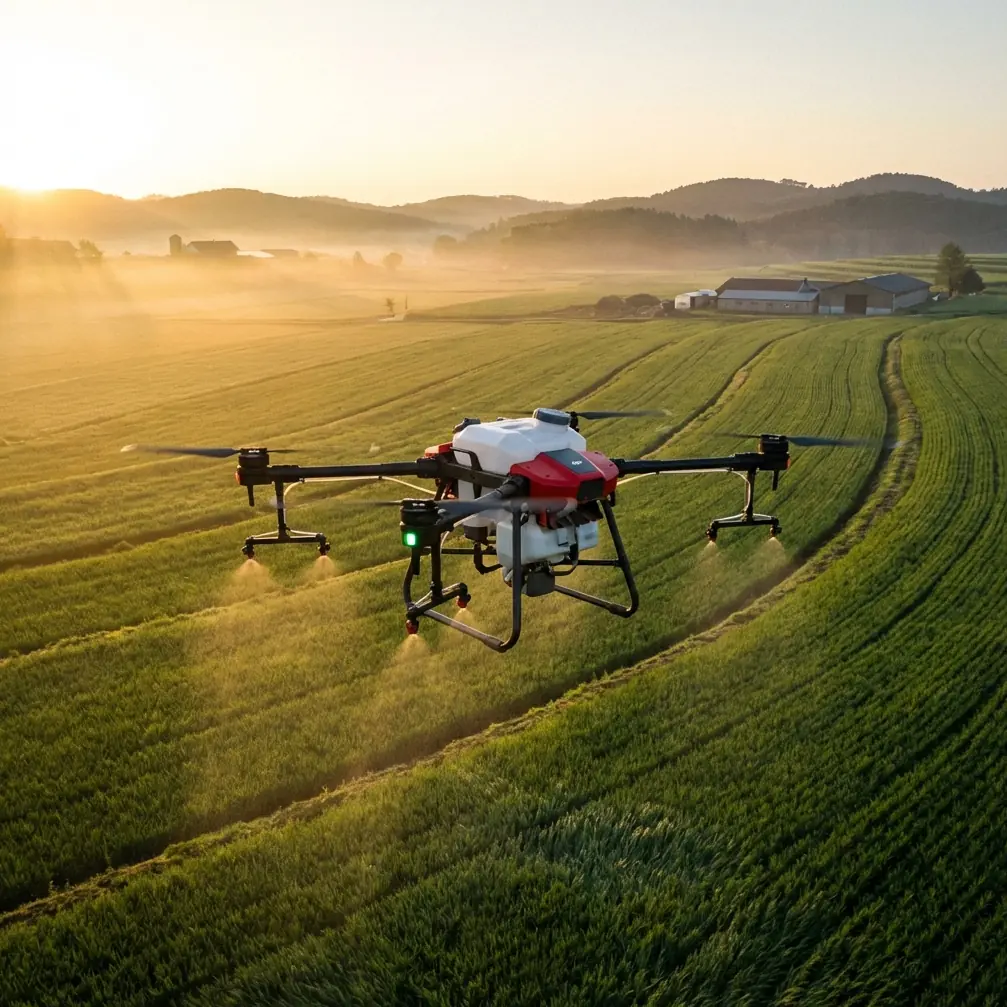
Delivering in Windy Conditions With the Agras T70P: A Field-First How-To for Better Accuracy and Less Drift
META: Learn how to operate the Agras T70P in windy field conditions with practical guidance on spray drift, nozzle calibration, RTK fix stability, swath width, and weather-ready workflow decisions.
Wind changes everything in agricultural drone work. It bends spray patterns, steals consistency from your edges, and turns an efficient flight plan into a patchy application if the operator treats the day like any other. The Agras T70P is often discussed in terms of payload and output, but for real field delivery in windy conditions, the bigger story is control: how well the aircraft holds its line, how precisely it meters liquid through the nozzles, and how reliably it maintains repeatable coverage when the air refuses to cooperate.
That is where the T70P separates itself from many lighter or less refined platforms. A drone can have impressive capacity on paper and still underperform when gusts start nudging it sideways across the crop. The difference comes down to how the whole system works under pressure: flight stability, centimeter-level positioning, terrain awareness, nozzle setup, and how disciplined the operator is in matching the machine to the weather.
I’ve worked with growers and operators who assume windy-day performance is mostly about bravery or schedule pressure. It is not. It is about knowing when the T70P’s strengths genuinely help and when even a capable aircraft should stand down. If you are delivering fields in windy conditions, this is the operational mindset that matters.
Why wind exposes weak setups fast
Wind is not only a flight issue. It is an application issue.
When air movement increases, three things usually happen at once. First, droplets shift off target. Second, swath shape becomes less predictable, especially on the outer edges. Third, the aircraft has to fight harder to stay aligned with the route, which can affect speed consistency and effective output. If any one of those variables drifts too far, the result is not simply reduced efficiency. It can become uneven deposition, missed zones, or unacceptable off-target movement.
The Agras T70P gives you more tools to manage that reality than many smaller agricultural drones. Its working logic is not just “carry more and finish faster.” In windy fields, the real advantage is that a more stable, more capable platform can maintain a better line, support more disciplined application settings, and preserve operational confidence when conditions are marginal but still workable.
That does not mean wind becomes irrelevant. It means the T70P gives a skilled operator more room to make smart adjustments before quality begins to collapse.
Start with the right question: should this field be flown now?
Before touching nozzle settings or route design, decide whether the mission makes agronomic sense.
A windy field day can tempt operators to push ahead because the crop window is tight. That pressure is real. But smart T70P work begins with a blunt screening process:
- Is the wind steady or gusting unpredictably?
- Is the crop canopy open enough that drift losses become more serious?
- Are there sensitive adjacent areas, roads, waterways, or neighboring crops?
- Will the planned spray quality still deliver target deposition at the intended swath width?
The T70P’s precision systems can help maintain route accuracy, especially when RTK performance is solid and the aircraft is holding a strong fix. That centimeter precision matters more in wind than many people realize. If your aircraft tracks the line cleanly, your overlap and edge control improve. If the fix rate is unstable, windy conditions magnify every small navigation error into a visible coverage problem.
This is one reason higher-end platforms outperform budget competitors in real farm work. Plenty of drones can fly a map in calm weather. Fewer can keep a disciplined line when crosswinds try to pull the aircraft off the route and the operator still needs reliable placement pass after pass.
RTK fix rate is not a spec-sheet detail
Operators sometimes treat RTK as a nice add-on, mainly useful for neat route records or cleaner repeat missions. In windy application work, that is a mistake.
A strong RTK fix rate supports repeatable path tracking with near-centimeter precision. That directly affects three operational outcomes:
Swath consistency
If the aircraft remains exactly where the system expects it to be, overlap remains more controlled even when wind pressure increases.Boundary discipline
Field edges are where drift risk and compliance pressure often meet. Better positional confidence helps the T70P avoid creeping into areas where it should not be applying.Reduced correction workload
When the aircraft holds its line well, the entire operation becomes calmer. The pilot is not constantly compensating for small route errors layered on top of wind effects.
Compared with lower-tier spray drones that may struggle with route fidelity in rougher conditions, the T70P’s precision architecture gives operators a practical edge. That edge is not glamorous. It simply shows up where it counts: straighter passes, cleaner overlaps, fewer surprises at the boundary, and more confidence that the application map reflects reality.
Nozzle calibration matters more when wind is working against you
If I had to pick one area where operators most often lose performance on windy days, it would be nozzle calibration.
The logic is simple. Wind already wants to move droplets away from the target. If the nozzle setup is producing a droplet spectrum that is too fine for the conditions, the application starts with a built-in disadvantage. The T70P can deliver serious productivity, but output without calibration discipline is just a faster way to spread inconsistency.
On windy jobs, nozzle calibration should be treated as a pre-flight control point, not a maintenance afterthought. Pay close attention to:
- Actual flow rate versus target application rate
- Wear condition across all nozzles
- Uniformity between left and right sides
- Pressure and droplet behavior at intended working speed
The operational significance here is direct. A well-calibrated nozzle set helps preserve target droplet behavior so the T70P can use its route accuracy and stable flight characteristics effectively. A poorly calibrated set creates asymmetric spray, unstable deposition, or drift-prone atomization that no navigation system can rescue.
This is where experienced operators beat casual ones. They understand that windy-day quality is built on tiny controls. If the aircraft is tracking precisely but the nozzles are mismatched, the pass may look professional in the flight log and still perform badly in the crop.
Swath width should shrink before quality does
One of the most common mistakes in wind is refusing to adjust swath width.
Operators love efficiency, and wide swaths look efficient. But when wind starts distorting the outer edges of the pattern, a swath that worked in calmer air may no longer be defensible. The right move is often to tighten the operational width before visible misses or over-light edges begin to appear.
With the T70P, this adjustment is especially worthwhile because the aircraft is built to maintain productive coverage even when you decide to become more conservative. That is another practical way it can outperform weaker alternatives. A platform with less capacity or less route stability may become uneconomical the moment you reduce width or slow down. The T70P gives you more flexibility to preserve application quality without the job instantly falling apart from a workflow standpoint.
That matters in commercial field delivery. Windy-day work is rarely about maxing out headline output. It is about protecting efficacy while still completing enough hectares to keep the day productive.
Speed control is not just a flight preference
In windy conditions, speed affects deposition, route adherence, and the time droplets spend exposed to lateral air movement. Faster is not always better, even on a capable platform.
The T70P can handle demanding workloads, but intelligent operators manage forward speed as part of spray quality control. If you slow slightly to preserve pattern integrity and improve on-target deposition, you may finish the field with a better agronomic result even if the mission takes longer.
That tradeoff is often where superior aircraft prove their value. A well-built spray drone should not force you into a binary choice between painfully slow operation and reckless output. The T70P’s platform stability helps it remain useful in that middle band, where speed, swath width, and droplet behavior are balanced rather than maximized blindly.
Why weather resistance still matters during spray planning
The T70P’s IPX6K-style protection is not just a brochure bullet. In real agricultural work, it affects field confidence.
Windy days often bring more than lateral airflow. You may also be dealing with fine dust, residue, moisture, splashback, and repeated refill cycles in dirty field conditions. A more weather-resilient airframe helps protect uptime when the operating environment is less than ideal. It does not make the drone invulnerable, and it should never encourage careless handling. But it does support a more dependable working rhythm across long field days.
This is one of those competitor comparisons that matters in practice. Some drones look competitive until operating conditions become messy. Connectors, seals, exposed areas, and maintenance sensitivity begin to show. The T70P’s ruggedness helps it hold up in the kind of field reality operators actually face, not the sanitized conditions of a product demo.
Use terrain and crop awareness, not just maps
Wind is rarely uniform across a field. Tree lines, elevation changes, irrigation structures, and open corridors can create localized gust behavior. That means one application recipe for the entire block may be too simplistic.
The best T70P operators read the field in sections. They notice where crosswinds intensify. They understand where shelter reduces movement. They treat boundaries, slopes, and crop-stage differences as variables that deserve tactical adjustments.
This is also where multispectral data, even if gathered through a broader farm workflow rather than directly during the spray mission, can improve decisions. If you already know where crop vigor is uneven or where canopy density changes, you can think more clearly about deposition risk. Thin or stressed areas may be more vulnerable to uneven coverage when wind is present. Dense sections may intercept droplets differently. The more complete your agronomic picture, the better your windy-day settings become.
A practical windy-day workflow for the Agras T70P
If I were setting a repeatable operating procedure for T70P field delivery in wind, it would look like this:
1. Confirm the field is worth flying
Check not only average wind speed, but gust pattern, direction relative to pass lines, and field sensitivity at the edges. If the risk profile is wrong, stop there.
2. Verify RTK integrity before launch
Do not assume a good lock will magically improve after takeoff. Stable RTK fix performance is part of the application quality equation, especially when the aircraft must resist drift and maintain clean overlaps.
3. Calibrate nozzles with zero shortcuts
Inspect wear, balance flow, and confirm output matches the planned application parameters. In wind, uneven nozzle behavior gets exposed immediately.
4. Reduce swath width if edge quality is doubtful
Protect pattern integrity first. Recovering missed coverage later is usually more expensive than being conservative on the first pass.
5. Adjust speed for deposition, not ego
A slightly slower mission with cleaner placement beats a fast mission that leaves weak edges and inconsistent canopy contact.
6. Watch the field, not only the screen
Look for visible drift behavior, crop movement, and changing gust zones. Wind can shift quickly across a block.
7. Reassess after the first passes
The first few runs tell you whether your settings are realistic. If the pattern looks compromised, change the plan early.
If you want to compare notes on route setup or drift-control workflow, use this direct field support channel: message Marcus here.
What makes the T70P especially strong in this role
The Agras T70P excels in windy field delivery because it combines several traits that matter together, not separately.
- It supports high-precision route execution when RTK is healthy.
- It gives operators enough capability to shrink swath width or adjust speed without destroying productivity.
- It is robust enough for hard agricultural use, where weather resistance and washdown tolerance matter.
- It rewards disciplined setup rather than demanding perfect calm conditions to look competent.
That last point is the most telling. Lesser competitors often perform acceptably only inside a narrow comfort zone. Once wind begins to pressure route fidelity and spray consistency, they show their limits quickly. The T70P has a broader useful envelope. For professional operators, that means more workable days and fewer compromised applications.
Still, no aircraft rewrites physics. The T70P is not a license to spray carelessly into bad conditions. It is a better tool for making the right decision, executing that decision more precisely, and preserving application quality when the margin for error gets thin.
For growers, that translates into more confidence that the drone is doing real agronomic work rather than simply covering ground. For operators, it means the machine can keep up with professional judgment instead of fighting it.
And that is the real test of a spray platform in wind. Not whether it can stay airborne, but whether it can still deliver a field in a way that respects efficacy, boundaries, and repeatability.
Ready for your own Agras T70P? Contact our team for expert consultation.