
Agras T70P for Construction-Site Delivery in Extreme
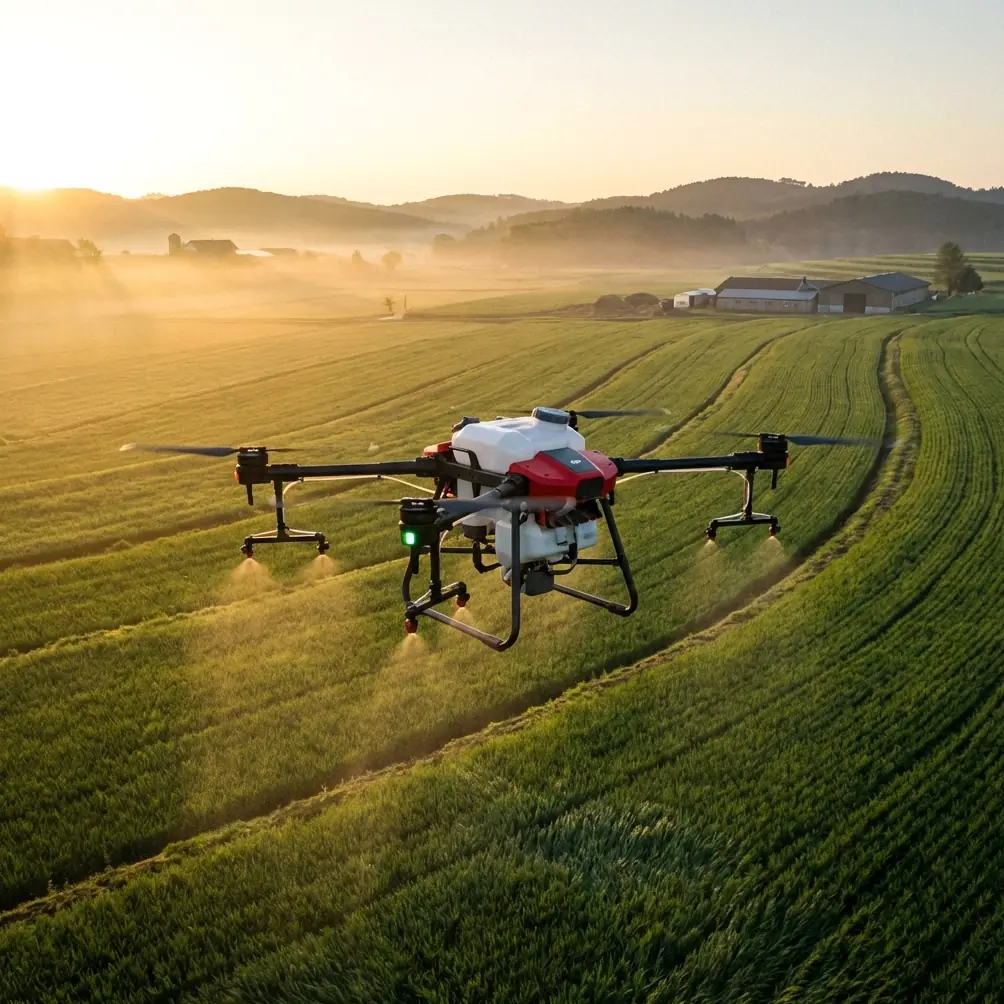
Agras T70P for Construction-Site Delivery in Extreme Temperatures: A Practical Operating Tutorial
META: A field-focused tutorial on using the Agras T70P around construction sites in extreme temperatures, with operational tips on pre-flight cleaning, sensor reliability, RTK discipline, swath control, and payload consistency.
Construction logistics gets messy long before the weather turns hostile. Dust coats sensors. Moisture sneaks into connectors. Temperature swings change battery behavior, surface visibility, and timing. If you’re planning to use the Agras T70P around construction sites in extreme heat or cold, the aircraft itself is only part of the equation. The real work is building a repeatable operating routine that protects accuracy, safety, and throughput.
I’ve seen crews focus on lift capacity and flight time while overlooking smaller disciplines that decide whether the day runs smoothly: how clean the sensing surfaces are before takeoff, whether the aircraft is getting a stable RTK fix, whether route spacing is realistic for the site, and whether the team knows how to pause operations before environmental conditions start degrading consistency.
This guide is built around that reality.
Even though the Agras T70P is commonly discussed through an agricultural lens, many of the same strengths matter on construction projects: precise route control, repeatable low-altitude tasking, dependable operation in dirty environments, and the ability to work methodically instead of improvising every sortie. On a jobsite, that can translate into moving lightweight materials, parts, samples, or tools between staging areas when ground access is slow or obstructed.
Start with the step too many teams rush: pre-flight cleaning
If you fly on active sites, your aircraft is living in abrasive air. Fine concrete dust, silica, mud spray, and oily residue all interfere with visibility and sensor confidence. Before the first flight of the day, perform a deliberate cleaning pass on the T70P’s exposed sensing and safety surfaces.
This is not cosmetic maintenance. It directly affects the aircraft’s ability to hold a reliable picture of its environment.
Pay particular attention to:
- Forward and downward sensing areas
- Camera lenses and protective covers
- RTK antenna surfaces and mounting points
- Battery contacts and compartment seals
- Any external lighting or visual positioning windows
- Payload mount interfaces and release points
Why this matters in extreme temperatures: contamination compounds environmental stress. In cold conditions, moisture and grime can stiffen, freeze, or fog surfaces. In hot conditions, dust can bake onto covers and reduce optical performance. A short pre-flight wipe-down often does more for safety performance than adding another checklist item somewhere later.
This is where ruggedization ratings such as IPX6K become relevant, but they should not be misunderstood. High ingress protection helps the aircraft tolerate harsh washdown-style exposure and rough field conditions. It does not mean you should let mud, slurry, or dust accumulate until the aircraft “powers through it.” Rugged design gives you margin. Good cleaning preserves it.
For jobsite managers, this one habit has an operational payoff: fewer false interruptions, fewer degraded sensor readings, and less chance of a mission being scrubbed after takeoff because the aircraft starts reporting inconsistent environmental awareness.
Build your route around precision, not optimism
Construction sites are dynamic, and that is exactly why route discipline matters. A T70P operating between laydown yards, elevated work zones, and temporary structures should not be flown with vague waypoint spacing or “that looks clear enough” logic.
Centimeter-level positioning only helps if the aircraft actually has the location confidence to use it. That’s where RTK fix rate becomes a serious operational metric, not a spec-sheet talking point. If the T70P is intended to follow repeated corridors across a site, a healthy RTK lock is what keeps those corridors consistent over time.
Why does that matter on a construction project?
Because repeatability reduces conflict. If the aircraft uses the same dependable path from staging to delivery point, ground teams learn where to expect it. Crane crews, spotters, and site supervisors can plan around that predictability. The aircraft becomes part of site logistics instead of an interruption to it.
If your RTK fix is unstable, you start losing that consistency. Small route deviations become bigger practical problems when flying near scaffolding, temporary fencing, stacked materials, or partially enclosed structures.
My recommendation is simple: do not treat RTK as “nice to have” if your site needs repeated delivery lanes. Treat it as a go/no-go quality gate. If you can’t maintain the fix quality needed for centimeter precision, reconsider the mission timing, the base setup, or the corridor itself.
Extreme temperatures change more than battery expectations
Most teams know that heat and cold influence battery performance. That’s true, but on a construction site the environmental effect is broader.
In heat
High surface temperatures can distort visual cues above roofing, asphalt, compacted soil, and concrete pads. Dust plumes linger longer in active work zones. Electronics may remain within allowable limits while your real problem becomes visibility and inconsistency in low-altitude sensing.
In cold
Plastic components, cables, and seals become less forgiving. Condensation can form during transitions from heated vehicles to cold outdoor air. Crew dexterity drops, which increases the chance of poor latching, rushed inspections, or sloppy payload attachment.
In both conditions, the key is standardization. The T70P should be staged, inspected, cleaned, powered, and launched in the same disciplined sequence every time. Variability in crew behavior usually causes more trouble than the weather itself.
A useful rule: if conditions are severe enough that your team starts skipping steps to “get in the air quickly,” those are precisely the conditions where the checklist matters most.
Borrow a lesson from training aircraft: stable entry matters
One of the more useful lessons from traditional RC aircraft training has nothing to do with aerobatics and everything to do with clean mission setup. The reference material emphasizes entering a maneuver with the wings level, on a stable horizontal path, with enough power already established—often 3/4 to full throttle, and at minimum above half power—because bad setup creates errors that show up later in the maneuver.
That principle translates surprisingly well to a T70P construction delivery mission.
Your “maneuver entry” is the first 20 to 30 seconds after launch. If the aircraft begins with an unstable hover point, weak positioning confidence, or an imbalanced payload, the rest of the sortie becomes a chain of small corrections. Those corrections eat margin.
On a jobsite, that means:
- Confirming the aircraft is level and stable before committing to the route
- Verifying the payload is seated and balanced
- Checking that your route line is truly clear, not just visually plausible
- Letting the aircraft settle rather than rushing straight into forward movement
The RC training reference also notes that slow or insufficient control input makes the loop radius too large and can cause the aircraft to lose authority at the top of the maneuver. The construction-site equivalent is an underpowered or hesitant climb-out with a payload in dense, hot, or gusty air. If your departure profile is weak, the aircraft spends too long in an inefficient transition state near obstructions. Clean, confident departure parameters matter.
Site mapping before delivery is not optional
If you are moving items around an active project, the route should be built from current site conditions, not last week’s assumptions. This is where the broader ecosystem around aerial work becomes valuable.
A fresh site model helps you identify temporary changes such as:
- new steel members
- crane swing areas
- scaffold growth
- container relocation
- spoil pile expansion
- netting or weather barriers
- narrowed access lanes
Some operators immediately think of multispectral tools because they are common in UAV workflows, but on construction delivery the real point is not crop analysis or vegetation health. The point is using the right sensing workflow to maintain current situational awareness. If your operation has access to updated aerial mapping data, use it to validate whether your intended corridor still makes sense.
A route that was safe and efficient on Monday may be a poor choice by Thursday.
Swath width thinking still applies, even if you are not spraying
Agras aircraft are often evaluated with agricultural language such as swath width, and that term can still be useful on a construction site. Not because you are applying liquid, but because it teaches crews to think in corridors rather than lines.
A delivery route should have a defined operating envelope:
- the central path,
- lateral tolerance,
- vertical margin,
- and exclusion areas.
That is basically corridor management, and swath discipline is one way to teach it. If you plan routes too tightly, every environmental disturbance becomes a problem. If you define them too broadly, you create unnecessary conflict with other site activity.
The best construction-site routes are wide enough to preserve margin, narrow enough to remain predictable, and simple enough that every ground supervisor understands them.
Why nozzle calibration still matters conceptually
At first glance, nozzle calibration sounds irrelevant to delivery work. But the underlying lesson is highly relevant: output consistency depends on setup accuracy.
In spraying, poor calibration leads to uneven application, drift, and waste. In construction delivery, the equivalent problems are:
- inconsistent payload release behavior,
- uneven sling geometry,
- shifting center of gravity,
- and variable delivery timing.
That is why every payload interface should be checked as carefully as a spray system would be checked in field operations. If the release mechanism or mount behaves slightly differently from one sortie to the next, your operation becomes harder to predict.
The same goes for spray drift as a concept. Around construction sites, the analogous issue is environmental displacement: gusts around structures, rotor wash interaction with loose debris, and turbulence near walls or partially enclosed frames. You may not be fighting chemical drift, but you are still managing movement caused by air.
That is a serious reason to keep landing zones and drop-off points clean. Loose plastic, dust sheets, paper wraps, insulation scraps, and lightweight packaging can all react badly to rotor wash, especially in heat-driven convective air or wind-channels between structures.
A practical launch workflow for extreme-temperature jobsites
Here is the sequence I recommend when using a T70P for repetitive site delivery:
1. Inspect the launch and recovery pad
Check for loose debris, standing water, rebar offcuts, packaging film, and dust buildup.
2. Clean the aircraft before power-up
Wipe sensor covers, camera surfaces, antenna areas, battery contacts, and payload interfaces. This is your first safety step, not a finishing touch.
3. Verify battery and temperature readiness
Make sure packs are in the appropriate operating condition for the day’s temperature. Avoid rushed transitions from storage to launch.
4. Confirm RTK status before mission commitment
Do not assume it will stabilize after takeoff. If the corridor depends on precise repetition, fix quality should already be where you need it.
5. Check payload attachment and balance
Treat this like calibration. Repetition is the goal. Each sortie should feel mechanically identical.
6. Reconfirm the corridor against current site activity
Look for cranes, telehandlers, suspended loads, scaffold changes, and temporary traffic control changes.
7. Launch and hold a stable initial hover
Give the aircraft time to demonstrate clean positioning and level behavior before moving into the route.
8. Monitor environmental change, not just aircraft status
Dust events, gust channels, thermal shimmer, and crew congestion on the ground often become the first warning signs that the mission window is degrading.
When to pause operations
Construction teams often push through conditions because deadlines are real. But with UAV delivery, the most professional decision is often a short pause.
Stop or reset if you see:
- degrading RTK stability
- persistent dust obscuring sensing surfaces
- repeated route corrections on the same segment
- inconsistent hover behavior
- increased rotor wash disturbance at delivery points
- condensation or grime forming after environmental transitions
This is where having a support line helps. If your crew needs field-oriented guidance on setup or route planning, you can message a UAV specialist here: https://wa.me/85255379740 and work through the scenario before forcing a mission that has lost margin.
The bigger takeaway
The Agras T70P can be a strong fit for construction-site logistics in extreme temperatures, but not because a rugged aircraft magically solves a rugged environment. It works when the operation is disciplined.
Two details from the source material point to that discipline clearly. First, the educational drone reference describes a 10-second countdown triggered by a button press. That small teaching example highlights a larger truth: reliable operations come from deliberate sequencing, not improvisation. A controlled trigger, a defined wait state, and a visible time-based process are exactly the kind of logic construction UAV teams should adopt before launch.
Second, the RC flight training material insists that the aircraft enter the maneuver with wings level and enough power already established—typically 3/4 to full throttle. Operationally, that means the quality of the setup determines the quality of the mission. For a T70P on a construction site, stable launch conditions, proper route confirmation, and sufficient performance margin matter more than flashy claims about what the aircraft can do on paper.
If you remember only one thing, make it this: clean first, verify precision second, launch third. The crews that reverse that order usually learn why the hard way.
Ready for your own Agras T70P? Contact our team for expert consultation.