
Agras T70P at High Altitude: What Actually Matters When
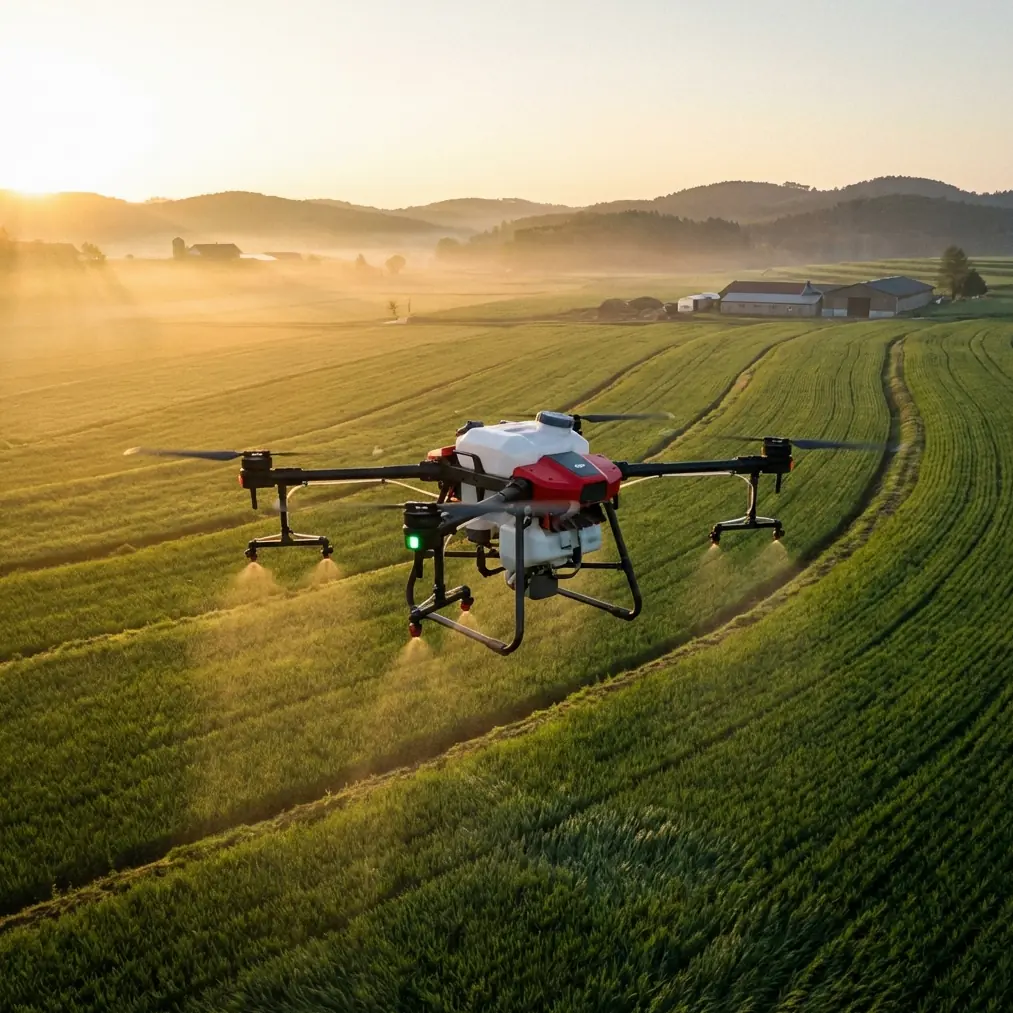
Agras T70P at High Altitude: What Actually Matters When Coastal Conditions Change Mid-Flight
META: A field-focused tutorial on using the Agras T70P in high-altitude coastal agriculture, covering crew roles, nozzle calibration, spray drift control, battery landing checks, and why maintenance training matters as much as flight tech.
High-altitude coastal work has a way of exposing every weak assumption in an ag drone operation.
The air is rarely stable for long. A field can look manageable at takeoff, then pick up a lateral wind ten minutes later as marine moisture rolls in. Temperature shifts alter droplet behavior. Terrain complicates line-of-sight and recovery planning. In that environment, talking about the Agras T70P only as a machine misses the bigger point. The aircraft matters, yes. But the outcome depends just as much on procedure, crew discipline, and the quality of technical support behind the platform.
That is the real story around the T70P for demanding agricultural work: not a single headline feature, but the way a modern multirotor operation holds together when conditions stop being polite.
Why the T70P conversation should start with workflow, not hardware
A lot of operators jump straight to capacity, swath width, or whether the aircraft can hold centimeter precision through RTK. Those are valid questions. They just are not the first questions I ask when the mission is high-altitude coastal application.
My first question is simpler: what happens when the weather shifts after launch?
A useful reference point comes from a flight-protection operating standard that breaks agricultural spraying into assigned roles rather than treating the pilot as a solo actor. In that framework, the flight operator handles the unmanned aircraft, the safety officer is primarily responsible for surrounding safety confirmation, and both the pilot and safety role share responsibility for confirming spray status and adjusting spray volume. Even the landing phase for replenishment is procedural: when the drone needs to land for chemical or battery refill, the pilot, safety officer, and assistant must confirm that no people or vehicles are crossing into the danger area.
That sounds basic until you operate above a coastal ridge with changing crosswinds.
When wind direction bends around terrain, the problem is not only whether the T70P can maintain its line. The problem is whether the team catches droplet displacement early enough to adjust output, route, or pause the run before spray drift turns into waste or off-target exposure. A drone with excellent positioning still needs a crew that understands the difference between accurate flight and effective application.
A mid-flight weather shift: the scenario operators should train for
Let’s make this concrete.
You launch the Agras T70P on a coastal terrace field at altitude. The initial pass is clean. Visibility is acceptable, drift is contained, and your nozzle calibration matches the crop and dilution plan. Then the weather changes. A marine gust line pushes in from the coast, and the wind becomes less uniform across the field edge than it was over the center block.
This is where a disciplined operation separates itself.
The first response should not be blind confidence in automation. It should be observation. The operating guidance in the reference material puts unusual emphasis on checking the characteristics of the pesticide, method of use, target pest, applicable crop, application rate, dilution ratio, timing, and total number of allowed uses. That level of detail matters because weather change does not affect all liquids equally. Some mixes tolerate small environmental changes better than others. Some are much less forgiving when droplet size distribution starts interacting with gusts.
Then comes equipment verification. The same standard calls for checking the aircraft and spraying system adjustment, including per-minute output, uneven discharge, and detachment issues. In practical T70P terms, that means you do not wait for a poor coverage result to discover that one nozzle is underperforming or that output consistency has changed under field vibration and repeated refill cycles. If the wind picks up, uneven discharge becomes more than a maintenance nuisance; it amplifies coverage variability and drift risk at the same time.
That is why nozzle calibration belongs near the center of any serious T70P discussion. Not as a checkbox. As a control lever.
The hidden strength of modern multirotor spraying platforms
To understand why the T70P is being asked to do this kind of work at all, it helps to step back and look at how multirotors matured.
A technical lecture excerpt on multirotor development describes the post-2013 period as an explosive phase, driven by hardware miniaturization, rising computing power, stronger motors, improved battery energy density, and integrated product design. It also notes that by 2016, visual obstacle avoidance had become a visible product milestone, while academic research was shifting toward greater intelligence and coordinated autonomy. A 2015 Nature review was already framing small autonomous drones as serious civilian tools rather than novelties.
Operationally, that history matters because it explains why a platform like the Agras T70P can even be considered for difficult agricultural environments. Modern multirotors are not just flying tanks with pumps attached. They are the result of a decade-long convergence: better control, better onboard computation, better energy systems, and more integrated user experience.
For the operator, that translates into something practical. When the coastal weather moves mid-flight, the aircraft is no longer fighting the environment with raw thrust alone. It is managing it through stabilization, positioning logic, route fidelity, and system-level integration. That does not eliminate risk. It reduces the number of surprises you have to absorb at once.
RTK fix rate and centimeter precision are only useful if the application side keeps up
In high-altitude field work, people like to talk about centimeter precision as if it solves everything. It does not.
High positioning accuracy is excellent for repeatable lanes, boundary control, and minimizing missed strips or overlap. A solid RTK fix rate becomes especially valuable where field geometry is irregular and terrain edges create costly rework. But precise flight tracks do not automatically produce precise deposition. If spray volume is off, if nozzle calibration has drifted, or if wind pushes droplets laterally during the outer edge passes, the result can still be agronomically sloppy.
This is why the role matrix in the operating standard is so relevant to the T70P. It distributes responsibility across the team. The pilot is not merely steering. The safety officer is not just standing around. One person watches surroundings. Multiple people confirm spray conditions. The team collectively manages replenishment and battery awareness. That structure protects application quality as much as it protects people.
On a high-altitude coastal site, that distributed awareness is operational gold.
Battery and refill landings are where avoidable incidents begin
One line from the operating standard deserves more attention than it usually gets: before landing for chemical or battery replenishment, the pilot, safety officer, and assistant must confirm whether people or vehicles have entered the hazardous range.
I have seen teams treat refill cycles as dead time. They are not. They are transition zones, and transition zones create errors.
At altitude, landing zones are often tighter and less forgiving. Along coastlines, access tracks can bring farm vehicles through unexpected approaches. Add changing wind and operator fatigue, and the simple act of landing for a battery swap becomes one of the highest-risk moments in the sortie.
For T70P operators, the lesson is straightforward. Build your landing and refill routine with the same seriousness you give your route plan. Check battery reserve before it becomes a forced decision. Keep the danger area clear. Reconfirm after every interruption. The standard explicitly assigns battery remaining confirmation to both the pilot and the safety role, with assistant awareness in support. That redundancy is there for a reason.
Maintenance capacity is becoming the real bottleneck
There is another development in the reference material that deserves a direct connection to the T70P ecosystem: on March 25, Guangdong Huitian Aerospace Technology and Guangzhou Civil Aviation College signed a school-enterprise cooperation agreement and unveiled the Huitian Industry College. The partnership covers customized training for electric aviation maintenance personnel, joint practical training platforms, two-way faculty exchange, and co-development of industry standards. The reason given is blunt: the shortage of specialized maintenance talent is becoming a serious constraint on high-quality development.
At first glance, that sounds adjacent to the Agras T70P rather than central to it. I would argue the opposite.
An agricultural aircraft operating in remote, high-altitude, weather-variable conditions is only as reliable as the maintenance culture behind it. Post-delivery support, continuing airworthiness, and after-sales technical depth are not abstract ideas. They determine how quickly an operator can diagnose output irregularities, keep spray systems within spec, maintain electrical reliability, and avoid downtime during narrow crop treatment windows.
The Huitian-college partnership matters because it reflects a wider industry truth: as electric aircraft ecosystems expand, maintenance talent becomes strategic infrastructure. Not optional overhead. If the sector is investing in customized maintenance training, shared training platforms, and standard-setting, that tells you the market has matured past the phase where flying is the only hard part.
For a T70P owner or fleet manager, this should reshape procurement thinking. Ask not only what the drone can do on day one. Ask what technical bench supports it through peak season, repeated cycles, and harsh field conditions.
Spray drift control begins before takeoff
Let’s return to the field.
When coastal wind changes mid-flight, most operators think first about pausing. Sometimes that is the right call. But the better result often starts earlier, before the propellers spin up.
The reference standard emphasizes understanding the chemical itself: target pest, crop, application volume, dilution ratio, timing, and use frequency. That matters because spray drift is not just a meteorological issue. It is a formulation-and-method issue. If your application plan does not match the crop and conditions, the best aircraft in the field will still deliver a poor outcome.
For the T70P, a disciplined preflight should include:
- verifying nozzle calibration against the intended output rate
- confirming that spray distribution is even and that no component has loosened or partially detached
- matching route parameters to actual field shape rather than idealized mapping
- assigning clear crew roles for surroundings, spray observation, and replenishment
- deciding in advance what weather change triggers a hold, reroute, or termination
That final point is especially useful in coastal altitude work. Weather feels manageable until everyone debates it in real time. Predefined limits remove emotion from the decision.
Why the future of the T70P is tied to training quality
The multirotor field has spent more than a decade becoming smarter. The technical history in the references describes a clear trend toward intelligent systems, stronger computation, and integrated user experience. That trajectory benefits aircraft like the Agras T70P directly.
But smarter aircraft create a new demand: smarter people around them.
The Huitian training partnership makes the maintenance side visible. The spraying operations standard makes the field-procedure side visible. Put together, they describe the real operating model for advanced agricultural drones. It is not lone-pilot heroics. It is trained teams, repeatable standards, and technical support systems that keep performance stable over time.
That is what lets a T70P stay productive when the field is elevated, the coastline is influencing the air mass, and the weather does not respect the schedule.
What I would prioritize on an Agras T70P coastal high-altitude job
If I were briefing a team for this scenario, my focus would be narrow and practical.
First, protect deposition quality, not just route accuracy. Strong RTK performance and centimeter precision are valuable, but they must be paired with nozzle calibration and active drift observation.
Second, formalize crew roles. The reference matrix is not bureaucracy. It is a method for preventing blind spots. Someone must own surrounding safety. More than one person should be verifying spray status and battery state.
Third, treat refill landings as critical phases. The requirement to confirm that no people or vehicles have entered the danger area before landing for chemical or battery replenishment should be non-negotiable.
Fourth, invest in maintenance capacity early. The industry’s response to technician shortages—customized training, shared practical platforms, and joint standards development—signals where long-term operational advantage will come from.
Fifth, rehearse the weather-shift decision tree. In coastal altitude operations, the question is rarely whether conditions will change. The question is whether your T70P workflow is ready when they do.
If you are mapping out that kind of operation and want a practical discussion instead of a brochure, you can message our field team directly and compare notes on setup, training, and workflow.
The Agras T70P is best understood this way: as a capable node inside a larger agricultural system. Aircraft intelligence matters. Crew coordination matters. Maintenance readiness matters. On demanding coastal terrain at altitude, the operators who understand all three are usually the ones who finish the day with consistent coverage, safe turnarounds, and fewer expensive surprises.
Ready for your own Agras T70P? Contact our team for expert consultation.