
Agras T70P on Dusty Coastlines: A Field Report on Precision
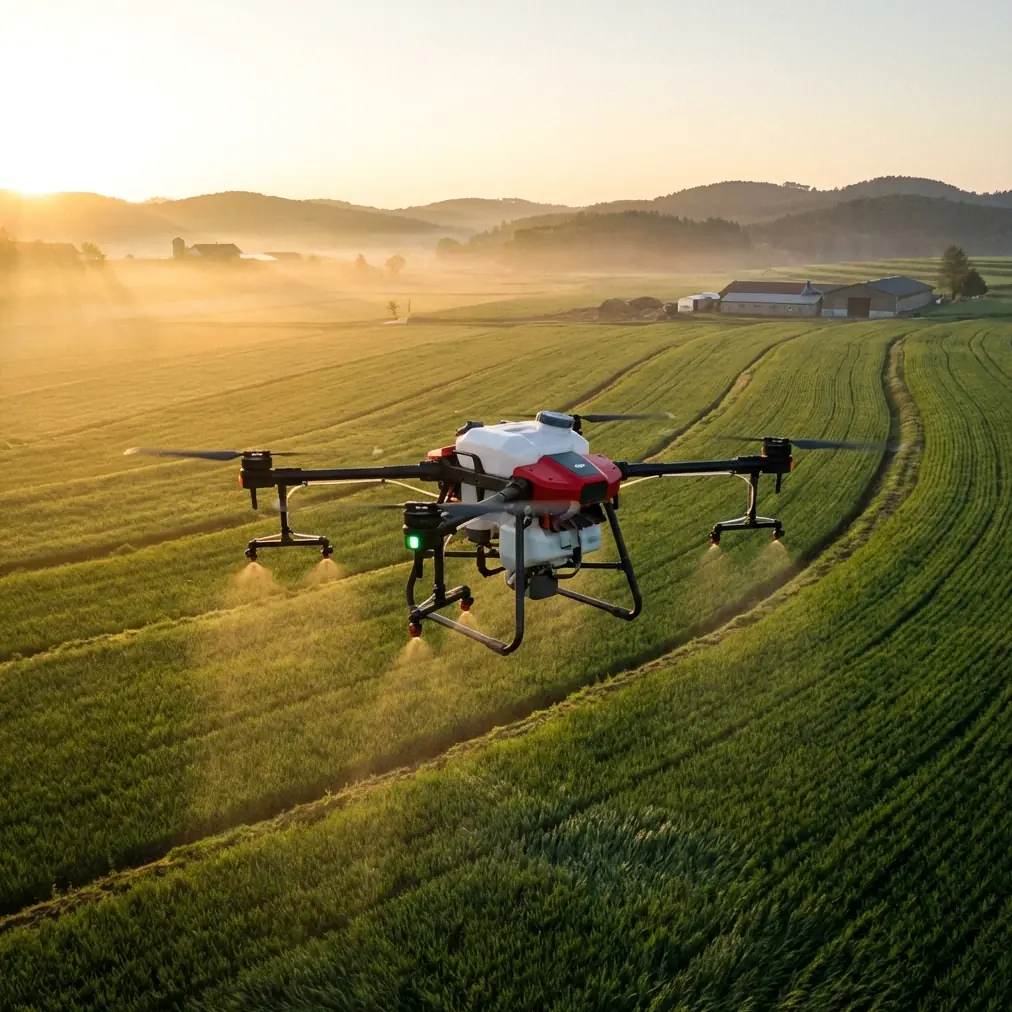
Agras T70P on Dusty Coastlines: A Field Report on Precision, Drift Control, and Faster Decision-Making
META: A practical field report on using the Agras T70P in dusty coastal agriculture, with lessons on spray drift, nozzle calibration, RTK precision, and how multispectral insights change field operations.
Coastal work has a way of exposing weak equipment and weak planning at the same time.
Dust hangs in the air longer than expected. Salt sits on surfaces. Wind shifts by the minute, not by the hour. Ground access is patchy, and the areas that matter most are often the hardest to reach consistently. When growers or contractors talk about drone performance in these environments, they usually start with payload or speed. That is understandable, but it misses the real issue.
On dusty coastlines, the hardest part is not getting a drone into the air. It is preserving accuracy when visibility, surface contamination, and variable microclimates keep trying to pull operations off target.
That is where the Agras T70P becomes interesting.
This is not because one aircraft magically removes the realities of coastal spraying. It does not. The value is that the platform can reduce friction across the whole job cycle: pre-mission assessment, route consistency, application quality, and post-flight turnaround. In practical terms, that means less time fighting the site and more time doing useful agronomic work.
The challenge I keep seeing in coastal deployments
A few years ago, one of the recurring frustrations in shoreline-adjacent farm blocks was not raw spraying capacity. It was decision latency.
Teams would identify crop stress too late. They would over-rely on visual scouting. Then, once treatment started, they would struggle to maintain a consistent application pattern because dusty conditions interfered with confidence in what had already been covered. Add coastal wind and uneven field geometry, and the result was predictable: overlap in some zones, under-application in others, and too much operator attention spent on basic verification.
The older workflow felt familiar, but it was expensive in hours and field confidence.
The reference material on hyperspectral crop assessment helps explain why this matters. Healthy vegetation and stressed vegetation do not just “look different” to the eye. Their spectral behavior shifts in measurable ways. In the visible range of 400 nm to 700 nm, reflectance rises under stress, while in the 720 nm to 1100 nm near-infrared range, reflectance drops. Even more useful, changes in near-infrared can appear before a person can clearly see disease or nutrient issues in the field.
That single fact has major operational significance for an Agras T70P workflow.
If you are managing coastal acreage where stress develops unevenly because of salt exposure, water variability, pest pressure, or wind-burn patterns, waiting for visual symptoms is too slow. A drone operation becomes far more effective when application planning is tied to multispectral or hyperspectral crop intelligence rather than broad, uniform assumptions. The T70P’s role is not only to carry and apply. It is to fit into a workflow where treatment happens sooner and more selectively.
Why that matters more on the coast than inland
In inland blocks, a delayed decision may only mean a few more days of reduced vigor. On coastal edges, delay compounds.
The environment is already stacking pressure onto the crop. Salt exposure can weaken resilience. Wind can spread pest populations or complicate disease progression. Dust can interfere with both plant surfaces and operational equipment. By the time visible discoloration is obvious, the treatment window may already be narrower than the operator wants.
The spectral reference is useful here because it reminds us that crop stress often declares itself in the data before it shows itself in the canopy. The “red edge,” typically located around 680 nm to 750 nm, shifts with chlorophyll content and plant vigor. When plants are thriving, that position moves differently than when crops are losing chlorophyll and vitality. For a coastal operator, this is not academic trivia. It is a scheduling tool.
It means the best T70P missions are often the ones that happen before the field looks dramatic.
The T70P advantage is workflow integrity
People often judge agricultural drones one mission at a time. I think that is the wrong lens for coastal work. The right question is whether the aircraft preserves workflow integrity across several difficult days in a row.
That includes:
- holding a stable path when visual references are reduced by dust
- keeping swath placement dependable enough to avoid invisible gaps
- supporting nozzle calibration discipline so actual output matches the agronomic plan
- reducing turnaround friction between mapping insight and spray execution
- tolerating washdown and contamination exposure typical of coastal operations
This is where details like RTK fix rate and centimeter precision stop being brochure language and start becoming field economics. If your route repeatability is poor, your nozzle setup can be perfect and you will still get uneven results. If your positioning is stable and repeatable, every improvement in droplet selection, height control, and swath width becomes easier to trust.
In dusty coastal environments, trust is underrated. Operators make better decisions when they do not need to second-guess where the aircraft has already been.
Lessons from surveying translate directly to spraying
The mapping case studies in the reference material are not about the T70P specifically, but they reveal something crucial about drone operations under pressure: time compression matters.
One planning project in Shenzhen cut environmental data collection from more than a week to 1 day using a DJI drone workflow. Another heritage mapping job in Jerusalem reduced fieldwork from 600 hours to 42 hours, with office processing dropping from 300 hours to 150 hours. A highway inspection project in Mexico covered 1,000 kilometers, using an 8-person team with 5 drones, capturing 120,000 images.
Those are surveying examples, not spraying missions. Still, the operational lesson carries over perfectly.
When drone systems reduce the time between observation and action, the whole project improves. In agriculture, that means less lag between identifying stress and applying the right treatment. On a dusty coastline, that speed is not merely convenient. It can be the difference between a contained agronomic issue and a spreading one.
That is why I prefer to think about the Agras T70P as part of a compressed-response field system. Pair it with multispectral intelligence, maintain a strong RTK fix rate, and calibrate the spray system carefully, and you are no longer just “using a spraying drone.” You are shortening the cycle from detection to intervention.
Spray drift is the coastline problem nobody gets to ignore
Coastal operators do not need lectures about wind. They need methods.
Spray drift management with the T70P starts long before takeoff. It begins with deciding whether the mission should happen at all, then moves into nozzle calibration, droplet strategy, flight height, speed discipline, and route orientation relative to local wind behavior. A coastal site can present very different drift conditions across a single block because dunes, tree lines, service roads, greenhouses, embankments, or shoreline contours create small air-pattern disruptions.
That is why broad assumptions fail.
A stable drone platform helps, but platform stability alone does not fix drift. The operator has to match the aircraft to the field reality. Nozzle calibration becomes especially significant in dusty conditions because contamination buildup can subtly alter output consistency over time. If one section of the spray system is not delivering as expected, drift risk and efficacy risk both increase. You may think you are compensating for wind when you are actually compensating for uneven output.
The T70P is best used as a disciplined application tool, not a brute-force one.
Dust changes maintenance from a routine into a mission-critical habit
Coastlines with dust are harsh on connectors, moving parts, and exposed surfaces. Add salt-laden air and the penalty for casual maintenance grows quickly. This is where an IPX6K-class protection mindset matters in real-world operations. Not because ingress protection makes a drone invincible, but because it supports a field routine built around cleaning, inspection, and repeated deployment in dirty environments.
What I advise teams is simple: treat every coastal mission as if contamination is cumulative, because it is.
That means checking spray hardware after every operating window, not only at the end of the week. It means verifying nozzle condition, confirming that deposits have not affected flow behavior, and making sure the aircraft is ready for precise repeat work the next morning. With the T70P, the technical capability is only half the story. The maintenance discipline is the other half.
Multispectral thinking makes the T70P smarter, even when the drone itself is the applicator
Some growers still separate sensing and spraying into two unrelated conversations. On coastlines, that split is inefficient.
The hyperspectral reference makes clear that crop stress can emerge spectrally before human scouting catches up. Reflectance changes in near-infrared are especially valuable because they can signal trouble earlier than visible inspection. That insight should directly shape how the T70P is deployed.
Instead of treating every field edge, every lane, or every management zone as equally urgent, teams can prioritize based on actual plant response. This is especially useful in irregular coastal blocks where wind exposure and soil variability create patchy stress patterns. A smarter mission is often not the largest one. It is the one with the cleanest agronomic rationale.
If your operation is building that kind of workflow and needs a practical discussion, this field support line for coastal T70P planning is the kind of resource that saves time before the season gets busy.
What changed once the workflow matured
The biggest improvement was not dramatic. It was cumulative.
Operators stopped flying as if every mission were a rescue mission. They began flying with clearer intent. Stress signals were identified earlier through spectral logic. Treatment timing improved. RTK-backed repeatability made route confidence stronger. Nozzle calibration stopped being an afterthought. Dust maintenance became systematic rather than reactive.
And because of that, the coastal environment felt less chaotic.
That is the real measure of an aircraft like the Agras T70P. Not whether it can complete a flight, but whether it can help a team turn a difficult environment into a manageable one. The best drone operations are not flashy. They are repeatable, defensible, and data-linked.
A final field note for coastline operators
If you are deploying an Agras T70P in dusty coastal conditions, the temptation is to focus on endurance, payload, and area covered per hour. Those things matter, but they should sit below three higher priorities.
First, know where stress is starting, ideally before visual symptoms dominate. The spectral evidence around the 400–700 nm visible range, the 720–1100 nm near-infrared response, and the 680–750 nm red-edge behavior gives a strong scientific basis for earlier intervention.
Second, protect application precision. A good RTK fix rate, dependable centimeter precision, and disciplined nozzle calibration are not optional on sites where drift and dust can quietly erode quality.
Third, respect the value of time compression. The mapping references show how drone workflows can collapse tasks from a week to a day, or from hundreds of hours to a fraction of that. In agriculture, that same compression means faster diagnosis and faster treatment, which is exactly what coastal crops need when conditions turn against them.
The Agras T70P earns its place when it is treated as part of that full system.
Ready for your own Agras T70P? Contact our team for expert consultation.