
Agras T70P Capturing Tips for Dusty Vineyards
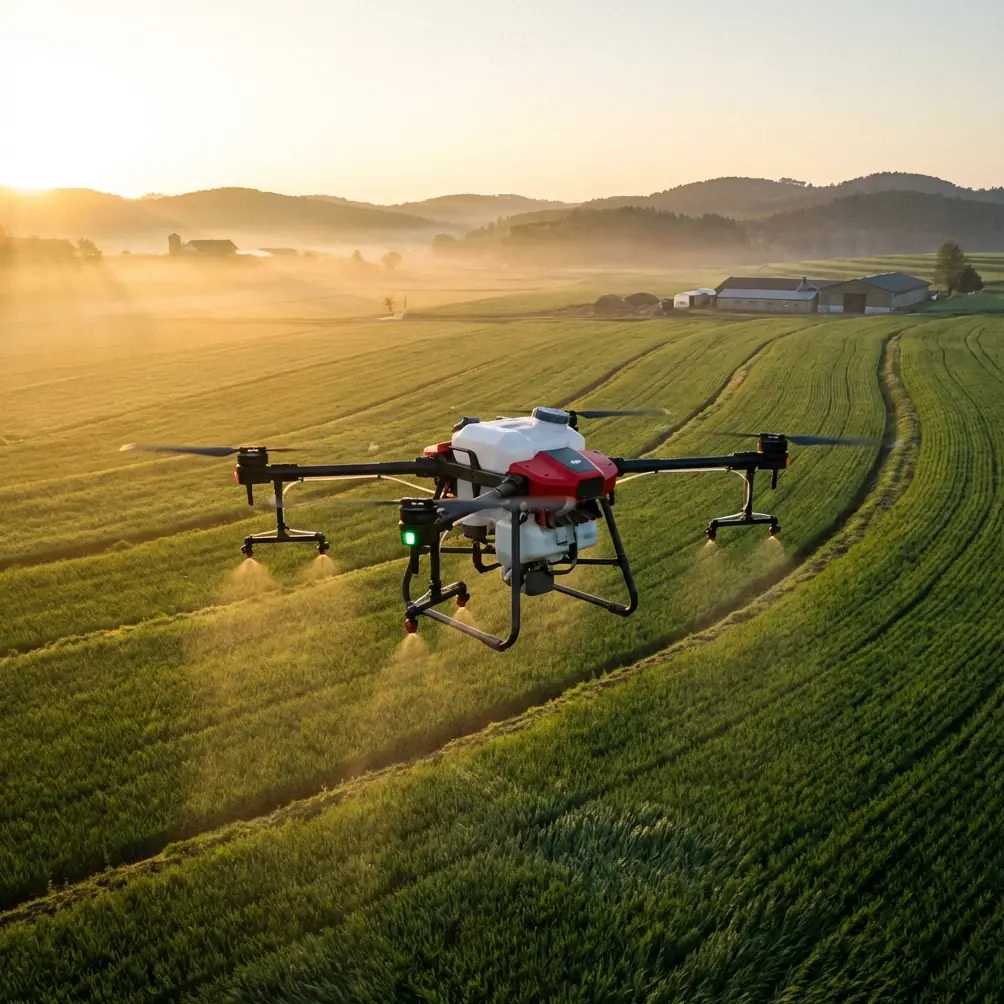
Agras T70P Capturing Tips for Dusty Vineyards: Precision Setup, Cleaner Passes, Better Data
META: Practical Agras T70P guidance for dusty vineyard work, covering RTK fix stability, nozzle calibration, spray drift control, IPX6K care, and antenna adjustment under electromagnetic interference.
Dusty vineyards expose every weakness in an aerial workflow. Fine particulate gets into connectors, wind channels between rows distort spray patterns, and metal trellis systems can complicate positioning when you need clean, repeatable passes. If you are operating an Agras T70P in that environment, the difference between a frustrating day and a productive one usually comes down to setup discipline rather than raw aircraft capability.
This is where the T70P deserves a more technical conversation. Not a broad overview. Not a feature recital. What matters in vineyard work is how the aircraft behaves when the rows are narrow, the terrain is uneven, the dust is constant, and electromagnetic noise starts to interfere with positioning confidence. In that setting, three things decide results: how stable your RTK fix remains, how accurately your nozzles are calibrated, and how well you manage drift across a variable canopy.
The T70P is a strong fit for this kind of operation because vineyard treatment is not really about maximum output in open acreage. It is about consistency under constraints. Vine rows create a directional corridor. Dust reduces visibility and can contaminate components over time. Support wires, pumps, nearby power infrastructure, and vehicle-mounted radios can all influence signal quality. If your objective is to capture field conditions accurately or apply product with discipline, the aircraft has to hold its line with centimeter precision, not just fly.
Start With the Environment, Not the Aircraft
Before powering up, read the vineyard itself. Dusty blocks often look operationally simple from the edge, but inside the rows the microclimate changes quickly. One section may be calm while the next funnels crosswind through a slope break. That matters because spray drift in vineyards is rarely uniform. The same droplet size and flow setting can behave very differently over 100 meters.
On the T70P, operators often focus first on route creation and tank workflow. That is understandable, but in vineyards the real priority is the interaction between swath width, canopy density, and airflow. A wide swath that works over a sparse section may become wasteful once the foliage thickens or row spacing tightens. You are not chasing maximum coverage on paper. You are trying to place droplets where they belong while minimizing off-target movement.
Dust intensifies this challenge because it can mislead your visual judgment. In dry conditions, rotor wash can throw up enough particulate to make the canopy edge look softer than it is. Operators then compensate by widening the pass or increasing altitude, both of which can worsen drift. The smarter move is to rely on pre-validated settings, confirmed nozzle calibration, and a stable RTK solution rather than what the eye thinks it sees through airborne dust.
Why RTK Fix Rate Becomes the Vineyard Bottleneck
Centimeter precision is not a marketing phrase in vineyard operations. It is the practical basis for repeatable lane tracking, overlap control, and clean edge management around trellis ends. The moment RTK fix quality becomes inconsistent, the symptoms show up fast: wandering line adherence, uneven overlap, hesitant corrections near row transitions, and reduced confidence in repeated missions.
That is why RTK fix rate should be treated as a core operational metric, not a background status icon. In vineyards, small deviations matter because the geometry is unforgiving. A drift of even a small margin can translate into missed canopy faces on one pass and excess overlap on the next. Over time, that compounds into uneven application and weaker data integrity if you are also documenting conditions.
Electromagnetic interference is one of the less discussed causes of this problem. In dusty vineyard environments, operators often work near pump stations, utility lines, radios in support vehicles, and metal-heavy infrastructure. These do not always cause complete signal loss. More often, they create instability: enough to degrade the RTK fix rate without triggering an obvious stop condition.
The simplest correction is also one of the most overlooked. Adjust the antenna position before assuming a mapping or calibration issue. If the aircraft or base setup is too close to reflective metal surfaces, parked machinery, or active radio equipment, small antenna placement changes can materially improve signal reliability. Raise the antenna higher, separate it from vehicle roofs or steel structures, and maintain a clearer sky view. In practice, this can restore the consistency needed to hold vineyard rows with far greater discipline.
For field teams that regularly encounter signal noise, it helps to standardize a preflight interference check. Power on, observe fix acquisition behavior, and if lock quality is sluggish or unstable, reposition the antenna before launching. That is a minor adjustment with outsized consequences. In vineyards, where line fidelity drives everything downstream, a cleaner RTK fix is often worth more than tweaking speed or height.
Nozzle Calibration Is Not Optional in Dust
Dust changes more than visibility. It changes trust. When you are flying in fine particulate, you should assume every fluid path and every exposed interface needs more attention than it would in a greener, wetter environment. Nozzle calibration on the Agras T70P is therefore not a one-time setup item. It is an operating routine.
The reason is simple. Vineyards demand uniformity along long, repetitive corridors, and any small inconsistency in nozzle output becomes visually and agronomically significant over multiple passes. If one nozzle begins to underperform because of contamination or partial obstruction, your pattern stops being symmetrical. The aircraft may still fly correctly, and the mission log may still look clean, but the biological outcome in the vines will tell a different story.
In dusty blocks, verify calibration more often than you think necessary. Check output balance, inspect for buildup, and confirm that the selected droplet profile still matches the day’s wind behavior and canopy condition. This is especially important when moving between blocks with different vine vigor or row orientation. A setting that behaved well in one parcel may drift too much in another because the local airflow behaves differently.
Operationally, this is where the T70P’s value shows up: not as a generic high-capacity platform, but as a machine that can deliver repeatable treatment when the operator treats calibration as part of precision farming rather than maintenance housekeeping. The better your nozzles are tuned, the less you need to compensate in flight. That lowers stress, preserves pattern integrity, and reduces the temptation to solve an application problem with altitude changes that create a new drift problem.
Managing Spray Drift Between Vineyard Rows
Spray drift in vineyards is usually discussed as a weather issue. That is too narrow. It is also a geometry issue and a timing issue. Row orientation, canopy height, bare soil reflectance, slope direction, and rotor wash all influence where droplets go after they leave the nozzle.
For T70P operators, the practical method is to think in layers. First, set a swath width that matches the actual block geometry rather than the theoretical maximum. Second, calibrate droplets for the target and the day’s wind profile. Third, confirm route direction against the vineyard’s natural airflow channels, not just the easiest path to draw on screen.
This matters because the T70P can hold a disciplined line, but line precision alone does not eliminate drift. If the route runs across a wind corridor that accelerates between rows, even excellent positioning can still produce uneven deposition. In dusty vineyards, this becomes harder to detect in real time because suspended particles can make air movement look more dramatic or less dramatic than it really is.
A better workflow is to begin with a short verification segment. Fly a limited section, inspect the result, and then commit to the full block. That small pause often reveals whether the chosen swath width is too ambitious or whether the droplet profile needs adjustment. In a crop where each row can carry high value and disease pressure can vary by microzone, that verification step is operationally cheap and agronomically smart.
Using Multispectral Logic Even Without Overcomplicating the Mission
Multispectral thinking has a place in T70P vineyard work, even if the immediate mission is application rather than imaging. The point is not to force every operation into a sensor-heavy workflow. The point is to use canopy variability as a planning input.
If prior multispectral data or agronomic scouting suggests uneven vigor across the block, do not treat the vineyard as a single uniform spraying environment. Dense sections may need tighter attention to penetration and drift control, while sparse sections may require restraint to avoid waste and off-target deposition. The T70P becomes more effective when it is used as part of a decision chain, not as an isolated machine.
This is particularly relevant in dusty conditions because visual assessment on-site can be unreliable. Dust haze and light glare over pale soil can flatten the apparent contrast between stressed and healthy vines. Historical multispectral interpretation, even at a basic level, helps the operator avoid making reactive decisions based on an imperfect visual impression at launch time.
IPX6K Matters, but It Is Not a License to Ignore Dust
The T70P’s IPX6K-rated protection is highly relevant in vineyard work because it signals that the airframe is built for harsh field exposure, including aggressive washdown conditions. That said, operators sometimes misunderstand what a rugged ingress rating means in daily practice. It does not mean dust can be ignored. It means the aircraft is better prepared for serious field use if the operator follows through with disciplined cleaning and inspection.
Dust in vineyards is persistent and abrasive. It settles on landing gear, accumulates around connectors, coats exposed surfaces, and can work its way into places that gradually affect reliability if left unmanaged. An IPX6K-class design gives you resilience, especially when cleaning down after a long day, but it works best when paired with a consistent maintenance rhythm.
After dusty operations, clean the aircraft thoroughly, inspect nozzle assemblies, verify connectors, and pay attention to antenna mounts and signal-related hardware. That last point ties back to RTK performance. Signal instability is not always caused by external interference alone. A dusty or poorly seated connection can create symptoms that look like a positioning problem when the real issue is simpler.
A Field-Ready T70P Workflow for Dusty Vineyards
If I were standardizing a T70P procedure for vineyard teams operating in dry conditions, I would keep it strict and repeatable.
Begin by checking the block for likely interference sources: power infrastructure, pumps, support vehicles, and metal-heavy staging areas. Then power up and watch RTK behavior closely. If fix acquisition is slow or unstable, adjust antenna placement immediately rather than trying to troubleshoot it in the air.
Next, validate nozzle calibration. Do not assume yesterday’s settings still apply. Dust, partial obstruction, or a shift in canopy condition can quietly change output quality. Then set swath width conservatively. A narrower but cleaner pass usually outperforms a broad pass that creates inconsistent deposition along the canopy edge.
After that, run a short test segment and inspect the result before scaling up. This is also a good point for crew coordination; if your team needs a quick field discussion on setup choices, a simple message via this vineyard operations chat link keeps everyone aligned without slowing the workflow.
Finally, clean the aircraft properly after the mission. Rugged design helps, but repeatability comes from process. The best T70P operators are not the ones who simply fly more hours. They are the ones who reduce variability before the rotors start.
The Real Advantage of the Agras T70P in Vineyards
For dusty vineyard work, the T70P’s real strength is not any single specification in isolation. It is the combination of controllable precision, environmental durability, and the ability to maintain disciplined application when conditions are working against you. RTK stability supports repeatable row tracking. Nozzle calibration preserves pattern integrity. Thoughtful swath width selection keeps drift under control. IPX6K-level protection supports cleanup after punishing field days. Antenna adjustment under electromagnetic interference solves a problem that many operators misdiagnose until performance has already slipped.
That combination is what makes the platform useful in vineyards. Not because it promises perfection, but because it rewards operators who understand that precision agriculture in difficult terrain is mostly a matter of managing small variables well.
If your vineyard work is dusty, signal-noisy, and row-constrained, the T70P can perform at a very high level. But only when flown as a system. That means reading the site, protecting the RTK fix rate, calibrating nozzles like it matters, and treating drift as a controllable operational factor rather than an unavoidable nuisance. In other words: fly the aircraft, but manage the environment first.
Ready for your own Agras T70P? Contact our team for expert consultation.