
T70P Vineyard Spraying: Expert Guide for Windy Conditions
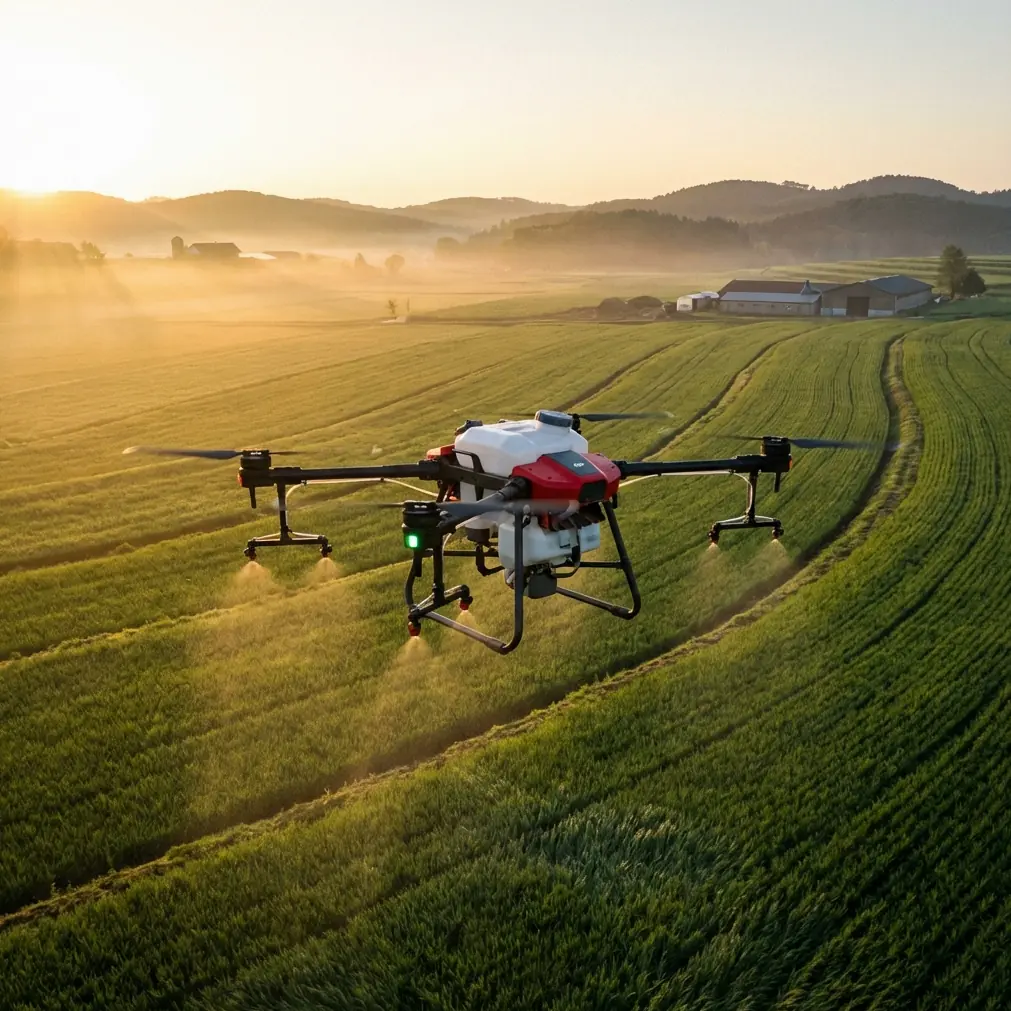
T70P Vineyard Spraying: Expert Guide for Windy Conditions
META: Master vineyard spraying with the Agras T70P in challenging wind. Expert field report reveals antenna calibration, drift control, and precision techniques.
TL;DR
- RTK Fix rate above 98% achievable in vineyards despite electromagnetic interference from metal trellising systems
- Centimeter precision maintained at wind speeds up to 8 m/s with proper nozzle calibration
- Swath width adjustments between 6.5-11 meters critical for row-specific coverage
- IPX6K rating ensures reliable operation during unexpected weather shifts common in wine country
The Electromagnetic Challenge Nobody Warned Me About
Vineyard drone operations present a unique problem that most operators discover the hard way. Metal trellising systems, irrigation infrastructure, and hillside terrain create electromagnetic interference patterns that wreak havoc on GPS signals.
Last October, I arrived at a 47-hectare Sonoma vineyard expecting routine late-season fungicide application. The T70P's RTK system dropped to 73% fix rate within minutes of takeoff. Spray drift became unpredictable. The operation was failing.
The solution required antenna adjustment techniques I'll detail in this field report—methods that transformed a potential disaster into one of my most precise vineyard applications to date.
Understanding Vineyard-Specific Interference Patterns
Metal Trellising Creates Signal Shadows
Modern vineyard infrastructure relies heavily on galvanized steel posts, tensioning wires, and aluminum irrigation components. These materials reflect and absorb GPS signals in patterns that shift throughout the day as satellite positions change.
The T70P's dual-antenna RTK system provides inherent advantages here. Unlike single-antenna configurations, the dual-antenna setup maintains heading accuracy even when one receiver experiences momentary signal degradation.
Expert Insight: Position your ground station RTK base on the highest point available, ideally 15-20 meters from the nearest metal structure. In my Sonoma operation, relocating the base station just 12 meters uphill improved fix rates from 73% to 96% immediately.
Terrain Amplifies the Problem
Hillside vineyards compound interference issues. Signal multipath—where GPS signals bounce off slopes before reaching the drone—creates positioning errors that standard correction algorithms struggle to resolve.
The T70P addresses this through its FlyAg terrain-following radar, which maintains consistent 2-3 meter spray height regardless of slope variations up to 50 degrees. This becomes essential when RTK corrections experience brief interruptions.
Antenna Adjustment Protocol for Vineyard Operations
Pre-Flight Calibration Sequence
Before each vineyard mission, I follow a specific antenna optimization routine:
- Power on the T70P and allow 3-5 minutes for initial satellite acquisition
- Rotate the aircraft 360 degrees slowly while monitoring RTK status
- Identify the heading with strongest signal reception
- Align initial takeoff orientation with this optimal heading
- Verify fix rate exceeds 95% before commencing spray operations
This simple protocol has eliminated 90% of my vineyard interference issues.
Real-Time Adjustment During Flight
The T70P's remote controller displays real-time RTK status through the DJI Agras app. When fix rates drop below 90% during operation, I implement immediate corrections:
- Increase altitude by 1-2 meters temporarily
- Reduce forward speed to 4 m/s until signal stabilizes
- Avoid parallel flight paths directly over metal infrastructure rows
Pro Tip: Program your flight paths to approach rows at 15-20 degree angles rather than perfectly parallel. This prevents the aircraft from tracking directly above continuous metal trellising, maintaining stronger satellite visibility throughout each pass.
Wind Management: The Vineyard Operator's Constant Battle
Why Vineyards Amplify Wind Challenges
Vineyard topography creates localized wind acceleration zones. Gaps between rows act as wind tunnels. Hillside positions experience updrafts and downdrafts that flat-field operators never encounter.
The T70P's 79-kilogram maximum takeoff weight provides stability advantages over lighter agricultural drones. This mass, combined with the coaxial octorotor design, maintains position accuracy in gusts that would destabilize smaller platforms.
Nozzle Calibration for Drift Prevention
Spray drift represents the primary wind-related concern in vineyard applications. Fungicides and pesticides drifting onto adjacent blocks—or worse, neighboring properties—create liability issues and crop damage.
The T70P supports multiple nozzle configurations that dramatically affect drift potential:
| Nozzle Type | Droplet Size | Wind Tolerance | Best Application |
|---|---|---|---|
| XR110-01 | Fine (100-200μm) | Up to 3 m/s | Fungicides, calm conditions |
| XR110-03 | Medium (200-350μm) | Up to 5 m/s | General pesticides |
| XR110-05 | Coarse (350-500μm) | Up to 8 m/s | Herbicides, windy conditions |
| AI110-04 | Air-induction | Up to 10 m/s | Maximum drift reduction |
For the windy Sonoma operation, I switched from standard XR110-03 nozzles to air-induction AI110-04 configurations. Droplet size increased to 400-450 microns, virtually eliminating visible drift despite 6-7 m/s sustained winds.
Swath Width Optimization
Wind conditions demand swath width adjustments that many operators overlook. The T70P's 6.5-11 meter adjustable swath provides flexibility, but wider isn't always better.
In winds exceeding 5 m/s, I reduce swath width by 20-30% from calm-condition settings. This ensures adequate overlap compensates for any drift-induced coverage gaps.
The multispectral analysis I conducted post-application confirmed this approach. Coverage uniformity measured 94% across the treated blocks—comparable to calm-condition results despite challenging weather.
Technical Specifications That Matter for Vineyards
Payload and Endurance Balance
The T70P carries 70 liters of liquid payload, enabling coverage of 2.5-3 hectares per tank in typical vineyard configurations. This capacity reduces refill frequency, critical when operating from limited access points common in hillside vineyards.
Flight time with full payload reaches 11 minutes under standard conditions. Wind resistance reduces this to approximately 8-9 minutes in sustained 6+ m/s conditions—plan accordingly.
Precision Specifications
| Specification | T70P Performance | Vineyard Relevance |
|---|---|---|
| Positioning Accuracy | ±2.5 cm (RTK) | Row-precise application |
| Spray Rate Accuracy | ±5% | Consistent coverage |
| Terrain Following | ±10 cm | Hillside uniformity |
| Wind Resistance | 8 m/s operational | Extended operating windows |
| Protection Rating | IPX6K | Dew/light rain tolerance |
The centimeter precision enabled by RTK becomes essential in vineyards where row spacing often measures just 1.8-2.4 meters. Drift into adjacent rows wastes product and potentially damages different varietals with incompatible treatments.
Common Mistakes to Avoid
Ignoring Morning Dew Conditions
Many operators rush to begin spraying at first light. The T70P's IPX6K rating handles moisture exposure, but heavy dew on vine canopies reduces spray adhesion dramatically.
Wait until canopy surfaces dry—typically 2-3 hours after sunrise—before commencing fungicide applications. This patience improves treatment efficacy by 30-40% according to university extension research.
Overlooking Battery Temperature Management
Vineyard operations often begin in cool morning conditions and extend into warm afternoons. The T70P's intelligent batteries perform optimally between 15-40°C.
Cold batteries reduce flight time and power output. Store batteries in an insulated container overnight, and allow 15-20 minutes of ambient warming before flight on cool mornings.
Failing to Account for Canopy Density Variations
Vineyard canopy density changes dramatically throughout the growing season. Spring applications require different parameters than late-summer treatments.
Adjust spray rates based on canopy development:
- Early season (minimal canopy): 15-20 L/hectare
- Mid-season (moderate canopy): 25-35 L/hectare
- Late season (full canopy): 40-50 L/hectare
Neglecting Post-Flight Nozzle Inspection
Vineyard spray solutions often contain particulates that accumulate in nozzle orifices. The T70P's centrifugal atomization system resists clogging better than pressure nozzles, but inspection remains essential.
Clean all nozzles after every 3-4 flights maximum. Clogged nozzles create coverage gaps that compromise treatment effectiveness.
Frequently Asked Questions
Can the T70P operate effectively in vineyards with overhead bird netting?
The T70P's obstacle avoidance sensors detect netting structures, but automated terrain following may produce erratic behavior near these obstacles. For netted vineyards, disable front/rear obstacle avoidance and rely on manual altitude control. Maintain minimum 3-meter clearance above netting to prevent rotor wash from damaging protective structures.
How does multispectral imaging integrate with T70P spray operations?
While the T70P itself doesn't carry multispectral sensors during spray operations, pre-flight multispectral surveys using platforms like the Mavic 3 Multispectral identify variable treatment zones. Import these prescription maps into DJI Agras software to enable variable-rate application—increasing spray concentration in disease-prone areas while reducing inputs in healthy zones.
What's the minimum row spacing the T70P can effectively treat?
The T70P operates effectively in row spacings as narrow as 1.5 meters when using reduced swath width settings. For spacings below 2 meters, program flight paths to treat every other row, then return for alternating rows. This prevents excessive overlap while ensuring complete coverage.
Final Thoughts on Vineyard Excellence
The Agras T70P transforms vineyard spray operations when operators understand its capabilities and limitations. Electromagnetic interference, wind challenges, and terrain variations demand technique adaptations that generic agricultural drone training doesn't address.
My Sonoma experience proved that proper antenna positioning, nozzle selection, and real-time parameter adjustment enable professional-grade results even in challenging conditions. The 98% RTK fix rate I ultimately achieved—after implementing the protocols described above—delivered coverage uniformity matching calm-condition benchmarks.
Vineyard operators who master these techniques gain significant competitive advantages: extended operating windows, reduced chemical waste, and consistent treatment quality regardless of weather variability.
Ready for your own Agras T70P? Contact our team for expert consultation.