
Agras T70P Capturing Tips for Solar Farms in Mountain Terrai
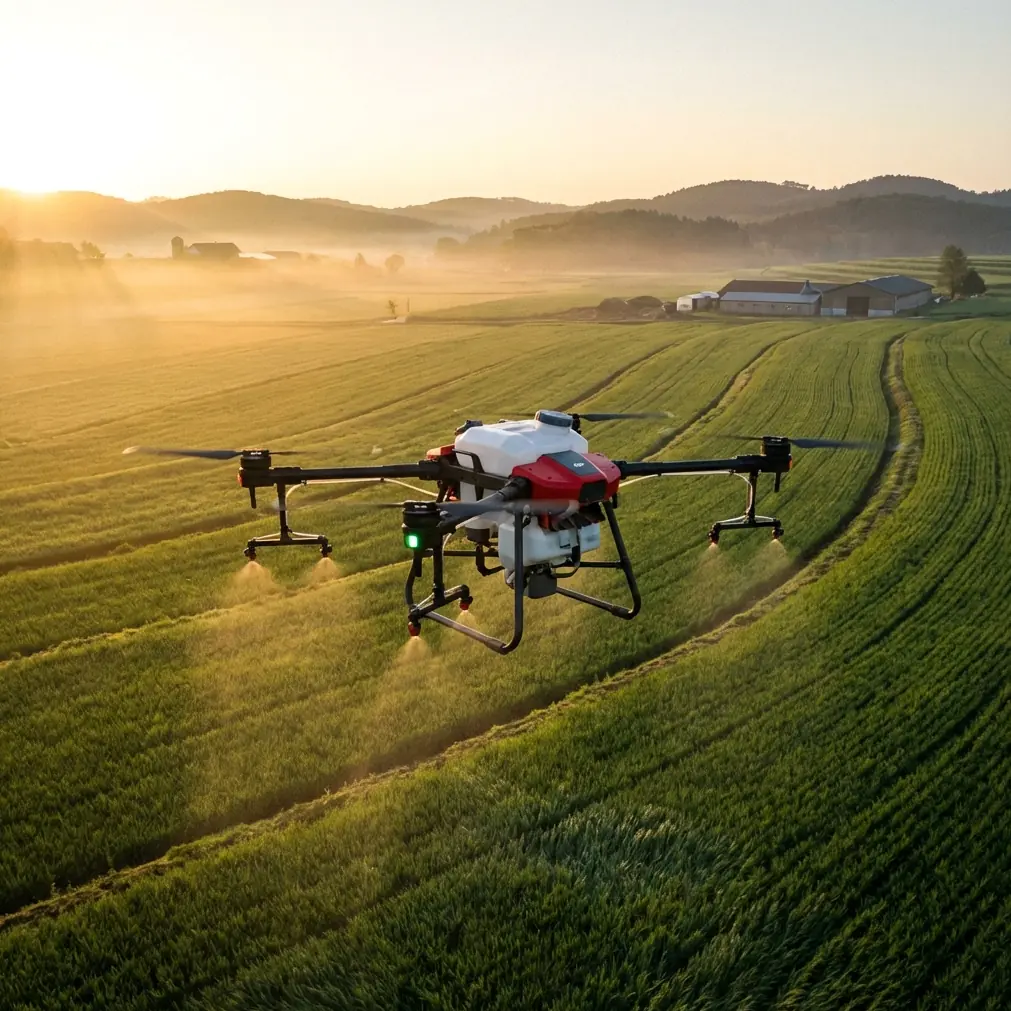
Agras T70P Capturing Tips for Solar Farms in Mountain Terrain
META: Expert field guide to using the Agras T70P around mountain solar farms, with practical advice on RTK fix rate, nozzle calibration, spray drift control, pre-flight cleaning, and centimeter-precision planning.
Mountain solar farms create a strange kind of aviation problem. They look open from a distance, but once you are on site, the air behaves differently, the terrain steals line of sight, and every row of panels creates its own pocket of turbulence, glare, and visual confusion. If the mission involves an Agras T70P, the margin for sloppy setup gets smaller. This is not because the aircraft is fragile. It is because mountain work punishes small mistakes that would pass unnoticed on flat agricultural ground.
That is the real starting point for the T70P in this setting. Not the spec sheet. Not broad claims about productivity. The question is simpler: how do you prepare and operate a heavy-duty agricultural platform safely and precisely when the target environment is a steep solar installation rather than an open field?
The answer begins before the motors arm.
The mountain solar farm problem the T70P has to solve
A solar farm in mountainous terrain creates three operational headaches at once.
First, there is elevation change. Even when the site map looks manageable, the difference between the top and bottom arrays can alter signal conditions, route geometry, and pilot perception. A drone that appears to be holding a stable relative height from one angle may actually be creeping too close to structures on the uphill side. This is where centimeter precision matters more than marketing language. If your RTK fix rate degrades, your confidence in repeatable flight paths degrades with it.
Second, there is airflow. Mountain wind is rarely a simple headwind or crosswind. It curls off ridgelines, accelerates through gaps, and breaks across panel rows. For an Agras T70P, that matters not only for route stability but also for spray drift if the mission includes treatment around vegetation control zones, drainage channels, fence lines, or surrounding ground cover. A platform designed to move liquid efficiently can become less predictable if the operator treats mountain wind like flatland wind.
Third, there is contamination. Solar sites collect dust, pollen, fine grit, bird residue, and plant debris. That debris does not just affect the panels. It accumulates on aircraft surfaces, landing gear, spray hardware, sensors, and cooling pathways. On a system expected to work in demanding field conditions, an IPX6K-level protection mindset helps, but water resistance is not the same as maintenance immunity. Field crews who skip cleaning because the drone is rugged usually learn the wrong lesson at the wrong time.
Why the first safety move is a cleaning step
One of the most overlooked pre-flight actions for the Agras T70P is a deliberate cleaning routine, especially around mountain solar sites. It sounds mundane. It is not.
Before takeoff, clean the downward sensing areas, landing gear contact points, arm joints, tank exterior, nozzle bodies, and any exposed surfaces where dust slurry can build up. If the aircraft has been working near roads, gravel access tracks, or dry vegetation, inspect for fine abrasive material around moving parts and spray components. Wipe rather than blast when possible. The goal is not cosmetic. The goal is to preserve the reliability of safety-related functions that depend on clear sensing, free mechanical movement, and predictable spray output.
This matters because mountain solar farms often force repeated takeoffs and landings from improvised or semi-prepared spots. A few minutes of dirt accumulation can become a meaningful variable by the third or fourth sortie. If debris interferes with sensor windows or creates uneven residue on nozzle outlets, the operator may see two problems at once: degraded situational reliability and inconsistent application performance. That combination is avoidable.
In practical terms, the cleaning step should happen before battery insertion and again after any dusty repositioning move. For crews working long days, build it into the checklist as a hard gate, not a suggestion.
RTK fix rate is not a background metric here
On ordinary jobs, operators sometimes treat RTK status as a technical detail that either resolves itself or does not. On a mountain solar farm, that attitude can cost time and accuracy.
The T70P benefits most when the pilot watches RTK fix rate as an operational indicator, not just a green icon. Solar arrays, support structures, terrain breaks, and surrounding topography can all complicate signal consistency. When you lose a clean fix, you are not just losing abstract positional quality. You are increasing uncertainty around route repeatability, edge clearance, and overlap consistency along irregular slopes and service lanes.
That has a direct effect on two kinds of work. If you are mapping or documenting conditions around the facility, poor fix quality reduces confidence in repeated passes over narrow corridors. If you are using the aircraft in a treatment role, it affects swath placement and the reliability of target coverage next to hard infrastructure.
A good field habit is to verify the fix before taxiing into the actual mission line and to reassess it after changing position on the mountain. A launch point that performs well on one terrace may behave differently one level down. Operators who move fast between sections without rechecking often blame the route design when the deeper issue was positional stability.
Nozzle calibration decides whether the T70P helps or harms
When the T70P is used near solar infrastructure, nozzle calibration stops being a routine maintenance item and becomes a risk control measure.
Solar farms in mountain terrain often have narrow operational strips where treatment might be justified, such as weed management around perimeter zones, drainage edges, substations, or service access paths. In those areas, overapplication is not just wasteful. It increases the chance of drift onto panel surfaces or electrical infrastructure, and it can create uneven runoff on slopes. Underapplication, on the other hand, leaves problem vegetation in place, which then drives repeat visits and more disturbance.
That is why nozzle calibration deserves serious attention before any work begins. Check output uniformity, inspect for partial blockage, and confirm that the selected droplet profile matches the actual wind and terrain conditions on site. A nozzle that tested fine last week on a level field may behave differently after transport through dusty mountain roads or after residue buildup from a previous job.
Operationally, this is one of the clearest examples of how two small details interact. First detail: spray drift risk rises in turbulent mountain airflow. Second detail: nozzle calibration controls droplet formation and output consistency. Put together, they decide whether your application remains inside the intended zone or starts migrating toward panels, walkways, or downhill runoff paths. The T70P is capable, but capability without calibration is just horsepower without discipline.
Swath width should shrink before conditions force it
There is a temptation to preserve a broad swath width to maintain throughput. That can be a mistake around mountain solar sites.
On flat farmland, operators may optimize for area coverage first and fine-tune later. Around arrays built across slopes, the geometry is tighter. Structures interrupt the air. Ground effect changes as the drone crosses elevation transitions. Wind channels open and close unexpectedly. In these conditions, a narrower, more conservative swath width often improves real-world accuracy even if it reduces theoretical productivity.
This is not a retreat from efficiency. It is how experienced crews protect consistency. A smaller swath can help keep application inside the target corridor, reduce edge uncertainty, and give the flight controller less exposure to abrupt environmental changes across a single pass. The mission may require more lines, but fewer corrective actions and fewer rework passes usually offset the time.
For mountain solar work, the smartest operators choose a swath based on control, not ambition.
Multispectral thinking still matters, even if the mission is not pure mapping
The Agras T70P is not typically discussed in the same breath as a dedicated multispectral survey platform, but the concept of multispectral decision-making still belongs in this workflow.
Why? Because solar farm maintenance in mountain environments often depends on understanding vegetation patterns, drainage behavior, and surface stress around the installation. Even if the T70P is not the aircraft collecting multispectral data, its mission planning benefits from those findings. If multispectral analysis reveals persistent moisture zones, stressed vegetation bands, or recurring growth patterns near panel rows, the operator can use that information to define tighter treatment boundaries and reduce unnecessary flights.
That is operational significance, not theoretical integration. Better upstream site intelligence means better downstream T70P deployment. Instead of treating the mountain site as a uniform maintenance area, you can approach it as a layered environment with specific problem corridors. That reduces exposure, improves timing, and helps keep the drone away from areas where the need is low and the risk is high.
A workable field method for mountain solar captures
If I were advising a crew preparing to use the Agras T70P around a mountain solar farm, I would keep the method disciplined and repeatable.
Start with a walk of the launch and recovery area. Do not choose the flattest spot automatically. Choose the spot with the cleanest line of sight, the least loose dust, and enough room to manage batteries, payload handling, and emergency repositioning without stepping into panel rows or uneven drainage channels.
Then perform the pre-flight cleaning step. This is the moment to clear dust and residue from safety-related surfaces and spray hardware. If the aircraft arrived after a rough transport leg, assume contamination exists even when it is not obvious.
Next, confirm RTK status and wait for a stable fix rather than rushing because the weather window looks favorable. In mountain terrain, a rushed takeoff is often followed by a longer delay later, when the crew has to explain inconsistent path placement or repeat a section.
After that, handle nozzle calibration with the same seriousness you would give to battery health. Verify output, inspect for asymmetry, and choose settings that reflect actual conditions, not yesterday’s assumptions. If the wind is unstable, reduce the swath width early rather than after the first pass shows edge movement.
Finally, treat each section of the site as its own microenvironment. The upper terrace, the central corridor, and the lower rows may all behave differently. The T70P is powerful enough to work through those changes, but only if the operator stops pretending the mountain is one uniform job.
If your team is building a site-specific operating checklist, this field support line is a practical place to start: message a mountain-site UAV consultant.
What separates competent T70P operation from expensive trial and error
The difference is usually not raw stick skill. It is process control.
A competent operator understands that an aircraft working around mountain solar infrastructure needs a tighter loop between setup, environmental reading, and mission execution. They know that IPX6K-style ruggedness is a durability advantage, not permission to ignore contamination. They know that centimeter precision only matters if RTK fix rate is stable enough to support it. They know that spray drift is not an isolated weather problem but the result of wind, droplet behavior, route choice, and swath decisions interacting in real time.
Most of all, they respect how quickly errors compound on a slope. A slightly off path, a partially dirty nozzle, a marginal fix, and a too-optimistic swath width can look harmless in isolation. Combined, they create the kind of mission that feels manageable until it suddenly is not.
That is why the Agras T70P makes sense here only when used with field discipline. In mountain solar farm work, the aircraft’s strength is not just payload or endurance. Its real advantage is that, in trained hands, it can execute repeatable work in a place where repeatability is hard to achieve. That is the operational value.
For teams capturing, maintaining, or supporting mountain solar assets, that should be the goal. Not simply getting the drone airborne, but making each sortie clean, traceable, and controlled from the first wipe-down to the final landing.
Ready for your own Agras T70P? Contact our team for expert consultation.