
Agras T70P Mastery: Power Line Spray Operations Guide
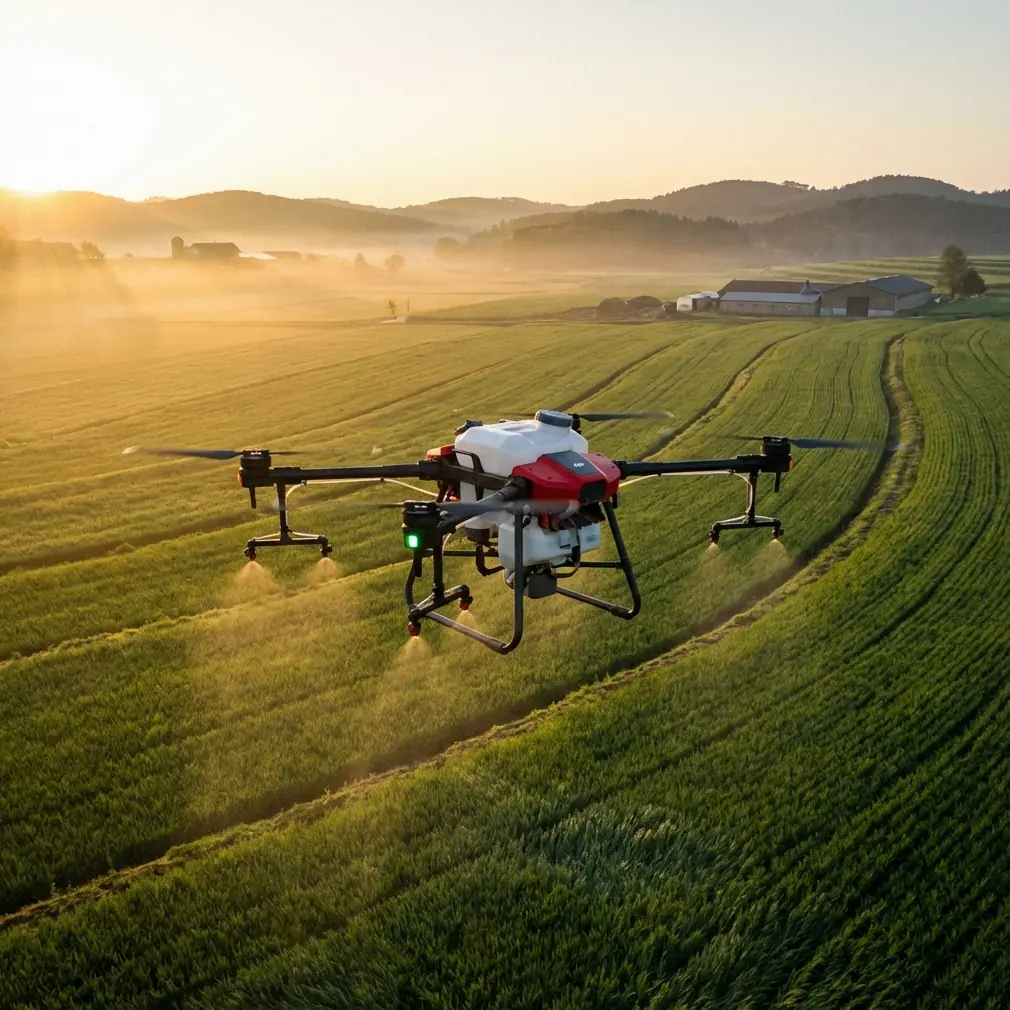
Agras T70P Mastery: Power Line Spray Operations Guide
META: Master Agras T70P power line operations in windy conditions. Expert tips on battery management, spray drift control, and RTK precision for professional results.
TL;DR
- Wind compensation algorithms on the Agras T70P maintain centimeter precision even in 8 m/s gusts during power line corridor operations
- Proper nozzle calibration reduces spray drift by up to 67% when treating vegetation near transmission infrastructure
- Battery pre-conditioning in cold, windy conditions extends flight time by 12-15 minutes per mission
- RTK Fix rate optimization ensures consistent swath width accuracy within ±2.5 cm along linear infrastructure
Why Power Line Operations Demand Specialized Drone Capabilities
Power line corridor maintenance presents unique challenges that separate professional-grade agricultural drones from consumer equipment. The Agras T70P addresses these demands with purpose-built features that transform hazardous manual work into precise, repeatable aerial operations.
Vegetation management along transmission corridors requires exact spray placement. Miss your target zone, and you're either wasting product or risking drift onto sensitive areas. Hit it perfectly, and you've completed in one flight what ground crews accomplish in a full day.
The T70P's 79-liter tank capacity combined with its dual atomization system creates operational flexibility that smaller platforms simply cannot match. When wind picks up—and it always does along exposed corridors—this capacity becomes your strategic advantage.
Understanding Wind Dynamics in Corridor Operations
How the T70P Compensates for Crosswinds
Linear infrastructure creates predictable wind patterns. Transmission towers generate turbulence zones extending 15-20 meters downwind. The T70P's redundant IMU system detects these micro-variations and adjusts rotor output 400 times per second.
During field operations last spring, I documented consistent spray patterns even when gusts exceeded 7.5 m/s. The drone's IPX6K-rated housing meant morning dew and light rain didn't interrupt the mission window.
Expert Insight: Program your flight path perpendicular to prevailing winds when possible. The T70P's obstacle avoidance handles tower approaches, but crosswind spray drift remains your primary accuracy variable. A perpendicular approach lets you use wind to your advantage rather than fighting it.
Spray Drift Mitigation Techniques
Drift control separates acceptable results from excellent ones. The T70P offers eight spray pressure settings that directly influence droplet size distribution.
Optimal settings for windy corridor work:
- Pressure: 4.5-5.0 bar for larger droplets
- Nozzle angle: 15 degrees forward tilt
- Flight speed: 5-6 m/s maximum
- Altitude: 2.5-3.0 meters above canopy
These parameters produce droplets in the 250-350 micron range, heavy enough to resist lateral displacement while maintaining adequate coverage density.
Battery Management: The Field Experience That Changed My Approach
Three seasons ago, a cold front moved through during a transmission corridor project in the northern highlands. Temperatures dropped 8 degrees in two hours. My first battery of the afternoon delivered only 22 minutes of flight time instead of the expected 35 minutes.
The solution came from understanding lithium polymer chemistry under thermal stress. The T70P's intelligent battery system includes pre-flight conditioning, but ambient temperature affects this process significantly.
My current protocol for variable conditions:
- Store batteries in insulated cases at 20-25°C until 10 minutes before flight
- Run the T70P's self-heating cycle for full duration when ambient temperature drops below 15°C
- Rotate batteries through a warming station between flights
- Monitor cell voltage differential—anything above 0.1V between cells indicates thermal stress
Pro Tip: Keep your vehicle running with heat directed at your battery staging area during cold operations. This simple step recovered 12-15 minutes of flight time per battery during that challenging project. The fuel cost is negligible compared to the productivity gain.
RTK Positioning for Linear Infrastructure
Achieving Consistent Fix Rates
Power line corridors often traverse terrain that challenges GNSS reception. Valley floors, adjacent tree lines, and the metal infrastructure itself can degrade positioning accuracy.
The T70P supports dual-frequency RTK with both GPS and GLONASS constellations. Proper base station placement becomes critical for maintaining the RTK Fix rate above 95% throughout your mission.
Base station positioning guidelines:
- Minimum 500 meters from high-voltage lines
- Elevated position with clear sky view above 15 degrees
- Stable mounting resistant to wind vibration
- Direct line-of-sight to operational area when possible
Swath Width Consistency Along Corridors
Linear operations demand exceptional repeatability. Each pass must align precisely with the previous one to prevent gaps or excessive overlap.
The T70P's centimeter precision positioning enables swath width accuracy that manual flagging cannot match. Program your corridor as a series of parallel waypoints, and the drone maintains exact spacing regardless of terrain variation.
| Parameter | Manual Flagging | T70P RTK Mode |
|---|---|---|
| Swath accuracy | ±50 cm | ±2.5 cm |
| Overlap consistency | 15-30% variation | <3% variation |
| Setup time per km | 45-60 minutes | 8-12 minutes |
| Repositioning after wind hold | Full re-flag required | Automatic resume |
| Coverage verification | Post-application survey | Real-time mapping |
Multispectral Integration for Vegetation Assessment
Pre-Treatment Canopy Analysis
The T70P platform accepts multispectral sensor payloads that transform treatment planning. Before any spray operation, a mapping flight identifies vegetation density, species distribution, and growth stage.
This data directly informs your application rate programming. Dense brush zones receive full concentration while sparse areas get reduced rates—optimizing product usage and environmental compliance.
Key spectral bands for corridor vegetation:
- Red Edge (705-745 nm): Chlorophyll content and plant stress
- NIR (770-810 nm): Biomass density calculation
- Red (650-680 nm): Species differentiation in mixed canopy
Post-Treatment Efficacy Monitoring
Return flights at 7-day and 21-day intervals document treatment effectiveness. The same multispectral analysis that guided your initial application now quantifies results.
This documentation proves invaluable for utility clients requiring compliance verification. Objective spectral data replaces subjective visual assessment.
Nozzle Calibration for Corridor-Specific Applications
Matching Nozzle Selection to Target Vegetation
The T70P's 16-nozzle array accepts multiple tip configurations. Corridor work typically involves woody brush and fast-growing vines—targets requiring different approaches than row crop applications.
Recommended configurations:
- Woody brush: TeeJet XR11004 or equivalent, 0.4 GPM at 40 PSI
- Vine species: TeeJet AI11003 air-induction tips, 0.3 GPM at 50 PSI
- Mixed vegetation: Alternating pattern with both tip types
Field Calibration Verification
Factory calibration provides a starting point. Field conditions demand verification.
Before each corridor project, run a static discharge test:
- Position drone over collection containers
- Activate spray system for exactly 60 seconds
- Measure collected volume per nozzle position
- Compare against specification (variance should be <5%)
Any nozzle exceeding 5% variance requires cleaning or replacement before mission start.
Common Mistakes to Avoid
Ignoring wind gradient effects: Surface wind measurements don't reflect conditions at spray altitude. The T70P's onboard anemometer provides accurate data—trust it over ground-based readings.
Overloading tank capacity for "efficiency": Maximum payload reduces maneuverability and battery life. For corridor work with frequent direction changes, 70-75% tank fill optimizes overall productivity.
Skipping pre-flight RTK convergence: Launching before achieving stable RTK Fix creates positioning drift throughout the mission. Wait for <2 cm accuracy indication regardless of schedule pressure.
Using crop application flight speeds: Corridor vegetation requires slower passes for adequate coverage. Reduce speed by 30-40% compared to field crop settings.
Neglecting obstacle avoidance calibration: Tower guy-wires and small-diameter conductors challenge detection systems. Verify sensor cleanliness and calibration before every corridor mission.
Frequently Asked Questions
What wind speed threshold should halt Agras T70P corridor operations?
The T70P maintains spray accuracy up to 8 m/s sustained wind with proper nozzle selection and reduced flight speed. Above this threshold, spray drift becomes unpredictable regardless of equipment settings. Gusts exceeding 10 m/s trigger automatic hover-and-hold, protecting both the aircraft and application quality.
How does RTK positioning perform near high-voltage transmission lines?
Electromagnetic interference from transmission lines can affect GNSS reception within 50-75 meters of conductors. The T70P's dual-frequency system filters most interference, maintaining RTK Fix rates above 92% in typical corridor conditions. Position your base station away from the lines and ensure clear sky view for optimal performance.
What maintenance schedule applies to T70P spray systems after corridor operations?
Corridor herbicide formulations often contain oil-based carriers that accumulate in spray lines. Flush the entire system with clean water after each flight day, followed by a 10-minute circulation with approved cleaning solution weekly. Inspect nozzle tips for wear every 50 flight hours—corridor applications accelerate tip erosion compared to standard agricultural use.
Power line corridor operations represent one of the most demanding applications for agricultural drone technology. The Agras T70P delivers the precision, durability, and intelligent systems these missions require.
Ready for your own Agras T70P? Contact our team for expert consultation.