
How I’d Prep an Agras T70P for Dusty Highway Corridor Captur
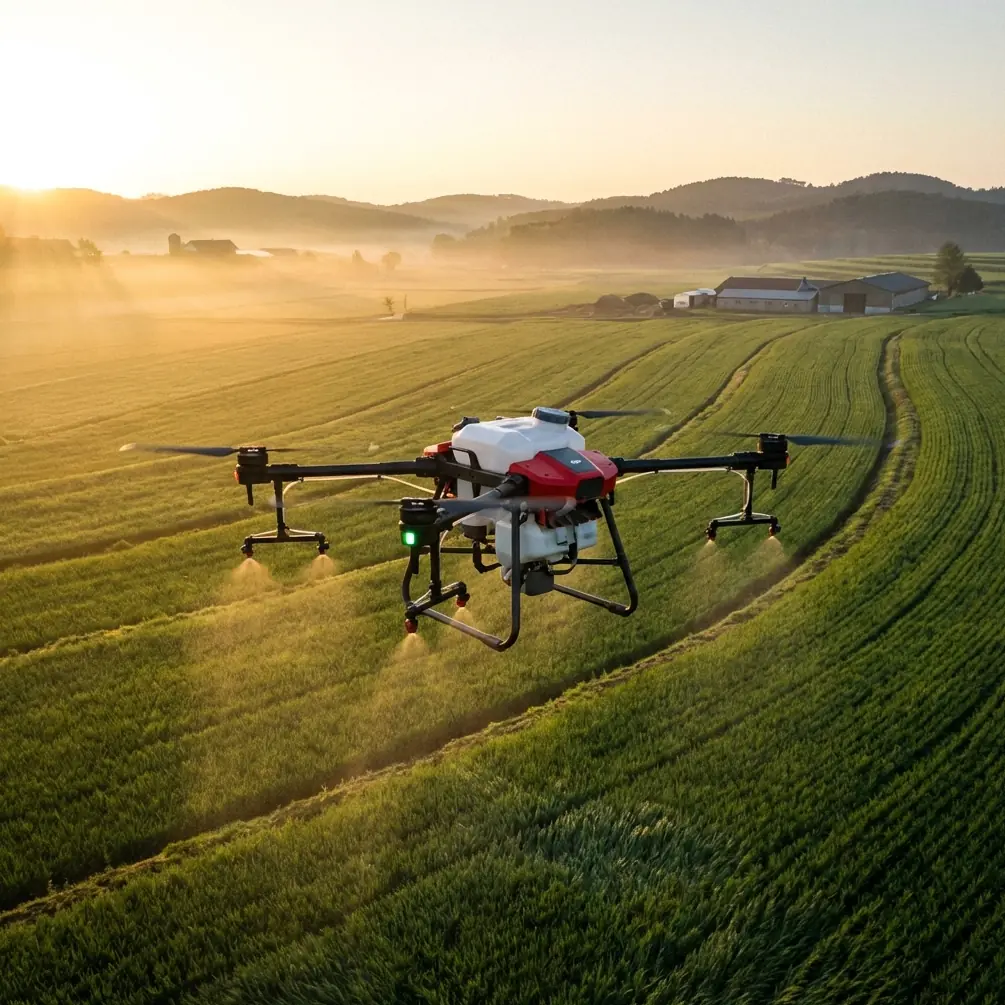
How I’d Prep an Agras T70P for Dusty Highway Corridor Capture
META: A field-focused guide to preparing the Agras T70P for dusty highway capture missions, covering pre-flight cleaning, sensor reliability, RTK stability, nozzle checks, and route discipline.
Dust changes everything.
On a highway-adjacent job, the drone is not just dealing with open space and long linear routes. It is working in a moving cloud of fine grit kicked up by traffic, shoulder work, dry soil, and crosswinds that never seem to settle. If you are planning to use an Agras T70P to capture a dusty highway corridor, the mission usually succeeds or fails before the motors ever spool up.
That is why my first concern is not speed. It is not acreage. It is not even route length.
It is cleanliness.
A recent report out of Hangzhou noted that some residential communities have started using drones to clean exterior façades, with cleaning performance said to exceed 95%. That figure matters here for a different reason than most people assume. It is not about using a drone as a cleaning gimmick. It is a reminder that aerial systems are now credible tools for precision surface cleaning, and that cleanliness has become an operational variable, not an afterthought. If a drone platform working around dusty highways carries exposed sensing surfaces, spray components, lighting indicators, and navigation hardware, a deliberate pre-flight cleaning step can directly affect flight safety and data quality.
For the T70P, this is especially relevant when the job is “capture” rather than crop application alone. Highway documentation in dusty conditions demands stable navigation, repeatable lines, clear sensor windows, and consistent system feedback from takeoff to landing. Dust on the wrong surface can quietly degrade all four.
Start with the surfaces that make decisions
When I inspect a T70P for this kind of work, I do not begin with the tank or the arms. I begin with the parts that help the aircraft perceive the world.
Dust buildup on forward-facing sensing areas, range-related modules, lighting indicators, and downward vision surfaces can produce subtle errors that operators tend to misread as pilot technique or environmental noise. A machine that should be holding a clean line can begin to feel hesitant. Obstacle perception may become less trustworthy. Height consistency can drift. None of that is dramatic at first, which is exactly why it causes trouble.
The education material for DJI’s TT drone offers a useful lesson here, even though it comes from a training context rather than a highway workflow. In its maze exercise, the drone is required to search dead-end corners for challenge cards, hover when a card is found, flash a red LED for 3 seconds, and display the card number on a dot-matrix screen. The point is simple: autonomous or semi-automated flight only works when the aircraft can reliably detect the environment, confirm position, and communicate state back to the operator.
That same logic applies in the field. On a dusty corridor mission, your T70P may not be looking for challenge cards in maze dead zones, but it is still relying on clean sensory inputs and clear feedback states to execute route logic safely. The TT material also warns that a maze should not be too simple, because a route with too few turns lacks challenge value. Highway capture is the opposite of a classroom maze in appearance, yet operationally it has its own complexity: long repeats, side gusts, lane-edge texture changes, dust plumes, service roads, embankments, and narrow margins for error around infrastructure. A “simple” straight corridor is often not simple for the aircraft.
So clean first. Wipe critical optical and sensing surfaces carefully. Check for dust film, not just visible dirt clumps. Fine powder is the real enemy because it can make surfaces look acceptable while still reducing performance.
Why a pre-flight cleaning step is not optional
I recommend treating pre-flight cleaning as part of the flight checklist, not maintenance that happens “when needed.” In dusty highway work, “when needed” is usually too late.
The Hangzhou façade-cleaning story highlighted a result above 95% cleanliness. You are not trying to make your drone shine like a building panel, but the standard is useful: if you can still see residue, streaking, or powder on key surfaces, the job is incomplete. A nearly clean sensor window is not a clean sensor window.
Operationally, this affects:
- RTK fix reliability in edge cases where multiple small issues compound
- Centimeter precision expectations during repeat passes
- Obstacle and terrain awareness around signs, barriers, embankments, and overgrowth
- Pilot trust in aircraft behavior, especially in long corridor runs where small tracking errors grow over distance
Readers often focus on RTK as if it alone solves positional consistency. It does not. A strong RTK fix rate helps the aircraft know where it is in the global frame, but local environmental sensing still matters for stable behavior near the ground and around varied highway geometry. If the machine’s decision inputs are partially obscured by dust, you may have centimeter-grade positioning on paper and mediocre real-world execution in practice.
The nozzle check still matters, even on a capture-oriented mission
This is where many teams get casual with an Agras platform.
Because the T70P is fundamentally an agricultural workhorse, operators sometimes assume that if the mission is more about documenting or capturing a corridor condition, the spray system can be ignored as long as it is not actively applying material. That is a mistake. Nozzle condition, line cleanliness, and residual fluid management still deserve attention.
Why? Because dried residue and fine dust like to meet in the same places.
Nozzle calibration and spray path inspection are not only about application accuracy and spray drift management. They also reveal whether the aircraft has accumulated contamination around plumbing, mounting points, underside structures, or airflow paths that can later affect stability, balance, or cleaning effectiveness. On a dusty roadside mission, those residues can trap more particulate matter and create uneven buildup.
So I inspect the spray hardware even if the day’s objective is corridor capture. I want to know:
- Are the nozzles clean or partially obstructed?
- Is there residue that can attract more dust during flight?
- Is there any asymmetrical buildup under the airframe?
- If the platform will switch back to agricultural work later, is this mission creating avoidable contamination?
This is also where spray drift belongs in the conversation, even if only indirectly. Highway shoulders can have unpredictable lateral winds. If your team is transitioning between capture work and application work on the same site, windy dusty conditions should push you toward stricter nozzle verification, because drift risk and particulate contamination often come from the same environmental setup.
Build your route like a mission, not a straight line
Highway work tricks people into underplanning.
From a distance, the corridor looks linear and repetitive. In reality, dusty roadsides create micro-environments: culverts, ramps, barriers, slopes, reflective surfaces, vegetation edges, and traffic-generated turbulence. This is why I liked one subtle idea from the TT training document: the drone had to visit the “dead angles” of the maze to find challenge cards. The lesson was not about classroom play. It was about forcing the aircraft to account for neglected spaces.
A highway corridor has its own dead angles. Think of:
- the leeward side of a sound wall
- the dusty pocket near an embankment cut
- the shoulder transition where loose soil meets pavement
- frontage-road intersections
- sign clusters and gantries
- drainage structures that break terrain uniformity
If your route only optimizes for the cleanest central track, you can miss the places where dust most affects aircraft behavior and image consistency. Plan turns and overlaps with those trouble spots in mind. Swath width is not just an efficiency setting; it determines how forgiving your mission is when the corridor throws irregular geometry at you.
That matters even more if you are pairing visible capture with multispectral workflows in nearby vegetation or erosion monitoring zones. Dust in the air and on the aircraft can reduce consistency in ways that are less obvious in RGB previews than in data products reviewed later.
Check signal discipline the same way you’d check hardware
One of the stranger but useful references in the source set came from the BLHeli programming manual. It describes a beep-driven parameter selection process in which moving the throttle stick to zero stores a value, moving it below max skips a parameter, and returning to full throttle helps ensure the correct selection. At first glance, that sounds unrelated to an Agras T70P highway mission.
It is not.
The operational takeaway is about disciplined input confirmation. In technical systems, ambiguous inputs create ambiguous outcomes. The BLHeli manual emphasizes deliberate control positions so the system interprets exactly what the user intends. The same mindset belongs in pre-flight checks for the T70P:
- confirm rather than assume mode state
- verify route and payload settings explicitly
- recheck any input that was changed mid-process
- avoid “close enough” stick, menu, or map selections
Dusty field conditions are terrible for rushed setup. Screens get glare. Gloves reduce tactile precision. Wind and vehicle noise break concentration. If you make one partial input and move on, you can carry a bad assumption into the air. The BLHeli example may come from ESC programming, but the human-factors lesson is universal: be intentional enough that the aircraft cannot misunderstand you.
What I’d inspect, in order
My practical sequence for a dusty highway capture mission on a T70P looks like this:
1. Airframe exterior
Remove dust from arms, joints, landing structure, and exposed surfaces. This is basic, but it sets the stage for spotting cracks, loose fasteners, or abrasion that dust can hide.
2. Sensor and vision surfaces
This is the priority cleaning step. Use the right materials, avoid scratching, and inspect in angled light so you can see film residue rather than just debris.
3. Lighting and status indicators
The TT training example made a good point through its red LED flash and display behavior: the aircraft’s communication layer matters. If indicator visibility is compromised by dust or residue, fast interpretation in the field gets harder.
4. RTK and positioning setup
Check lock quality and confirm your RTK fix rate before committing to the corridor. Highway jobs expose weak positioning discipline quickly because errors accumulate over long distances.
5. Spray system and nozzles
Even if the mission focus is capture, verify nozzle cleanliness and look for residue zones that can trap dust. This is where nozzle calibration and contamination control intersect.
6. Route geometry and swath width
Do not set these based only on ideal map conditions. Adjust for roadside turbulence, shoulder variability, and the fact that dusty environments rarely behave consistently across the full corridor.
7. Weather and drift behavior
Crosswinds do more than move droplets. They move dust, distort hover quality, and affect image consistency. If you are working in mixed use where agricultural tasks may follow, keep spray drift considerations in the same weather conversation.
Don’t misunderstand ruggedness
A lot of operators lean too hard on ingress protection language. If the T70P platform or supporting gear offers robust environmental resistance, that is useful, but it does not excuse poor field hygiene. Even with an IPX6K-class mindset around washdown and harsh-condition readiness, persistent dust on sensitive areas can still degrade performance before it creates outright failure.
Ruggedness means the platform can survive tough work. It does not mean contamination is irrelevant.
That distinction matters on highways because the mission tempo encourages shortcuts. Teams want to launch fast, finish the corridor, and beat the wind shift or traffic pattern change. That pressure leads to “good enough” cleaning and “probably fine” checks. Usually the aircraft will fly anyway. The problem is not whether it takes off. The problem is whether it performs with enough consistency to trust the result.
A final field rule I stand by
If the site is dusty enough that you wipe one surface and immediately see powder on the cloth, budget time to clean twice.
First pass removes what is obvious. Second pass removes what remains dangerous.
That approach may sound fussy, but I have seen too many corridor flights where minor contamination created avoidable instability, weak confidence in route execution, or data that looked acceptable in the field and uneven back in review. The T70P is built for serious work. Serious work deserves disciplined preparation.
If your team is designing a repeatable SOP for these jobs, include the cleaning step formally, place it before RTK confirmation, and tie it to sensor, nozzle, and route verification rather than leaving it as a cosmetic task. That is the difference between an aircraft that merely survives a dusty highway mission and one that produces dependable output.
If you want a field checklist tailored to your corridor workflow, I can help you map one out here: message me directly on WhatsApp.
Ready for your own Agras T70P? Contact our team for expert consultation.