
Agras T70P Field Report: Working Through Dust, Drift
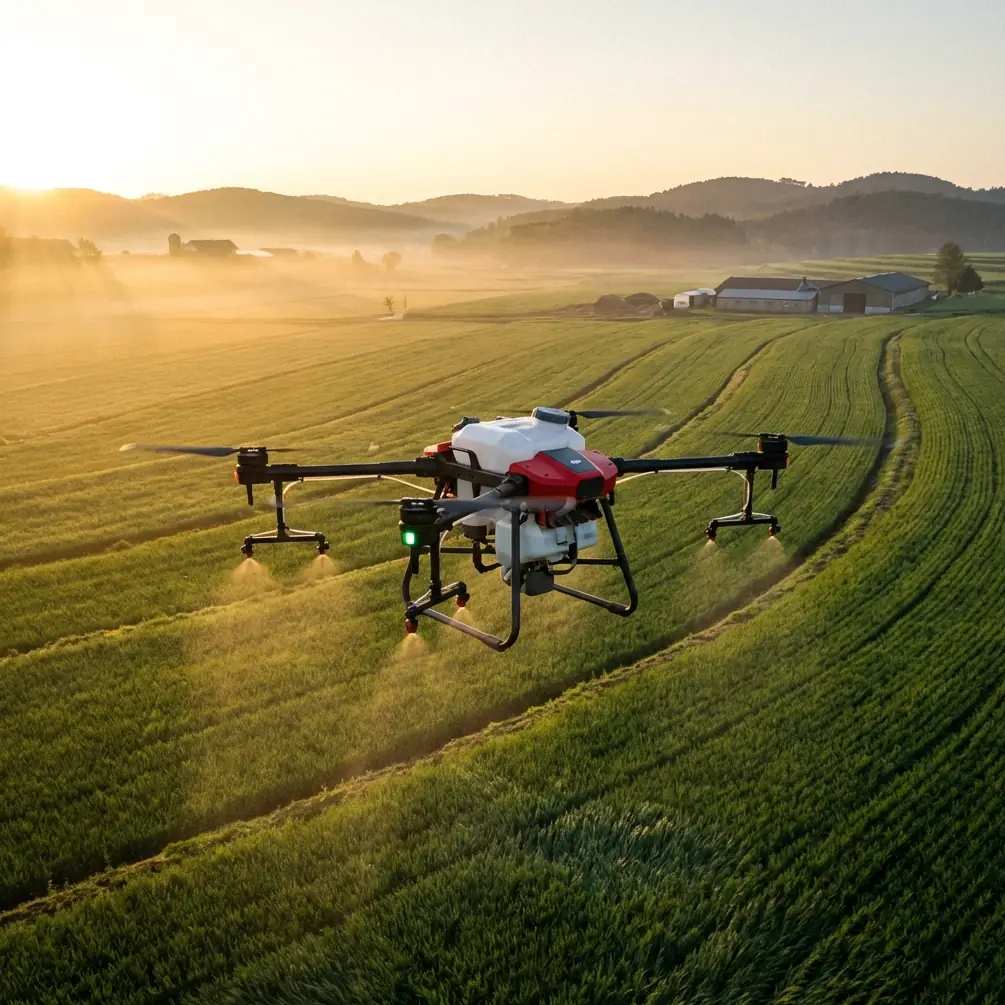
Agras T70P Field Report: Working Through Dust, Drift, and Precision Demands on Construction Sites
META: A field-focused Agras T70P article covering dusty construction site operations, spray drift control, nozzle calibration, RTK fix rate, centimeter precision, swath width planning, IPX6K durability, and practical accessory upgrades.
Construction sites are not gentle places for aircraft. Fine dust hangs in the air, surfaces are abrasive, visibility changes by the hour, and the work itself rarely pauses just because a drone needs clean conditions. That is exactly why the Agras T70P deserves a more practical discussion than the usual spec-sheet treatment.
Most people associate the Agras line with crop work. Fair enough. But on dusty construction projects, some of the same strengths that matter in agriculture become highly relevant for commercial site operations too: controlled liquid application, stable route execution, repeatable coverage, and the ability to keep performing in harsh environments. If the job involves dust suppression, surface wetting, broad-area treatment passes, or repeatable coverage over changing terrain, the T70P starts to look less like a niche platform and more like a serious utility aircraft.
This field report is written from that perspective.
Why the T70P fits dirty, high-friction job sites
A construction site creates two problems for any drone team. The first is environmental punishment. The second is inconsistency. One hour you are flying over graded earth; the next, trucks have changed traffic flow, stockpiles have shifted, and dust plumes are rolling across your route.
That is where build quality and positioning discipline matter more than flashy promises.
The Agras T70P’s appeal in this setting begins with durability. An aircraft rated to IPX6K brings a practical advantage in sites where dust control itself often involves water, mist, washdown, and residue. This is not a cosmetic detail. If your platform is regularly exposed to wet cleaning, splash-heavy operating zones, or airborne particles sticking to damp surfaces, weather resistance becomes part of uptime. On a construction site, uptime is not a luxury. It decides whether the aircraft is a tool or a distraction.
The second operational factor is centimeter precision through RTK-enabled positioning. On paper, that sounds like a mapping talking point. In practice, it changes how well the T70P can repeat passes in environments where overlap and missed sections both carry consequences. If you are applying liquid for dust suppression along haul roads, perimeter routes, graded pads, or demolition staging areas, route consistency affects coverage quality and water usage. Poor repeatability leads to wet patches in one area and airborne dust in another. Neither helps the site superintendent.
RTK fix rate is not a minor detail
People often treat RTK as a checkbox. They should not.
On dusty construction sites, the RTK fix rate directly influences how reliably the aircraft holds intended lines, especially when you are trying to repeat treatment across the same corridor day after day. A stable fix improves route confidence. That matters when you need predictable swath placement near temporary fencing, stacked material, drainage channels, or partially occupied work zones.
A high RTK fix rate also reduces the operational drag that comes from second-guessing the aircraft. If positioning quality degrades, crews compensate by adding larger overlap buffers and more conservative pass spacing. That may sound cautious, but it quietly reduces efficiency. You burn time, increase liquid use, and still may not get cleaner results. On a site that changes fast, precision is not just about neat lines on a screen. It is about preserving trust in the route plan.
For teams running recurring dust suppression patterns, centimeter-level repeatability can also improve documentation. When the same treated path is flown consistently, site managers can compare outcomes with fewer variables. That gives the T70P value beyond the flight itself. It becomes part of a repeatable site-control process.
Spray drift is the issue that decides whether the mission actually worked
On construction projects, drift is not an abstract agronomy concern. It is often the line between a useful operation and a complaint.
If the T70P is being used for dust suppression or controlled liquid application, spray drift needs active management. Open haul roads, exposed pads, building edges, and moving equipment all create turbulent air. Add midday heat and crosswinds, and droplets can travel farther than intended. That means wasted fluid, uneven treatment, and potential overspray onto equipment, temporary structures, or finished surfaces.
This is why nozzle calibration matters so much. Not occasionally. Routinely.
A properly calibrated nozzle setup affects droplet size, distribution, and application uniformity. On a dusty site, those variables determine whether the aircraft lays down a useful treatment band or just creates a short-lived visual mist that evaporates or drifts away. Calibration should be linked to the actual mission objective. A broad dust-control pass over compacted soil may call for one approach; tighter application along a narrow service road may need another. The mistake many teams make is flying the same liquid setup across every surface condition and wind pattern. The T70P is capable enough that it deserves better than that.
Operationally, this also connects to swath width. A wider swath can improve productivity, but only if droplets are landing where you think they are. In unstable air, chasing maximum width without recalibrating nozzles or reassessing altitude can create an impressive coverage map and a mediocre real-world result. The T70P’s value comes from balancing width with control. The site does not care how efficient the pass looked in software if dust still rises behind every truck.
Dust changes maintenance discipline more than pilots expect
Construction dust has a way of invading every assumption. It affects sensors, clings to surfaces, and can obscure issues until they become failures.
This is another reason the T70P stands out in a civilian industrial role. A platform built for harsh application work is naturally better suited to grime-heavy operating cycles than lighter inspection drones pressed into jobs they were never designed to do. Still, durability is only part of the equation. The rest is field discipline.
After repeated missions in dusty environments, crews should pay close attention to spray components, seals, moving parts, and any surface where residue can interfere with flow or sensor performance. That is especially true when fine particulates mix with moisture and create a paste-like film. IPX6K helps with washdown resilience, but resilience is not immunity. Good crews use that protection to clean aggressively and restore readiness, not to postpone maintenance.
In my experience, one of the clearest dividing lines between successful site deployments and frustrating ones is whether the team treats cleaning as part of the mission profile. On the T70P, that mindset pays off.
A third-party accessory that made a real difference
One upgrade that genuinely improved site performance was a third-party quick-change nozzle kit designed to make nozzle swaps and recalibration faster in the field. This was not flashy hardware. It simply reduced downtime between different application conditions.
That mattered more than expected.
Construction sites rarely stay uniform across a full day. Morning conditions on a compacted access road are not the same as afternoon conditions around a drier spoil area. Being able to adjust nozzle behavior without turning every change into a workshop event made the T70P much more responsive to the site as it actually existed. It encouraged the team to recalibrate when needed instead of pushing through with a compromised setup.
That is the kind of accessory I tend to trust: not the ones that promise transformation, but the ones that remove excuses. On the T70P, better field adaptability means better drift control, more useful swath planning, and cleaner treatment consistency.
Where multispectral fits, and where it does not
The word multispectral appears in a lot of drone conversations because people like data-rich workflows. On construction sites, though, its relevance depends on the task.
For pure dust suppression and liquid application, multispectral payloads are not the center of the story. The T70P’s strength is operational coverage and repeatability, not pretending every site task needs plant-health style analytics. That said, there are edge cases where multispectral-adjacent workflows can support broader site management, especially when teams are monitoring surface moisture variability, disturbed ground behavior, or vegetation boundaries near active works. The key is not to force the technology into a role it does not naturally own.
For most T70P construction deployments, precision application, route repeatability, and environmental robustness will matter far more than layered spectral interpretation.
Planning swath width around the site, not the brochure
If I had to identify one field habit that separates thoughtful T70P operators from casual ones, it is this: they do not set swath width once and forget it.
A dusty construction site is a patchwork. Open haul corridors, narrow material lanes, excavated edges, stockpile perimeters, and partially completed hardscape all behave differently. A swath that works on a broad graded section may be too ambitious beside barricades or equipment queues. The T70P can cover serious ground, but coverage discipline is what turns capacity into results.
The smarter workflow is to segment the site. Assign wider, more efficient passes where turbulence and obstacle density are low. Tighten the plan where drift risk rises or where treatment boundaries matter more. Tie that segmentation back to nozzle calibration and RTK confidence. Once those variables work together, the aircraft starts delivering the kind of consistency that site managers notice.
And they do notice. Usually not because they admire the drone, but because fewer dust complaints reach them from operators, subcontractors, or neighboring properties.
The human side of operating the T70P on a work site
There is a tendency in drone marketing to imply that a strong platform solves weak operations. That is never true on construction projects.
The Agras T70P gives crews a sturdy and capable base, but the outcome still depends on how the mission is run. Pilots need to think like site coordinators. They have to read wind behavior between structures and stockpiles, anticipate where vehicle movement will disturb airflow, and recognize when surface conditions call for different liquid behavior. The aircraft can execute with precision, but the operator has to define what precision should mean in context.
That is why I like the T70P for this kind of work. It rewards disciplined teams. If your process includes route planning with RTK awareness, frequent nozzle checks, drift-conscious timing, and washdown-backed maintenance, the platform makes those habits count. It is not just surviving a dirty environment. It is staying useful inside one.
A practical communication point for teams evaluating setups
If you are trying to adapt an Agras T70P for demanding site conditions and want to compare nozzle strategies, RTK setup choices, or accessory options, it helps to discuss real field scenarios rather than generic drone talk. A direct line like message the operations team here is often the fastest way to sort out what is actually working on active projects.
That kind of conversation is especially valuable when the site has conflicting priorities: broad coverage, low drift, narrow application corridors, and minimal interruption to surrounding work.
Final assessment from the field
The Agras T70P makes sense on dusty construction sites for reasons that are easy to miss if you only view it through an agriculture lens. Its IPX6K resilience supports hard-use washdown cycles. Its centimeter precision and RTK-backed route control improve repeatable coverage where overlap errors waste liquid and leave untreated sections behind. Its effectiveness rises or falls with nozzle calibration, especially when spray drift is a real operational concern rather than a theoretical one. And swath width only becomes an advantage when it is matched to site geometry and actual airflow conditions.
Those are not decorative features. They are the mechanics of getting useful work done.
For construction teams dealing with dust, changing surfaces, and pressure to keep operations moving, the T70P is best understood as a field utility platform that happens to come from an agricultural lineage. Use it with discipline, add the right accessory support, and it can become one of the more reliable tools on a difficult site.
Ready for your own Agras T70P? Contact our team for expert consultation.