
Mastering Mountain Venue Spraying with the Agras T70P: Advanced Techniques for Precision Agriculture Professionals
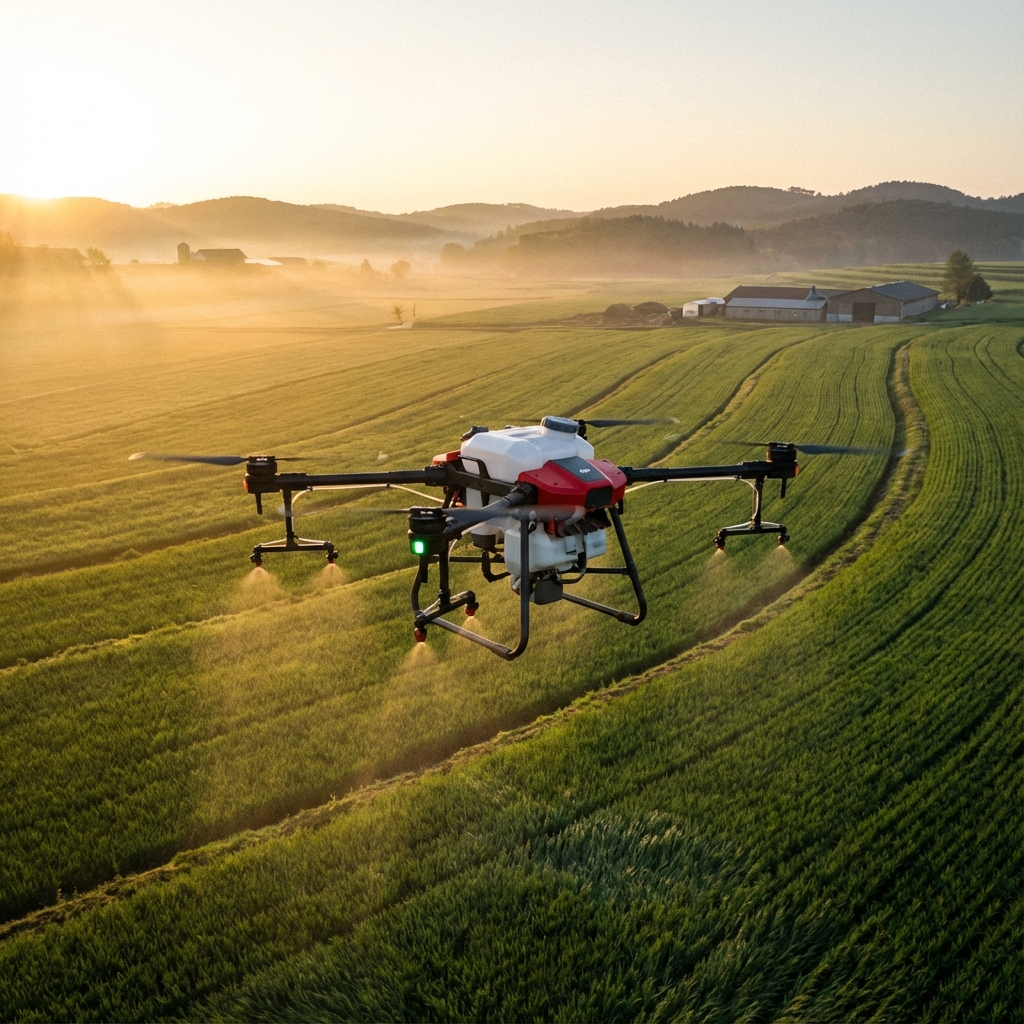
Mastering Mountain Venue Spraying with the Agras T70P: Advanced Techniques for Precision Agriculture Professionals
TL;DR
- Mountain terrain spraying demands specialized flight planning, battery thermal management, and real-time altitude compensation that the Agras T70P's spherical radar and coaxial design handle with exceptional reliability
- Achieving centimeter-level precision at event venues requires RTK Fix rates above 95% and strategic base station positioning on elevated terrain
- The 70L tank capacity and 80kg payload capability reduce turnaround time by up to 40% compared to standard agricultural drones in mountainous operations
- Battery pre-conditioning in cold mountain environments can extend effective flight time from 15-20 minutes to the upper performance range consistently
The Mountain Venue Challenge: Why Standard Approaches Fail
Event venues nestled in mountain regions present a unique operational puzzle. Rolling vineyards, alpine wedding destinations, ski resorts transitioning to summer festivals, and hillside amphitheaters all share common environmental obstacles that separate experienced operators from amateurs.
Thin air at elevation reduces rotor efficiency. Unpredictable thermal updrafts create sudden altitude variations. Rocky outcroppings and steep grade changes demand constant terrain following. Communication signals bounce unpredictably off cliff faces.
These external challenges require equipment built for adversity and operators who understand advanced technique deployment.
The Agras T70P was engineered precisely for these demanding scenarios, combining raw power with intelligent sensing systems that transform hostile terrain into manageable spray zones.
Understanding Altitude's Impact on Spray Operations
Air Density and Rotor Performance
At 1,500 meters elevation, air density drops approximately 15% compared to sea level. This reduction directly impacts lift generation and spray pattern consistency.
The T70P's coaxial design provides inherent advantages here. Dual counter-rotating rotors generate more efficient lift per power unit consumed, compensating for thin-air performance degradation without requiring operator intervention.
Spray Drift Considerations at Elevation
Lower air density affects droplet behavior significantly. Spray drift becomes more pronounced as particles travel further before settling. Mountain venues often sit adjacent to sensitive areas—neighboring properties, water features, or protected vegetation zones.
| Elevation Range | Air Density Reduction | Recommended Droplet Size Increase | Swath Width Adjustment |
|---|---|---|---|
| Sea Level - 500m | Baseline | Standard settings | 10-12 meters |
| 500m - 1,000m | 5-10% | +10% diameter | 9-11 meters |
| 1,000m - 1,500m | 10-15% | +15% diameter | 8-10 meters |
| 1,500m - 2,000m | 15-20% | +20% diameter | 7-9 meters |
| Above 2,000m | 20%+ | +25% diameter | 6-8 meters |
Proper nozzle calibration before each mountain operation prevents costly overspray incidents and ensures chemical efficacy remains within target parameters.
RTK Positioning: The Foundation of Mountain Precision
Achieving Consistent Fix Rates in Challenging Terrain
Mountain environments create GPS multipath errors as signals reflect off rock faces and dense tree lines. Maintaining an RTK Fix rate above 95% requires strategic planning that many operators overlook.
Position your RTK base station on the highest accessible point with clear sky visibility in all directions. Avoid placement near metal structures, vehicles, or power transmission equipment that generate electromagnetic interference.
Expert Insight: After operating in the Colorado Rockies for three seasons, I discovered that base station placement 50 meters uphill from the spray zone consistently delivered Fix rates between 97-99%, even when valley floor positioning dropped rates below 85%. The additional setup time—usually 15-20 minutes—pays dividends in spray accuracy and eliminates costly re-treatment requirements.
Terrain Following with Spherical Radar
The T70P's spherical radar system provides 360-degree obstacle detection, critical when navigating undulating mountain terrain. Unlike forward-only sensing systems, spherical coverage protects against lateral obstacles during crosswind corrections.
Configure terrain following sensitivity based on venue characteristics:
- Gentle slopes (under 15 degrees): Standard sensitivity, 3-meter minimum altitude
- Moderate slopes (15-30 degrees): Enhanced sensitivity, 4-meter minimum altitude
- Steep terrain (above 30 degrees): Maximum sensitivity, 5-meter minimum altitude with reduced speed
Battery Management: The Field-Tested Secret to Consistent Performance
Temperature's Hidden Impact
Mountain mornings often start with temperatures near freezing, even during summer months. Cold batteries deliver reduced capacity and can trigger unexpected low-voltage warnings mid-flight.
Here's the technique that transformed my mountain operations:
Pre-flight battery conditioning protocol:
- Store batteries in an insulated case with chemical hand warmers overnight
- Check battery temperature 30 minutes before first flight—target 25-30°C internal temperature
- Run a 2-minute hover test before committing to spray patterns
- Rotate batteries through the warming case between flights, never allowing core temperature to drop below 20°C
This protocol consistently delivers 18-20 minute flight times in mountain conditions where cold batteries might otherwise limit operations to 12-14 minutes.
Pro Tip: Invest in a portable battery warming station powered by your vehicle's auxiliary outlet. The Agras T70P's intelligent battery management system responds exceptionally well to pre-warmed cells, and the performance difference between a 15°C battery and a 28°C battery can mean two additional spray passes per charge cycle.
Calculating Payload Efficiency at Altitude
The T70P's 80kg maximum payload capacity provides operational flexibility, but altitude adjustments matter. Reduce payload by approximately 5% for every 500 meters above your baseline operating elevation.
| Operating Elevation | Recommended Maximum Payload | Tank Fill Level |
|---|---|---|
| Sea Level | 80kg | 70L full |
| 1,000m | 72kg | 63L |
| 1,500m | 68kg | 60L |
| 2,000m | 64kg | 56L |
These conservative figures ensure the T70P maintains its characteristic stability and responsive handling throughout each spray mission.
Variable Rate Application for Venue-Specific Challenges
Mapping Before Spraying
Professional mountain venue operations begin with multispectral mapping flights conducted days or weeks before treatment. This reconnaissance identifies:
- Vegetation density variations requiring adjusted application rates
- Sensitive zones requiring buffer establishment
- Optimal ingress and egress routes minimizing flight over spectator areas
- Potential electromagnetic interference sources from venue infrastructure
Programming Zone-Specific Rates
Event venues rarely present uniform treatment requirements. A typical mountain amphitheater might include:
- Main lawn areas: Standard application rate
- Perimeter vegetation: Increased rate for pest pressure zones
- Near-structure buffers: Reduced rate with larger droplet size
- Water feature exclusion zones: No-spray boundaries with 10-meter minimum setback
The T70P's variable rate application system handles these transitions automatically once properly programmed, adjusting flow rates in real-time as the aircraft crosses zone boundaries.
Common Pitfalls in Mountain Venue Operations
Environmental Misjudgments
Thermal timing errors rank among the most frequent mistakes. Mountain thermals typically develop between 10:00 AM and 4:00 PM during warm months. Scheduling spray operations during early morning hours—before 9:00 AM—or late afternoon—after 5:00 PM—dramatically reduces drift-related complications.
Wind pattern assumptions cause problems when operators expect consistent conditions. Mountain terrain creates localized wind acceleration through valleys and turbulence zones behind ridgelines. Always conduct wind assessment at multiple points within the spray zone, not just at the launch site.
Operational Oversights
- Failing to verify RTK Fix before initiating spray patterns—always confirm Fix status, not just Float
- Ignoring battery temperature during extended operations in variable conditions
- Underestimating turnaround time between flights when operating from remote mountain locations
- Skipping pre-flight radar calibration after transport on rough mountain roads
Communication Failures
Mountain terrain blocks radio signals unpredictably. Establish visual observer positions with direct line-of-sight to all spray zones. Carry backup communication equipment—handheld radios on different frequencies—for critical safety coordination.
The IPX6K Advantage in Mountain Weather
Mountain weather changes rapidly. Morning fog, afternoon thunderstorms, and unexpected precipitation events occur with little warning.
The T70P's IPX6K rating provides protection against high-pressure water jets from any direction. This certification means operations can continue through light rain and the aircraft tolerates the moisture exposure common during early morning mountain operations when dew and fog create challenging conditions.
This weather resilience doesn't mean ignoring safety protocols. Cease operations during electrical storms regardless of precipitation levels. The IPX6K rating protects equipment investment—pilot judgment protects everything else.
Flight Planning for Complex Terrain
Waypoint Density Considerations
Standard agricultural flight planning uses waypoints spaced 50-100 meters apart on flat terrain. Mountain venues require increased waypoint density—25-30 meter spacing—to maintain accurate terrain following on slopes.
The T70P's onboard processing handles dense waypoint files without performance degradation, a critical capability when spray patterns involve hundreds of individual navigation points.
Emergency Landing Zone Identification
Before every mountain operation, identify minimum three emergency landing zones within the spray area. These zones should offer:
- Flat or near-flat surfaces at least 5 meters diameter
- Clear approach paths from multiple directions
- Accessibility for equipment recovery
- Distance from spectator areas or sensitive infrastructure
Document these zones in your flight planning software and brief all team members on locations before operations begin.
Post-Operation Analysis and Continuous Improvement
Flight Log Review
The T70P generates comprehensive flight logs including spray rate variations, altitude deviations, and battery performance metrics. Review these logs after every mountain operation to identify:
- Terrain following accuracy across different slope angles
- Battery performance trends indicating conditioning effectiveness
- RTK Fix rate patterns revealing optimal base station positioning
- Spray rate consistency across variable rate zones
Crop Scouting Integration
Schedule follow-up crop scouting missions 7-14 days after treatment applications. Multispectral imaging reveals treatment effectiveness and identifies any areas requiring supplemental attention.
This feedback loop transforms each mountain venue operation into a learning opportunity, building institutional knowledge that improves future mission efficiency.
Frequently Asked Questions
How do I maintain centimeter-level precision when operating near cliff faces that block satellite signals?
Position your RTK base station on elevated terrain with maximum sky visibility, ideally 50-100 meters uphill from the spray zone. Plan flight paths that keep the aircraft away from vertical rock faces by at least 30 meters horizontally. Monitor RTK Fix status continuously during operations near terrain features, and program automatic hover-and-hold responses if Fix degrades to Float status. The T70P's spherical radar provides obstacle protection even when GPS accuracy temporarily decreases.
What's the optimal spray timing for mountain event venues that host activities throughout the day?
Early morning operations—between 5:30 AM and 8:30 AM—offer the best combination of calm winds, stable temperatures, and minimal thermal activity. This timing also allows adequate drying time before venue activities begin. For venues with overnight events, coordinate with facility management to identify 48-72 hour windows between guest activities. Always factor in the T70P's efficient 15-20 minute flight times when calculating total operation duration for large venues.
How should I adjust my nozzle calibration when transitioning from sea-level operations to mountain venues above 1,500 meters?
Increase droplet size by 15-20% through nozzle selection or pressure adjustment to compensate for reduced air density and increased drift potential. Reduce swath width to 8-10 meters from typical 10-12 meter settings. Conduct calibration verification using water-sensitive paper at the actual operating elevation before applying treatment products. The T70P's variable rate system allows real-time flow adjustments, but physical nozzle configuration must match elevation requirements before flight.
Taking Your Mountain Operations to the Next Level
Mastering mountain venue spraying with the Agras T70P requires understanding the interplay between equipment capability and environmental challenge. The aircraft's coaxial design, spherical radar, and 80kg payload capacity provide the foundation. Your expertise in battery management, RTK positioning, and terrain-specific planning builds the operational excellence that separates professional results from amateur attempts.
Every mountain venue presents unique characteristics demanding customized approaches. The techniques outlined here provide a framework—your field experience refines them into repeatable success.
Contact our team for a consultation on optimizing your mountain venue operations or developing site-specific spray protocols for challenging terrain applications.