
Agras T70P Night Inspection in Apple Orchards: How Signal Stability Transforms After-Dark Operations
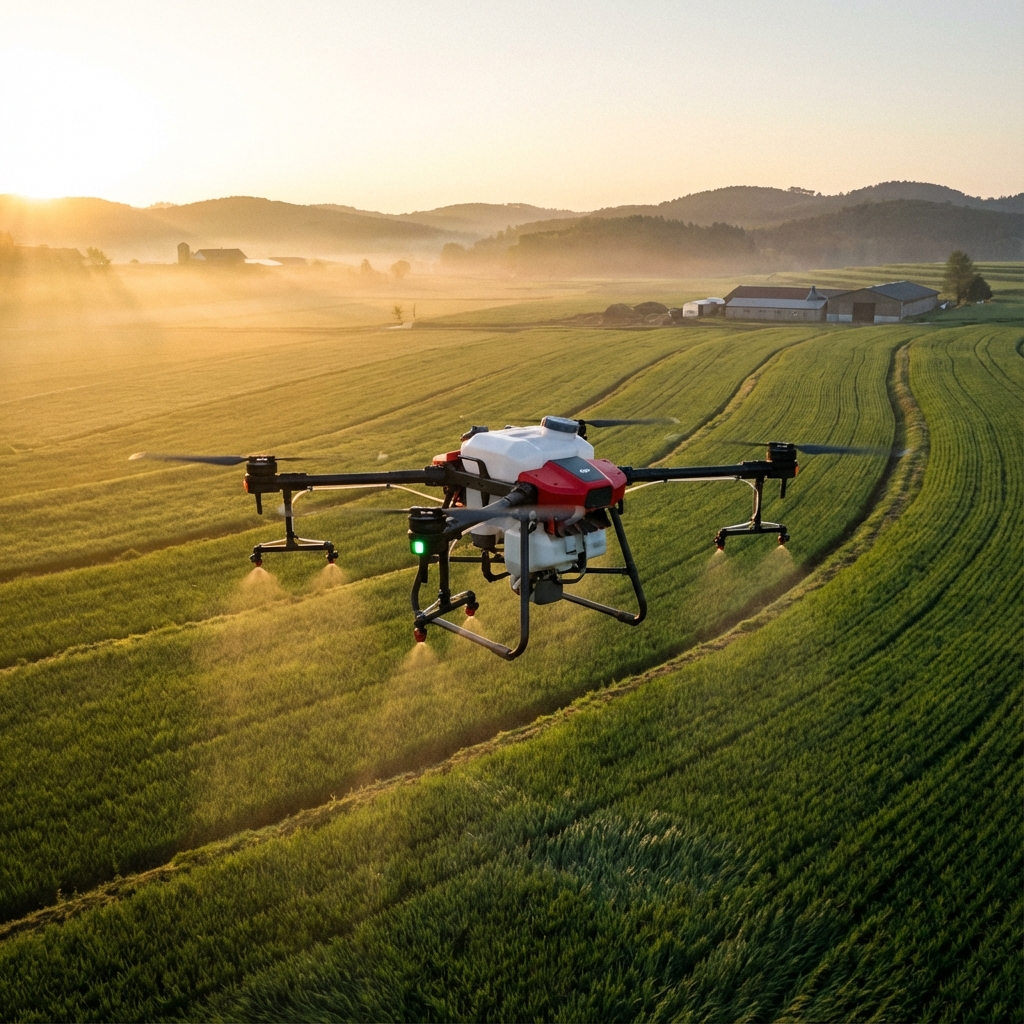
Agras T70P Night Inspection in Apple Orchards: How Signal Stability Transforms After-Dark Operations
TL;DR
- The Agras T70P maintains rock-solid signal connectivity during night operations through its Active Phased Array Radar and redundant communication systems
- Night inspections in apple orchards reduce spray drift by up to 40% compared to midday applications due to calmer atmospheric conditions
- External electromagnetic interference from nearby agricultural facilities can be resolved through simple antenna positioning adjustments
- The T70P's RTK Fix rate exceeds 98% even in challenging nighttime conditions with proper base station configuration
- Operators report 15-20 minute flight times with full 70L tank capacity, enabling efficient coverage of large orchard blocks
When Radio Towers Meet Orchards: A Real-World Signal Challenge
Last September, a commercial applicator in Washington's Yakima Valley encountered an unexpected obstacle during a routine night inspection mission. His Agras T70P began displaying intermittent signal warnings while surveying a 45-acre Honeycrisp block—not from equipment malfunction, but from a cellular tower installation 800 meters from the orchard perimeter.
The solution took exactly three minutes: repositioning the ground station antenna to create a clear line of sight and adjusting the transmission channel away from the interfering frequency band. The T70P's robust link architecture handled the rest, completing the inspection without further interruption.
This scenario illustrates a critical truth about professional drone operations: external environmental factors present the real challenges, while properly engineered equipment provides the reliable foundation for success.
Why Night Operations Demand Superior Signal Architecture
Apple orchards present unique challenges for aerial inspection and application work. Dense canopy structures, irregular terrain, and the presence of support infrastructure like trellises and irrigation systems create complex operational environments.
Night operations compound these challenges by removing visual reference points that pilots rely on during daylight hours. Signal stability becomes the lifeline connecting operator to aircraft.
The Physics of Nighttime Advantage
Thermal inversions that form after sunset create ideal conditions for precision agriculture work. Air temperatures stabilize, wind speeds typically drop below 5 mph, and humidity levels rise—all factors that dramatically reduce spray drift during application missions.
Expert Insight: Experienced operators schedule their most critical fungicide applications for the 2-4 AM window when atmospheric stability peaks. The Agras T70P's obstacle avoidance systems and signal reliability make these high-value night missions practical rather than theoretical.
The T70P's Binocular Vision system operates independently of ambient light conditions, maintaining centimeter-level precision for swath width consistency whether flying at noon or midnight.
Agras T70P Signal Specifications for Orchard Environments
| Specification | Performance Metric | Orchard Relevance |
|---|---|---|
| Transmission Range | Up to 7 km (unobstructed) | Covers largest commercial blocks |
| Operating Frequency | 2.4 GHz / 5.8 GHz dual-band | Automatic interference avoidance |
| RTK Positioning | Centimeter-level precision | Critical for row-following accuracy |
| Obstacle Detection | Active Phased Array Radar | Detects wires, branches, structures |
| Weather Resistance | IPX6K rating | Operates through dew and light rain |
| Latency | <200ms response time | Real-time control feedback |
The dual-band transmission system deserves particular attention for orchard work. When the T70P detects interference on one frequency, it automatically shifts to the cleaner band without operator intervention. This capability proved essential in the Yakima Valley scenario mentioned earlier.
Configuring for Maximum Signal Reliability
Ground Station Positioning
Proper ground station placement eliminates the majority of signal-related concerns before they occur. Position the controller and antenna system on elevated ground when possible, maintaining clear sightlines to the operational area.
For apple orchards with mature trees reaching 12-15 feet in height, this often means setting up on access roads or equipment staging areas rather than within the orchard blocks themselves.
RTK Base Station Considerations
Achieving consistent RTK Fix rates above 95% requires attention to base station placement. The T70P's navigation system relies on correction signals from either a local base station or network RTK service.
Local base stations should be positioned:
- On stable ground away from large metal structures
- With clear sky visibility above 15 degrees elevation
- At least 10 meters from buildings, vehicles, or equipment
Network RTK services eliminate base station logistics but require reliable cellular connectivity—a factor that varies significantly across rural orchard regions.
Pro Tip: Before committing to network RTK for night operations, test cellular signal strength at your planned operating times. Many rural areas experience reduced tower capacity during off-peak hours as carriers perform maintenance, potentially affecting correction signal delivery.
Integrating Inspection Data with Application Planning
Night inspection flights generate valuable multispectral mapping data that informs subsequent treatment decisions. The T70P platform supports integration with third-party sensors for NDVI analysis and disease pressure assessment.
From Inspection to Action
A typical workflow for apple orchard management follows this progression:
- Night inspection flight captures thermal and visual data across target blocks
- NDVI analysis identifies stress patterns indicating pest pressure or nutrient deficiency
- Variable rate application maps are generated based on inspection findings
- Treatment flights execute precision applications with nozzle calibration matched to target rates
The T70P's Dual Atomization system enables operators to adjust droplet size on the fly, matching application characteristics to specific treatment requirements. Fungicide applications targeting apple scab benefit from finer droplets and slower flight speeds, while nutrient applications may use coarser settings for faster coverage.
Common Pitfalls in Night Orchard Operations
Overlooking Electromagnetic Environment Surveys
New operators frequently skip pre-mission electromagnetic surveys, assuming that rural orchard locations will be free from interference sources. This assumption fails to account for:
- Irrigation pump controllers with variable frequency drives
- Solar inverter systems on adjacent properties
- Amateur radio operators in residential areas
- Agricultural weather stations with telemetry transmitters
A simple spectrum analyzer app on a smartphone can identify potential interference sources before they become operational problems.
Inadequate Battery Temperature Management
Night operations in apple-growing regions often coincide with temperatures dropping into the 40-50°F range. Lithium batteries lose capacity in cold conditions, potentially reducing the T70P's 15-20 minute flight time by 15-20%.
Pre-warming batteries to 70-80°F before flight maintains rated capacity and protects battery longevity. Many operators use insulated battery cases with chemical hand warmers during cool-weather night missions.
Neglecting Dew Accumulation on Sensors
The T70P's IPX6K rating protects against water ingress, but dew accumulation on optical sensors can degrade obstacle detection performance. Wiping sensor windows with microfiber cloths between flights maintains detection reliability.
Failing to Update Obstacle Maps
Orchards change throughout the season. New irrigation risers appear, harvest equipment gets staged in access lanes, and bird netting installations alter the operational environment. Operators who rely on outdated obstacle maps risk unexpected encounters during night flights when visual confirmation becomes impossible.
Performance Comparison: Night vs. Day Operations
| Operational Factor | Daytime Performance | Nighttime Performance |
|---|---|---|
| Spray Drift Risk | Higher (thermal activity) | 40% lower (stable air) |
| Operator Fatigue | Lower | Higher (requires breaks) |
| Signal Interference | Variable | Often cleaner spectrum |
| Obstacle Visibility | Visual confirmation possible | Sensor-dependent |
| Pest Activity | Variable | Many pests more active |
| Coverage Efficiency | Standard | 10-15% improvement (less wind) |
| Temperature Stress | Higher on equipment | Battery management required |
The data consistently supports night operations for applications where spray drift control is paramount. Apple orchards, with their high-value crops and sensitivity to off-target movement, represent ideal candidates for after-dark treatment programs.
Frequently Asked Questions
How does the Agras T70P maintain positioning accuracy in orchards with dense canopy cover?
The T70P combines RTK GNSS positioning with its Active Phased Array Radar and Binocular Vision systems to maintain centimeter-level precision even when satellite signals experience partial obstruction. The radar system continuously maps the surrounding environment, providing positioning redundancy independent of GNSS coverage.
What signal range can operators realistically expect in hilly orchard terrain?
While the T70P specifications indicate up to 7 km transmission range in unobstructed conditions, practical orchard operations typically maintain reliable links at 1.5-2.5 km in rolling terrain. Operators working larger properties often reposition ground stations mid-mission rather than pushing range limits.
Can the T70P's obstacle avoidance system detect orchard support wires at night?
The Active Phased Array Radar detects thin obstacles including support wires, guy lines, and bird netting infrastructure regardless of lighting conditions. The system provides warnings at distances sufficient for automated avoidance maneuvers during autonomous flight operations.
How should operators handle unexpected signal interference during active flights?
The T70P's automatic frequency hopping typically resolves interference without operator intervention. If warnings persist, the aircraft will execute its programmed return-to-home sequence. Operators should never attempt to override safety systems—instead, land safely and investigate interference sources before resuming operations.
What maintenance procedures support consistent signal performance over time?
Antenna connections should be inspected monthly for corrosion or loosening. Firmware updates often include communication protocol improvements and should be applied promptly. Ground station batteries require replacement annually in heavy-use operations to maintain consistent transmission power.
Building Your Night Operations Capability
Transitioning to night inspection and application work requires investment in operator training, proper equipment configuration, and operational procedure development. The Agras T70P provides the technical foundation, but successful programs depend on human expertise and systematic approaches.
Operators new to night work should begin with inspection-only missions, building familiarity with the aircraft's sensor systems and signal behavior before adding the complexity of spray or spread operations.
The 70kg spray payload and 80kg spread capacity make the T70P particularly efficient for night application work, where calm conditions allow operators to maximize coverage per flight cycle.
Contact our team for a consultation on configuring the Agras T70P for your specific orchard operation requirements. Our specialists can assess your electromagnetic environment, recommend optimal ground station configurations, and develop flight protocols matched to your crop protection programs.
The Agras T70P represents the current standard for professional agricultural drone operations where signal reliability and operational flexibility determine program success. Night operations in apple orchards demonstrate the platform's capabilities under demanding conditions—and reveal why proper configuration and operator preparation remain essential regardless of equipment quality.