
7 Essential Maintenance Tips for Your Agras T70P After Rice Paddy Operations in Muddy Conditions
7 Essential Maintenance Tips for Your Agras T70P After Rice Paddy Operations in Muddy Conditions
TL;DR
- Post-rain rice paddy operations expose your Agras T70P to corrosive mud, standing water, and organic debris that demand immediate attention
- IPX6K rating protects against water ingress, but accumulated mud on sensors can degrade RTK Fix rate and binocular vision accuracy
- Nozzle calibration becomes critical after muddy operations—even microscopic sediment affects spray drift patterns and swath width consistency
- Active Phased Array Radar requires specific cleaning protocols to maintain obstacle detection performance
- Scheduled maintenance windows after every 3-5 muddy field operations extend airframe lifespan by up to 40%
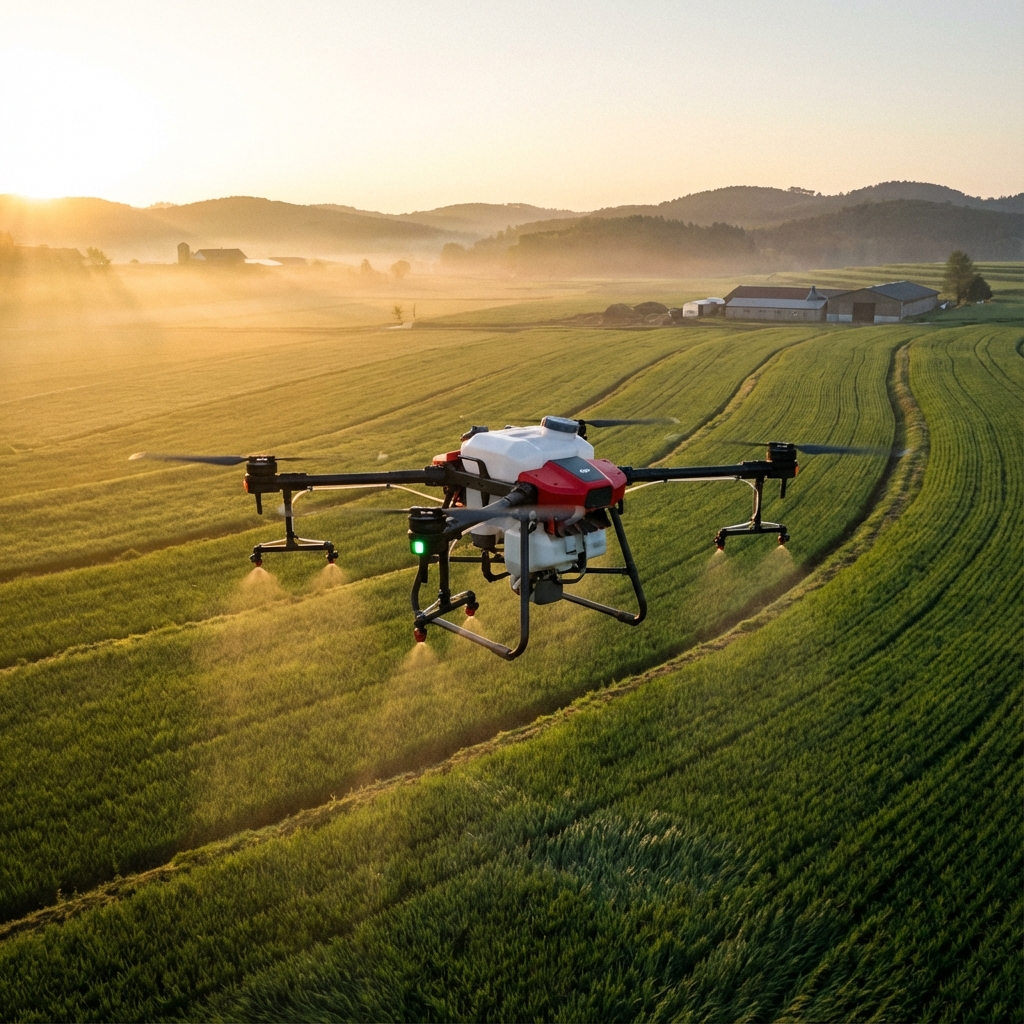
The morning after a heavy monsoon downpour, I watched a flock of egrets scatter from a flooded rice paddy as the Agras T70P lifted off for a fungicide application. What caught my attention wasn't the birds—it was how the drone's Active Phased Array Radar detected a nearly invisible irrigation pipe running just 0.8 meters above the water surface, triggering an automatic altitude adjustment mid-swath. That kind of sensor reliability doesn't happen by accident. It happens through disciplined maintenance.
Rice paddy operations during post-rain conditions represent one of the most demanding environments for agricultural drones. The combination of standing water, clay-heavy mud, decomposing organic matter, and high humidity creates a perfect storm of maintenance challenges. Your Agras T70P, with its 70L tank capacity and 70kg spray payload, is engineered to handle these conditions—but only if you uphold your end of the maintenance partnership.
This guide delivers field-tested protocols I've developed across hundreds of hectares of flooded rice cultivation.
Understanding the Post-Rain Paddy Environment
Before diving into specific maintenance procedures, you need to understand what your drone faces in muddy rice paddy conditions.
Post-rain paddies present a unique combination of threats. Water splashback during low-altitude spraying carries dissolved fertilizers, pesticides from previous applications, and microscopic silica particles. These contaminants don't just sit on surfaces—they actively corrode aluminum components and cloud optical sensors.
The Agras T70P's Dual Atomization system operates at heights that put it directly in the splash zone. During variable rate application passes over uneven paddy terrain, the aircraft may descend to maintain consistent coverage, increasing exposure to contaminated water spray.
| Environmental Factor | Risk Level | Primary Components Affected |
|---|---|---|
| Clay mud accumulation | High | Landing gear, motor vents, radar housing |
| Silica-laden water splash | Critical | Camera lenses, binocular vision sensors |
| Organic debris (rice straw) | Moderate | Propeller roots, cooling intakes |
| Dissolved agricultural chemicals | High | Spray system seals, tank interior |
| High humidity (>85% RH) | Moderate | Electronic connectors, battery terminals |
Tip 1: Implement Immediate Post-Flight Sensor Cleaning
The binocular vision system and Active Phased Array Radar are your primary obstacle avoidance tools. During one memorable operation near Jiangsu Province, the radar successfully detected and navigated around a complex web of power lines crossing a paddy—lines that were nearly invisible against the overcast sky. That detection capability depends entirely on clean sensor surfaces.
Within 15 minutes of landing, use a microfiber cloth dampened with distilled water to wipe all optical surfaces. Avoid circular motions; use straight, overlapping strokes to prevent micro-scratching.
For the radar housing, compressed air at 30 PSI maximum removes loose debris without risking damage to the phased array elements. Never use solvents on radar components—the housing materials can degrade, affecting signal transmission.
Expert Insight: I carry a dedicated sensor cleaning kit that includes lens-grade microfiber cloths, a hand-pump air blower, and distilled water in a spray bottle. The investment of three minutes post-flight saves hours of troubleshooting RTK Fix rate issues later. When your centimeter-level precision starts drifting, dirty sensors are the first suspect.
Tip 2: Flush and Inspect the Spray System After Every Muddy Operation
The 70-liter tank and Dual Atomization nozzles represent your primary revenue-generating system. Contamination here directly impacts spray drift control and application accuracy.
After each muddy field operation, run a complete flush cycle with clean water. This isn't optional—it's mandatory. Residual mud particles as small as 50 microns can partially obstruct nozzle orifices, creating inconsistent droplet sizes that compromise coverage uniformity.
Nozzle calibration verification should follow every flush. Use a graduated cylinder to measure output from each nozzle over a 60-second period at your standard operating pressure. Variation exceeding 5% between nozzles indicates partial blockage or wear requiring attention.
Inspect all seals and gaskets for swelling or degradation. Agricultural chemicals combined with muddy water create surprisingly aggressive conditions for rubber components.
Tip 3: Protect and Verify RTK Antenna Performance
Centimeter-level precision depends on consistent RTK Fix rate—and nothing degrades that faster than contaminated antenna surfaces.
The RTK antenna on the Agras T70P sits in an exposed position by design, optimizing satellite signal reception. This exposure means mud splatter accumulates during low-altitude operations over flooded paddies.
Clean the antenna surface with isopropyl alcohol (70% concentration) and a lint-free cloth. Check the antenna cable connection point for moisture intrusion—a common failure point that manifests as intermittent position drift during operations.
| RTK Performance Indicator | Acceptable Range | Action Threshold |
|---|---|---|
| Fix rate during operation | >98% | <95% requires inspection |
| Position accuracy (horizontal) | <2 cm | >5 cm indicates antenna issue |
| Time to first fix | <45 seconds | >90 seconds suggests obstruction |
| Satellite count (typical) | 18-24 | <14 requires repositioning |
Tip 4: Conduct Thorough Landing Gear and Undercarriage Inspection
Muddy landings deposit significant debris on the landing gear assembly. This isn't just cosmetic—accumulated mud adds weight asymmetrically, affecting flight stability and increasing motor load.
Remove all visible mud using a soft-bristle brush and low-pressure water spray. Pay particular attention to the joints and pivot points where mud can harden and restrict movement.
The Agras T70P's 80kg spread payload capability means the landing gear experiences substantial stress during operations. Hairline cracks or deformation in muddy conditions may not be immediately visible but can propagate rapidly under load.
Inspect for:
- Cracks at weld points and joints
- Deformation of tubular members
- Corrosion initiation at scratched surfaces
- Debris accumulation in shock-absorbing components
Tip 5: Maintain Motor and Propulsion System Integrity
The propulsion system driving your Agras T70P through 15-20 minute flight times under full payload generates significant heat. Mud accumulation on motor housings acts as insulation, trapping heat and accelerating bearing wear.
After muddy operations, inspect motor ventilation openings for debris. Use compressed air to clear any accumulated material, directing airflow from the motor interior outward to avoid pushing debris deeper into the assembly.
Listen for unusual sounds during a brief ground test run. Bearing degradation often announces itself through subtle grinding or whining before complete failure.
Pro Tip: I maintain a maintenance log that tracks motor temperatures after each operation using the telemetry data. A gradual upward trend in operating temperature—even just 3-4°C over several weeks—often indicates cooling system obstruction from accumulated field debris. Catching this early prevents expensive motor replacements.
Propeller inspection should focus on leading edge condition. Rice straw and other organic debris cause micro-abrasions that increase drag and reduce efficiency. Replace propellers showing visible edge damage rather than risking mid-flight failure.
Tip 6: Verify Radar and Vision System Calibration
The Active Phased Array Radar and binocular vision system work together to provide obstacle detection that keeps your investment safe. After exposure to muddy conditions, verification of calibration status ensures these systems perform as designed.
Access the diagnostic menu through the controller interface and run the built-in sensor verification routine. This process takes approximately four minutes and confirms that both radar returns and vision system depth calculations fall within specification.
During multispectral mapping operations that often follow spray applications, sensor accuracy directly impacts NDVI analysis quality. Contaminated or miscalibrated sensors produce data that leads to incorrect variable rate application prescriptions on subsequent passes.
If calibration verification fails, clean all sensor surfaces again and repeat. Persistent failures indicate the need for professional service—contact our team for a consultation before attempting field repairs on these precision components.
Tip 7: Establish a Structured Maintenance Schedule
Random maintenance catches problems randomly. Structured maintenance catches problems before they become failures.
For rice paddy operations in post-rain conditions, I recommend a tiered maintenance schedule:
After Every Flight (5 minutes)
- Visual inspection of all surfaces
- Sensor surface cleaning
- Spray system flush initiation
After Every 3 Flights (20 minutes)
- Complete spray system flush and nozzle calibration verification
- RTK antenna cleaning and connection check
- Motor ventilation inspection
- Landing gear detailed inspection
After Every 10 Flights (60 minutes)
- Full diagnostic routine including sensor calibration verification
- Propeller condition assessment and replacement if needed
- Battery terminal cleaning and connection verification
- Firmware update check and installation
Monthly (During Active Season)
- Professional inspection of all flight-critical systems
- Swath width verification through test application
- Complete spray system seal inspection and replacement as needed
Common Pitfalls to Avoid
Even experienced operators make mistakes that compromise their Agras T70P's performance and longevity. Here are the errors I see most frequently:
Delaying post-flight cleaning: Mud that sits for more than two hours begins bonding chemically with surfaces. What takes five minutes to remove immediately can require thirty minutes of careful work later—and may cause permanent staining or corrosion.
Using pressure washers: The IPX6K rating protects against powerful water jets, but pressure washers can still force water past seals at connection points. Stick to low-pressure spray and manual cleaning.
Ignoring minor spray drift changes: Small variations in spray pattern often indicate developing nozzle issues. Addressing a 10% drift variation early prevents the 40% variation that ruins an entire field application.
Skipping calibration verification after cleaning: Cleaning sensors is only half the job. Verification confirms that cleaning was effective and that no damage occurred during the process.
Storing with residual moisture: The combination of agricultural chemicals and moisture creates corrosive conditions during storage. Ensure all components are completely dry before storing, especially in humid climates.
Frequently Asked Questions
How does mud exposure affect the Agras T70P's obstacle detection range?
Clean Active Phased Array Radar maintains its full detection range for obstacles in the flight path. Mud accumulation on the radar housing can reduce effective detection range by 15-25% depending on contamination severity. The binocular vision system experiences similar degradation. Regular cleaning after muddy operations restores full performance.
Can I use the same cleaning products for all sensor types?
No. Optical sensors (cameras, binocular vision) require distilled water or lens-specific cleaning solutions. Radar housings should only be cleaned with distilled water and dried with lint-free cloths. RTK antennas can tolerate 70% isopropyl alcohol. Using incorrect cleaning agents can damage coatings or housing materials.
How often should I recalibrate nozzles during intensive rice paddy operations?
During post-rain muddy conditions, verify nozzle calibration after every three flights or 15 tank loads, whichever comes first. If you notice any change in spray pattern during operation, perform immediate verification before the next flight. Consistent swath width depends on properly calibrated nozzles.
What's the best way to dry the aircraft after cleaning?
Allow natural air drying in a shaded, well-ventilated area for at least 30 minutes before storage. Avoid direct sunlight, which can cause uneven heating and stress optical components. For faster drying, use clean compressed air at low pressure on electronic connection points and motor ventilation openings.
Should I remove batteries before cleaning?
Yes. Always remove batteries before any cleaning procedure. This prevents accidental power-on during cleaning and protects battery terminals from moisture exposure. Clean battery terminals separately with a dry cloth and inspect for any signs of corrosion before reinstallation.
Protecting Your Investment Through Disciplined Maintenance
Your Agras T70P represents a significant investment in agricultural efficiency. The 70kg spray payload and 80kg spread capacity deliver productivity that transforms rice cultivation economics—but only when the aircraft operates at full capability.
Post-rain muddy paddy conditions test every system on the aircraft. The engineering that enables reliable performance in these demanding environments requires partnership from operators who understand that maintenance isn't overhead—it's investment protection.
The protocols outlined here come from direct field experience across diverse rice cultivation regions. They work. They prevent failures. They keep your aircraft generating revenue instead of sitting in a repair queue.
For operators seeking additional guidance on optimizing their Agras T70P for specific regional conditions or crop types, contact our team for a consultation. Our agronomists provide customized maintenance protocols based on your specific operational environment.
Your drone's sensors successfully navigated those power lines because someone maintained them properly. Keep that chain unbroken.