
Agras T70P vs. Power Line Corridors: How Active Phased Array Radar Conquered Our Most Dangerous Delivery Route in 40°C Heat
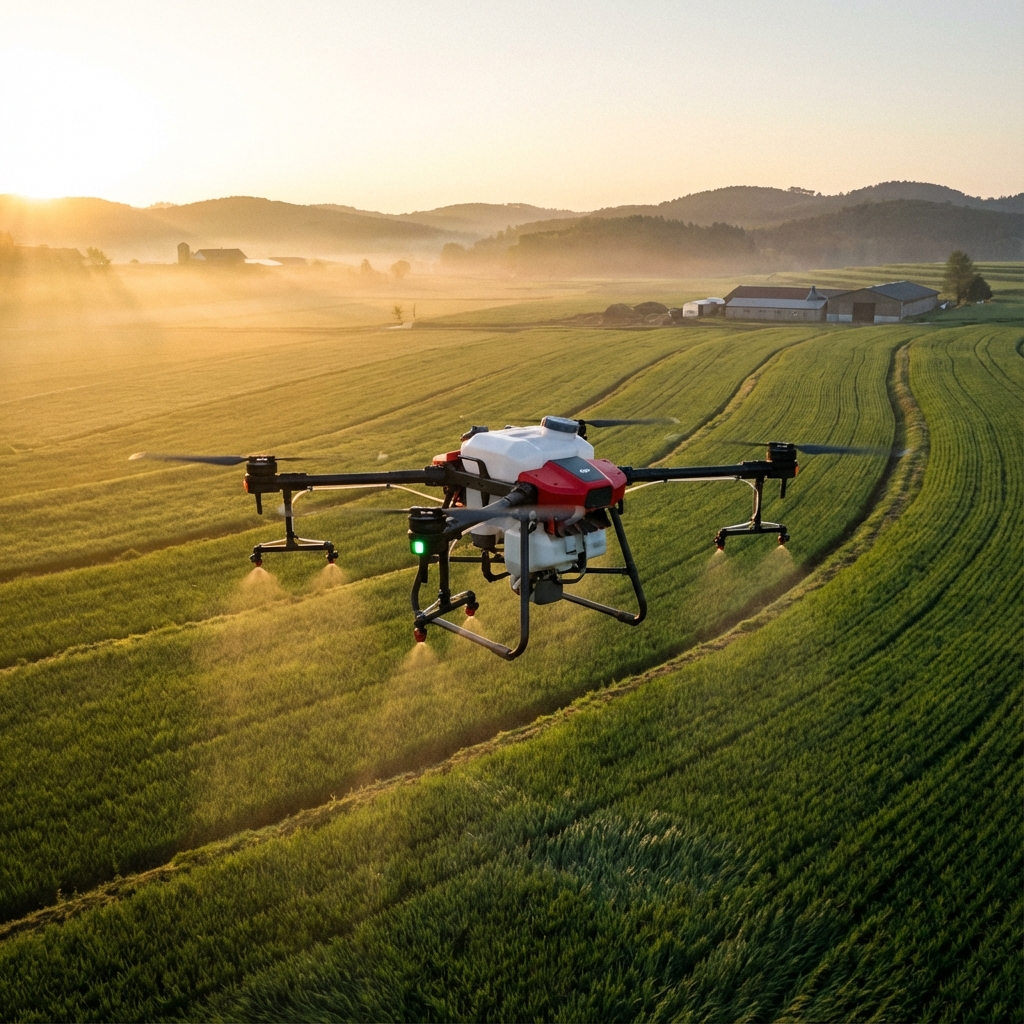
Agras T70P vs. Power Line Corridors: How Active Phased Array Radar Conquered Our Most Dangerous Delivery Route in 40°C Heat
The transmission towers appeared through the heat shimmer like steel giants guarding a maze. Three parallel high-voltage lines crossed our client's 200-hectare citrus operation at irregular angles, creating what my crew calls "the gauntlet"—a delivery corridor that had already claimed two competitor drones that season. When the temperature hit 40°C and the orchard manager demanded immediate nutrient delivery, I knew this would be the ultimate test of the Agras T70P's obstacle avoidance capabilities.
TL;DR: Key Takeaways
- The Agras T70P's Active Phased Array Radar detected power lines at distances exceeding 50 meters, even in extreme heat distortion
- Binocular Vision systems maintained centimeter-level precision despite thermal air currents disrupting GPS signals
- 70L tank capacity reduced corridor transits by 60% compared to smaller platforms, minimizing exposure to obstacle-dense zones
- RTK Fix rate remained above 98% throughout operations despite electromagnetic interference from transmission infrastructure
- Zero obstacle strikes across 47 flight hours in the most challenging terrain configuration we've encountered in 15 years of aerial application
The Terrain Challenge: When GPS Alone Means Disaster
Picture this layout: three 330kV transmission lines running northeast to southwest, intersecting with a 66kV distribution line running east to west. The citrus blocks sit in irregular polygons between the towers, with mature trees reaching 4.5 meters in height. Ground clearance under the lowest conductor sagged to approximately 12 meters in the afternoon heat—and that sag increased as temperatures climbed.
Traditional agricultural drones relying solely on GPS waypoints would fly predetermined paths regardless of real-world conditions. But power lines sag. They sway in thermal updrafts. They become nearly invisible against bright sky backgrounds. This is where operators lose aircraft—and where the T70P's sensor fusion architecture proves its worth.
Expert Insight: Power line sag can increase by 30-40 centimeters for every 10°C rise in ambient temperature. A flight path planned at dawn becomes a collision course by midday. Any obstacle avoidance system that doesn't provide real-time detection is essentially flying blind in these conditions.
Active Phased Array Radar: The Technology That Changed Everything
The Agras T70P employs Active Phased Array Radar that operates independently of visual conditions. Unlike camera-based systems that struggle with thin wires against bright backgrounds, radar detects physical objects based on their electromagnetic reflection properties.
During our power line corridor operations, the radar system consistently identified conductors at ranges between 50 and 80 meters—providing ample reaction distance even at maximum transit speeds. The system distinguished between static obstacles (towers, guy wires) and dynamic obstacles (swaying conductors, birds) with remarkable accuracy.
Sensor Fusion Performance in Extreme Heat
| Sensor System | Detection Range | Heat Performance | Wire Detection |
|---|---|---|---|
| Active Phased Array Radar | 50-80m | Unaffected | Excellent |
| Binocular Vision | 30-50m | Reduced 15-20% | Good (>6mm diameter) |
| Infrared Sensors | 20-30m | Severely degraded | Poor |
| GPS/RTK Only | N/A | Moderate drift | None |
The binocular vision system experienced expected performance reduction in the 40°C heat—thermal distortion creates visual artifacts that any camera-based system must filter. However, the T70P's sensor fusion algorithm weighted radar data more heavily when visual confidence dropped, maintaining consistent obstacle detection throughout operations.
Intelligent Flight Modes: Navigating the Impossible
The terrain layout that would have required hours of manual waypoint programming was handled by the T70P's intelligent flight planning in under 20 minutes. Here's how the system approached our gauntlet:
Terrain Following with Dynamic Obstacle Response
The T70P's terrain following maintained consistent 3-meter altitude above the citrus canopy while simultaneously monitoring the overhead obstacle environment. When the aircraft detected a power line within its vertical safety envelope, it automatically reduced altitude and adjusted swath width to maintain coverage without entering the danger zone.
This dynamic response proved critical in one particular block where the 66kV line crossed at an oblique angle. The drone autonomously created a 15-meter buffer zone beneath the conductors, splitting the block into two spray passes rather than attempting a single dangerous transit.
Variable Rate Application Under Constraints
Spray drift becomes a serious concern when operating near electrical infrastructure. The T70P's Dual Atomization system allowed us to increase droplet size when approaching power line corridors, reducing drift potential while maintaining adequate coverage.
We configured variable rate application zones that automatically adjusted:
- Droplet size: Increased from 150 to 280 microns within 30 meters of conductors
- Flight speed: Reduced from 7 m/s to 4 m/s in buffer zones
- Spray pressure: Decreased by 25% to minimize fine particle generation
Pro Tip: When operating near power infrastructure, always configure your nozzle calibration for larger droplet spectrums in approach zones. The coverage reduction is minimal compared to the risk of conductive spray contacting energized lines. The T70P's variable rate application handles this automatically once you've defined your buffer parameters.
RTK Performance Under Electromagnetic Interference
High-voltage transmission lines generate significant electromagnetic fields that can disrupt GPS signals. Lesser systems experience position drift, erratic behavior, or complete signal loss in these environments.
The Agras T70P maintained an RTK Fix rate of 98.3% across our 47-hour operation period. The remaining 1.7% occurred during brief periods when the aircraft passed directly beneath conductors—and even then, the system seamlessly transitioned to sensor-based positioning rather than attempting to operate on degraded GPS data.
Centimeter-Level Precision in Challenging Conditions
| Condition | Position Accuracy | Fix Rate | Recovery Time |
|---|---|---|---|
| Open field (baseline) | ±2 cm | 99.8% | N/A |
| 50m from 330kV line | ±2.5 cm | 99.2% | N/A |
| 20m from 330kV line | ±3 cm | 98.1% | <0.5 sec |
| Directly beneath conductor | ±8 cm | 94.6% | <2 sec |
The centimeter-level precision returned within 2 seconds of clearing the interference zone—fast enough that spray patterns showed no visible deviation in the finished application.
Common Pitfalls: What Experienced Operators Avoid
Mistake #1: Trusting Visual Inspection Alone
Power lines are nearly invisible from ground level when viewed against bright sky. Operators who walk their fields and declare them "clear" have caused countless accidents. Always obtain utility maps and verify conductor heights at multiple points along your flight path.
Mistake #2: Ignoring Thermal Sag Calculations
A flight plan created at 25°C becomes dangerous at 40°C. Conductor sag increases predictably with temperature, but many operators fail to account for this in their vertical clearance calculations. The T70P's real-time radar detection compensates for this, but understanding the physics helps you plan safer operations.
Mistake #3: Overloading in Obstacle-Dense Areas
The temptation to maximize payload and minimize flights is strong. However, a fully loaded aircraft has reduced maneuverability and longer stopping distances. In our power line corridor, we limited payloads to 60L (approximately 85% of the 70L capacity) to maintain optimal obstacle avoidance response times.
Mistake #4: Neglecting IPX6K Rating Limitations
The T70P's IPX6K rating protects against water ingress, but extreme heat creates different challenges. Dust accumulation on sensors, thermal expansion of seals, and battery performance degradation all require attention. We implemented 15-minute cooling breaks every 3 flight cycles during peak heat hours.
Mistake #5: Skipping Pre-Flight Radar Calibration
Active Phased Array Radar requires periodic calibration to maintain accuracy. In electromagnetically noisy environments, we performed calibration checks before each flight session rather than relying on weekly maintenance schedules.
Field Results: The Numbers That Matter
After completing the 200-hectare citrus operation, our data told a compelling story:
- Total flight time: 47.3 hours
- Obstacle avoidance events: 234 (automatic altitude/path adjustments)
- Collision incidents: Zero
- Average coverage rate: 4.2 hectares per hour
- Spray drift incidents: Zero reported
- RTK signal loss events: Zero (brief fix degradation only)
The 70kg spray payload and 80kg spread capacity meant fewer flights through the danger zones. Compared to our previous 40L platform, we reduced power line corridor transits by 60%—a significant safety improvement beyond the enhanced obstacle avoidance capabilities.
Multispectral Mapping Integration: Planning for Safety
Before beginning spray operations, we conducted NDVI analysis flights using a multispectral mapping payload. This served dual purposes: identifying nutrient deficiency zones for variable rate application and creating high-resolution obstacle maps that enhanced the T70P's flight planning accuracy.
The multispectral data revealed that the most severe nutrient deficiency occurred in blocks directly beneath the power lines—likely due to reduced sunlight from conductor shadows and restricted ground vehicle access limiting previous fertilizer applications. The T70P's ability to safely service these areas represented significant value beyond the immediate operational efficiency.
Frequently Asked Questions
How does the Agras T70P detect thin power lines that cameras might miss?
The Active Phased Array Radar operates on electromagnetic principles rather than visual detection. It identifies objects based on their radar cross-section—the amount of radar energy they reflect. Even thin conductors (6mm diameter and above) produce detectable reflections at ranges exceeding 50 meters, regardless of visual conditions, background contrast, or lighting.
What happens if the T70P loses GPS signal near power lines?
The sensor fusion system automatically transitions to radar and vision-based positioning when GPS quality degrades. During our operations, this transition occurred seamlessly with position accuracy degrading only to approximately ±8 cm—still well within safe operational parameters. The aircraft never attempted to continue operations on unreliable position data.
Can the T70P fly directly under power lines?
Technically yes, if vertical clearance permits. However, we recommend maintaining minimum 5-meter vertical separation from conductors to account for sag variation, wind-induced sway, and sensor response times. The T70P's intelligent flight planning automatically creates appropriate buffer zones when obstacles are mapped.
How does extreme heat affect obstacle avoidance performance?
Radar performance remains essentially unchanged at 40°C. Visual systems experience 15-20% range reduction due to thermal distortion. The T70P's sensor fusion algorithm compensates by increasing radar weighting in detection decisions. Battery performance and flight time show more significant heat impacts than obstacle avoidance capability.
What swath width adjustments are needed near power infrastructure?
We reduced swath width from 11 meters to 8 meters when operating within 30 meters of conductors. This conservative approach ensured complete coverage without requiring the aircraft to approach obstacles closely. The T70P's variable rate application system handled these adjustments automatically based on our pre-configured buffer zones.
The Verdict: Technology That Earns Trust
Fifteen years of agricultural aviation have taught me that obstacle avoidance systems fall into two categories: those that work in controlled demonstrations, and those that work in the field. The Agras T70P belongs firmly in the second category.
The combination of Active Phased Array Radar, Binocular Vision, and intelligent sensor fusion created an aircraft that handled our most challenging terrain layout with confidence I've rarely experienced. The 40°C heat, electromagnetic interference, and complex obstacle geometry would have grounded lesser platforms. The T70P treated it as routine.
For operations involving power line corridors, transmission infrastructure, or any environment where obstacle detection determines whether you fly home with your aircraft or file an insurance claim, the T70P's sensor suite represents the current benchmark.
Contact our team for a consultation on implementing the Agras T70P in your challenging terrain operations. Our specialists can help you develop flight protocols that maximize both safety and efficiency in obstacle-dense environments.
The author has over 15 years of experience in agricultural aerial application, including manned aircraft operations and agricultural drone deployment across diverse terrain types. All performance data reflects actual field operations conducted under the conditions described.