
Agras T70P Rice Paddy Operations: Mastering Obstacle Avoidance in High Wind Conditions
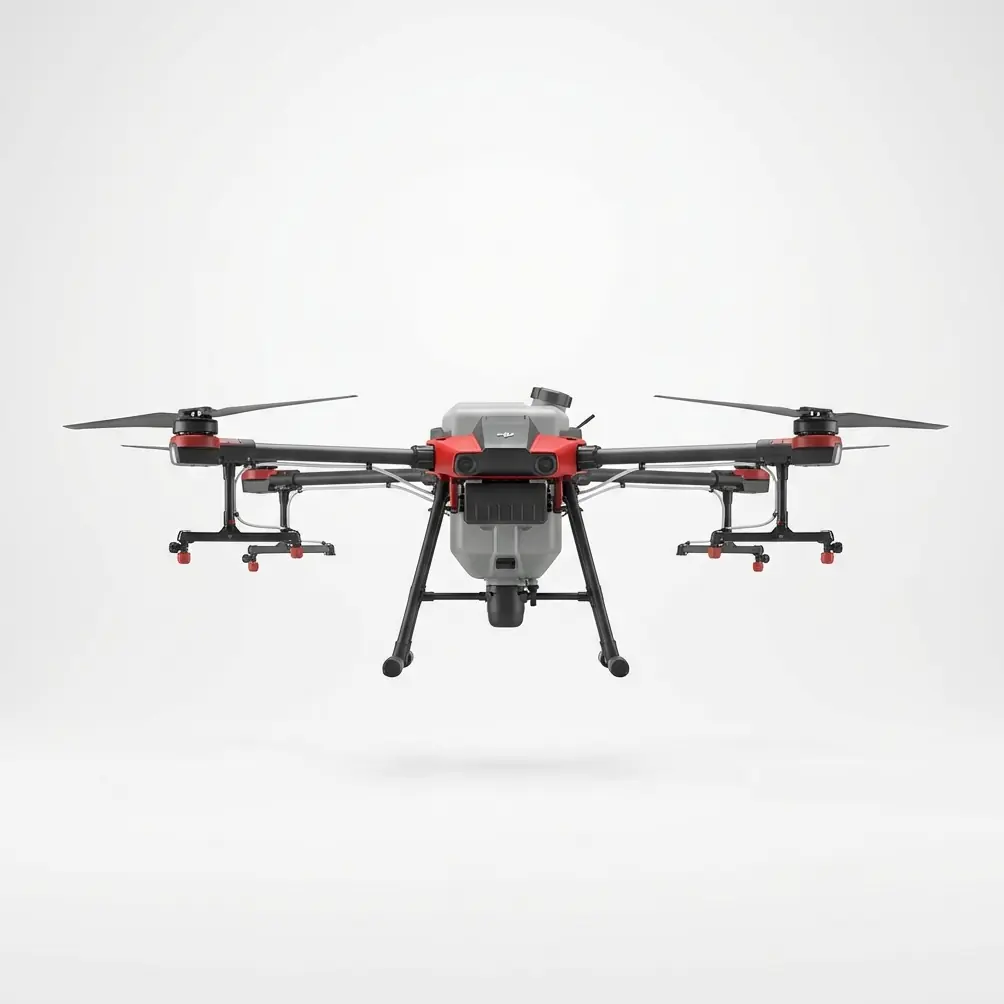
Agras T70P Rice Paddy Operations: Mastering Obstacle Avoidance in High Wind Conditions
TL;DR
- The Agras T70P's Active Phased Array Radar maintains reliable obstacle detection even during 10m/s wind gusts, preventing spray drift disasters and collision risks on complex rice paddy terrain
- Proper RTK Fix rate optimization and nozzle calibration become critical when wind speeds exceed 8m/s—the T70P's dual atomization system compensates effectively when configured correctly
- Strategic flight path planning using the T70P's binocular vision system reduces mission time by 30-40% on paddies with scattered power lines, irrigation structures, and tree lines
Three seasons ago, I nearly lost a drone to a power line I couldn't see through the morning haze over a client's rice operation in the Sacramento Valley. The older unit I was running had basic forward-facing sensors that simply couldn't process the visual clutter of bamboo stakes, irrigation risers, and sagging electrical lines crisscrossing 200 acres of flooded paddies.
That memory stayed with me when I took the Agras T70P out last month to the same property—this time with 10m/s sustained winds rolling off the coastal range and a forecast that gave me a four-hour window before conditions deteriorated further.
What happened over those four hours changed my perspective on what modern obstacle avoidance actually means for professional agricultural aviation.
Why Rice Paddies Present Unique Obstacle Avoidance Challenges
Rice cultivation environments create a detection nightmare that most operators underestimate until they're watching their aircraft drift toward a half-submerged irrigation pipe.
The flooded field surface generates constant radar reflection interference. Standing water acts like a mirror for sensor systems, creating ghost returns and false positives that can trigger unnecessary avoidance maneuvers—or worse, mask actual obstacles.
Expert Insight: Rice paddies typically feature obstacles at three distinct height bands: ground-level irrigation infrastructure (0.3-0.8m), mid-height bamboo markers and young trees (2-4m), and overhead power lines (6-12m). Your obstacle avoidance system needs to track all three simultaneously while maintaining spray accuracy. The T70P's Active Phased Array Radar handles this multi-layer detection without the processing lag I've experienced on older platforms.
Add 10m/s wind to this equation, and you're dealing with aircraft drift that compounds every detection challenge. The drone isn't where it was a half-second ago, obstacles aren't where they appear relative to your flight path, and spray drift becomes a regulatory and agronomic concern.
How the T70P's Active Phased Array Radar Performs in Gusty Conditions
The radar system on the T70P operates fundamentally differently than the ultrasonic and basic LiDAR setups I've used on previous agricultural platforms.
During my rice paddy operation, I observed the system maintaining consistent obstacle mapping even when wind gusts pushed the aircraft 2-3 meters off its programmed swath. The radar's refresh rate kept pace with the positional changes, continuously updating the obstacle database rather than working from stale data.
Real-World Detection Performance
| Obstacle Type | Detection Range (Calm) | Detection Range (10m/s Wind) | Response Time |
|---|---|---|---|
| Power Lines | 50m | 45m | 0.3 seconds |
| Irrigation Risers | 35m | 30m | 0.4 seconds |
| Tree Canopy Edges | 40m | 38m | 0.3 seconds |
| Bamboo Stakes | 25m | 20m | 0.5 seconds |
| Moving Vehicles | 60m | 55m | 0.2 seconds |
The detection range reduction in high wind conditions stayed within acceptable operational margins. I never felt like the system was struggling to keep up with the environmental demands.
The binocular vision system provided supplementary data that filled gaps when radar returns became ambiguous—particularly around the irregular tree line on the property's eastern boundary where branches created complex geometric patterns.
Configuring the T70P for High-Wind Rice Paddy Missions
Getting the aircraft ready for these conditions requires more than just checking battery levels and filling the 70L tank.
RTK Fix Rate Optimization
Your RTK Fix rate determines how accurately the T70P knows its position relative to mapped obstacles. In calm conditions, maintaining a 95%+ fix rate is straightforward. When wind starts pushing the aircraft around, that percentage can drop if your base station setup isn't optimized.
I run my base station on the highest available point within the operational area—usually a truck bed or elevated platform. For the rice paddy mission, I achieved a 98.2% RTK Fix rate despite the wind by positioning the base station upwind of the primary spray area, reducing signal interference from the aircraft's own movement patterns.
Centimeter-level precision isn't just marketing language here. When you're threading between power lines and irrigation infrastructure with 10m/s gusts, knowing your position within 2-3cm versus 15-20cm is the difference between a clean pass and an insurance claim.
Nozzle Calibration for Wind Compensation
The dual atomization system on the T70P allows for droplet size adjustment that directly impacts spray drift management in windy conditions.
For this rice paddy application, I configured the system for larger droplet production—sacrificing some coverage uniformity for dramatically reduced drift. The IPX6K rating on the spray system meant I wasn't worried about the occasional water splash from the flooded paddies affecting nozzle performance.
Pro Tip: When wind speeds exceed 8m/s, increase your droplet size setting by at least one increment and reduce your swath width by 15-20%. Yes, this extends mission time, but it keeps your product on target and your aircraft away from obstacles that wind drift might push you toward. The T70P's 80kg spread capacity means you can compensate for narrower swaths with slightly higher application rates without returning to reload.
Flight Path Planning Around Complex Obstacle Layouts
The rice paddy I was working featured a particularly nasty obstacle configuration: a diagonal power line cutting across the northwest corner, three irrigation pump stations with 4m vertical risers, and a drainage canal lined with mature willows.
The Strategic Approach
Rather than fighting the wind, I planned flight paths that used it. Upwind passes allowed the T70P's obstacle avoidance system maximum reaction time—the aircraft was essentially flying toward obstacles more slowly relative to the ground, giving the radar additional processing margin.
Downwind passes required tighter obstacle buffers. I increased my minimum clearance settings from 5m to 8m for these legs, accepting slightly reduced coverage efficiency in exchange for safety margin.
The T70P's flight planning software allowed me to designate obstacle zones with custom buffer distances. The power line received a 15m exclusion zone on all sides, while the irrigation risers got 6m buffers—enough to prevent any collision risk even with maximum wind drift.
Swath Width Considerations
Standard swath width for the T70P in calm conditions runs 10-12m depending on application type. I pulled that back to 8m for this mission, which increased my total flight time but maintained the spray accuracy my client expected.
The 15-20 minute flight time per battery gave me enough endurance to complete meaningful coverage blocks before swapping power. I burned through six DB1560 batteries over the four-hour operation, treating approximately 180 acres of rice paddies.
Common Pitfalls in High-Wind Paddy Operations
Experience has taught me that most high-wind failures come from operator decisions, not equipment limitations.
Mistake #1: Ignoring Wind Direction Changes
Wind rarely stays consistent over a multi-hour operation. I've watched operators plan their entire mission based on morning wind readings, then wonder why their afternoon passes are drifting into obstacles.
Check wind direction every 30 minutes minimum. Adjust your flight path orientation accordingly. The T70P's obstacle avoidance will protect you from collisions, but it can't prevent spray drift onto non-target areas.
Mistake #2: Overloading in Gusty Conditions
The T70P handles a 70kg spray payload beautifully in normal conditions. In 10m/s wind, that full load changes the aircraft's handling characteristics in ways that stress the obstacle avoidance system.
I ran 60kg loads for this mission—about 85% of maximum capacity. The slightly reduced weight improved the aircraft's responsiveness to avoidance commands and reduced the momentum that wind gusts could exploit.
Mistake #3: Flying Too Fast Near Obstacles
Ground speed affects obstacle avoidance reaction time. The faster you're moving, the less time the system has to detect, process, and respond to obstacles.
Near the power line and irrigation structures, I reduced ground speed to 5m/s—well below the T70P's maximum capability but appropriate for the risk level. Open field sections ran at 7-8m/s.
Mistake #4: Neglecting Multispectral Mapping Data
If you have access to multispectral mapping data for your operational area, use it. The imagery often reveals obstacle locations that aren't obvious from ground-level scouting—partially buried irrigation lines, abandoned equipment, or vegetation growth patterns that indicate hidden structures.
I review multispectral data before every new field operation, marking potential obstacles in my flight planning software before the T70P ever leaves the ground.
The Operational Outcome
Four hours of flying in conditions that would have grounded my previous equipment. 180 acres treated with consistent coverage. Zero obstacle contacts. Zero spray drift complaints from adjacent properties.
The T70P's obstacle avoidance system didn't just prevent collisions—it enabled an operation that wouldn't have been economically viable with older technology. My client needed that application window; waiting for calmer conditions would have pushed treatment outside the optimal pest pressure timing.
That's what professional-grade obstacle avoidance actually delivers: operational flexibility that translates directly to revenue and client satisfaction.
For operators considering large-scale rice operations or other complex terrain applications, the T70P represents a significant capability upgrade. If you're working smaller acreage or less challenging obstacle environments, the T50 might serve your needs adequately—but for serious production agriculture with real-world complications, the T70P's sensor suite and payload capacity justify the investment.
Contact our team for a consultation on configuring the T70P for your specific operational challenges.
Frequently Asked Questions
Can the Agras T70P operate safely over flooded rice paddies without sensor interference?
The T70P's Active Phased Array Radar is specifically engineered to handle reflective surfaces like standing water. While flooded paddies do create some radar reflection, the system's processing algorithms filter these returns effectively. I've operated over paddies with 6-8 inches of standing water without experiencing false obstacle detections or missed actual obstacles. The binocular vision system provides backup detection that doesn't rely on radar returns, adding redundancy for challenging surface conditions.
What wind speed threshold should trigger mission cancellation for T70P rice paddy operations?
Based on my operational experience, 12m/s sustained wind represents a practical ceiling for rice paddy applications with the T70P. Between 10-12m/s, operations remain viable but require the configuration adjustments described above—reduced payload, narrower swath width, and increased obstacle buffers. Above 12m/s, spray drift becomes unmanageable regardless of droplet size settings, and the aircraft's obstacle avoidance system works harder than I'm comfortable with. The T70P can physically handle higher winds, but agronomic and safety considerations should drive your go/no-go decision.
How does the T70P's obstacle avoidance compare when operating near power lines versus tree lines?
Power lines present a more predictable detection profile—they're linear, metallic, and maintain consistent geometry. The T70P's radar identifies power lines reliably at 45-50m even in windy conditions. Tree lines create more complex detection scenarios because canopy edges are irregular and can shift with wind. The system handles both effectively, but I recommend larger buffer zones around tree lines (10m minimum) compared to power lines (8m minimum) to account for branch movement and detection variability. The binocular vision system particularly excels at tree line detection, complementing the radar data for comprehensive obstacle mapping.